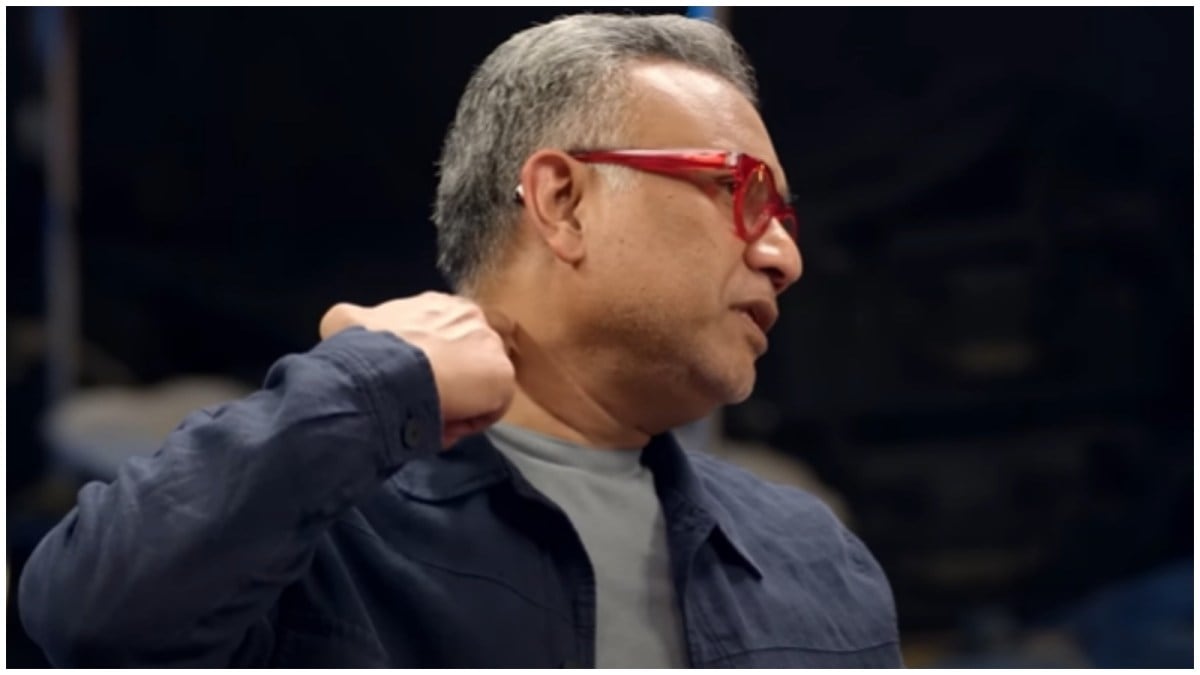
IC 814 The Kandahar Hijack director Anubhav Sinha reacts to CBFC interference in his projects: ‘If you want to release your film…’
In a conversation with the indianexpress.com ahead of IC 814 The Kandahar Hijack release, Anubhav Sinha addresses the role of CBFC and how it impacts the creative aspect of a project.
Anubhav Sinha, whose recent web series IC 814: The Kandahar Hijack found itself in a row as a section of the audience accused the Netflix show of deliberately fudging the religious identity of the five terrorists who hijacked an Indian Airlines flight in 1999, has faced similar disagreements earlier as well. At the time of the release of his films Bheed (2023), Mulk (2018), and Article 15 (2019), the certification process was long and arduous. Most of his movies had to undergo certain changes and long discussions to get a clearance certificate.
Talking about the same ahead of IC 814 release, in an exclusive conversation with indianexpress.com, the filmmaker addressed the role of CBFC and how it impacts the creative process, “If it is a Utopian question then everything should be made and released, but there is a law of the land and if the law of the land tells me if you don’t do this, you can’t release your film, I will have to follow the law of the land. Now, I can’t have cerebral utopian conversation about it. CBFC is the law of the land. It tells me, ‘Anubhav, if you want to release your film, you have to delete this,’ I have to delete this. As simple as that.”
You’ve Read Your Free Stories For Now
Sign up and keep reading more stories that matter to you.
When asked if the interference of the censor board compromised the creativity of a project, the Thappad filmmaker said, “It is a compromise with the creativity of a film, it’s not what if. It is. But, it is the law of the land.”
In the same interview, the filmmaker also spoke about his films Bheed, and Anek tanking at the box office, despite opening to rave reviews. When asked how it feels, he told the indianexpress.com, “It breaks your heart, it breaks your backbone. You lose confidence. You almost get encouraged not to make a film again. But then something else convinces you enough to do it again and then you look back and say, ‘No, it’s not a big deal, it’s okay.'”
He added, “I had three back-to-back hits and then I had two films that didn’t work and those were also strange times and I was making a dark film on Corona tragedy, and in black-and-white, it didn’t work. It’s okay. As long as you are not ashamed of your film, as long as people who participated with you in that film are not ashamed, you take it in a stride. When you read or write history, you turn a page, and you have gone past a decade in the history of filmmaking, so don’t take yourself that seriously.”
Currently, his Netflix series IC 814: The Kandahar Hijack was asked to add a disclaimer after a row over the hijackers being called by their aliases, including Bhola and Shankar, while their names were Ibrahim Athar, Shahid Akhtar Sayed, Sunny Ahmed Qazi, Mistri Zahoor Ibrahim, and Shakir.
Jyothi Jha is an incisive Copy Editor and multi-platform journalist at The Indian Express, where she specializes in high-stakes entertainment reporting and cinematic analysis. With over six years of diverse experience across India’s leading media houses, she brings a rigorous, ethics-first approach to digital storytelling and editorial curation.
Experience & Career
Jyothi’s career is characterized by its breadth and depth across the media landscape. Before joining the editorial team at The Indian Express, she honed her expertise covering the entertainment beat for premier national broadcasters, including NDTV, Republic Media, and TV9. Her professional journey is not limited to digital text; she has a proven track record as an on-air anchor and has successfully managed production teams within the high-pressure segments of Politics and Daily News. This 360-degree view of newsroom operations allows her to navigate the complexities of modern journalism with veteran precision.
Expertise & Focus Areas
Guided by the Orwellian principle that "Journalism is printing what someone else does not want you to do," Jyothi focuses on transparent, accountability-driven reporting. Her core areas of expertise include:
Cinematic Deconstruction: Analyzing the social subtext of mainstream Bollywood and South Indian cinema (e.g., Kantara, Masaan, Dabangg).
Toxic Masculinity & Gender Studies: A vocal critic of regressive tropes in Indian cinema, she often highlights the industry's treatment of women and social progress.
Box Office & Industry Economics: Providing data-backed predictions and analysis of film performance and superstar fee structures.
Exclusive Multimedia Coverage: Conducting deep-dive interviews and long-form features that bridge the gap between archival history and modern pop culture.
Authoritativeness & Trust
Jyothi Jha has established herself as a trusted voice by prioritizing substance over PR-driven narratives. Her background in hard news and political production provides her with a unique lens through which she views the entertainment industry—not merely as gossip, but as a reflection of societal values. Readers rely on her for "Journalism of Courage," knowing her critiques are rooted in a deep respect for the craft and a refusal to settle for superficiality. Her ability to pivot between daily news and specialized entertainment analysis makes her a versatile and authoritative pillar of The Indian Express newsroom.
... Read More