


Click here to follow Screen Digital on YouTube and stay updated with the latest from the world of cinema.
Tags:


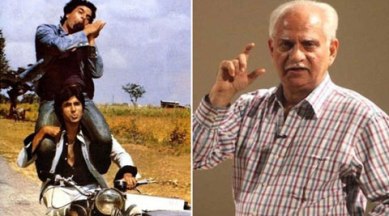
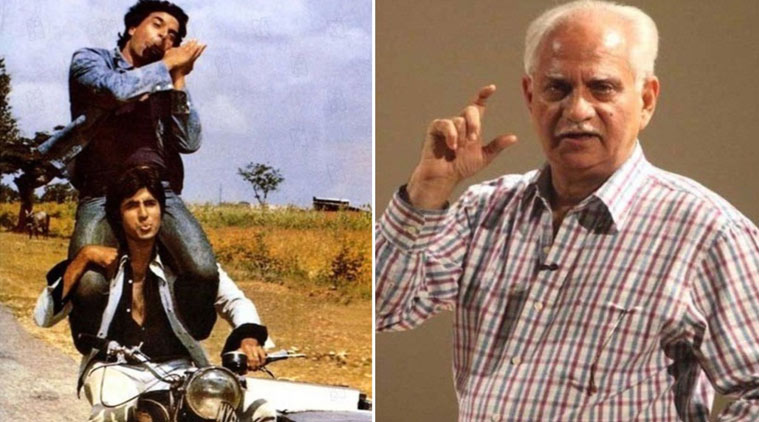
WHEN Ramesh Sippy walked on to the stage, to the tunes of Mehbooba Mehbooba, deafening whistles and applause reverberated in the 300-seater Experimental Theatre at Mumbai’s National Centre for the Performing Arts (NCPA) on Thursday evening. Sippy’s wife, Kiran Juneja, who was seated in the front row along with his daughter Sheena and son Rohan, quickly whipped out her iPhone and began filming the euphoric sentiment. “When we began making Sholay, we wanted to make it the biggest and best film ever. But even then, I didn’t know that I would be here, 40 years later, talking about it,” said a beaming Sippy.
A week before the film released on August 15, 1975, during the Emergency, the Sholay director almost got arrested in London. At that time, he was there for its post-production, particularly for the 70mm format. A senior bureaucrat in Delhi, who Sippy claims wanted to “lay down the rules”, had tipped the Indian high commission in London to keep a tab on him. “We had arranged for a screening at the Odeon Marble Arch. I had also invited the Indian embassy officials. I was speaking to one of the officials, who had an intuition that it might not be a good idea and we cancelled the show at the last minute. When I turned up at the venue the next morning to apologise, officers were there to arrest me. They couldn’t do that because the print wasn’t there,” he recalled. Turns out that there was a fine print clause that mentioned that the sealed film could only be opened in India.


Sholay was shot over a period of two years, from October 1973 to June 1975. Sippy overshot his budget by Rs 2 crore and the film was originally four hours long. Nearly 40 minutes were edited out before the release. RD Burman, who had composed the background score was upset over it. “Burman saab had seen the four-hour version and had composed the music accordingly. When he saw the final film, he started crying, ‘what happened to that scene, what did you do’,” he said.
While categorically declining that he would ever consider a sequel or remake the film, Sippy confessed that he would change one aspect of the climax if he were to make it again. “When Jai is dying, Veeru turns the coin and on seeing that it’s double-sided, throws it away in a fit of anger. With the stereophonic sound, that echo destroyed what was an emotional moment,” he said, adding that he would have found a better place for the effect. The director revealed that Gabbar actually took shape in his head when he first saw the rocky terrains of Ramanagara, a town near Bangalore. At a time when a lot of dacoit films were based in the Chambal valley, Sippy wanted a different setting. “The moment I reached the place, I knew this would be my Ramgarh. I could visualise where the house would be and the rocks Gabbar would sit on,” he said.
Unlike other films of its time, Sholay has continued to have a resonance through the decades, with the dialogues, music and characters finding a permanent place in pop culture. “Mediums have changed, and so have the mindset and relationships. But the emotions that the film embodied have stayed on,” he says.
shikha.kumar@expressindia.com


Click here to follow Screen Digital on YouTube and stay updated with the latest from the world of cinema.


