4 min read
Click here to follow Screen Digital on YouTube and stay updated with the latest from the world of cinema.
© IE Online Media Services Pvt Ltd



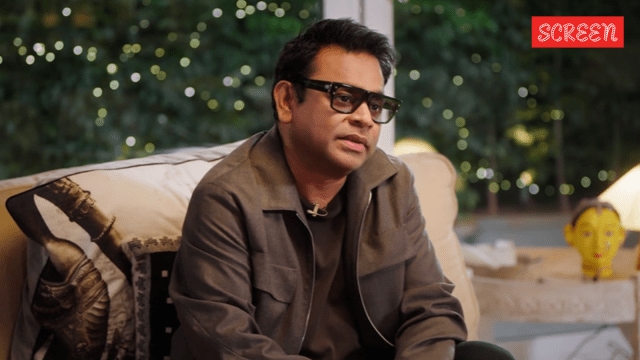 AR Rahman discusses religion and Sufism. (Photo: YouTube/Nikhil Kamath)
Prolific composer AR Rahman has always been candid about his views on religion and his decision to switch over to Sufism. In a recent interview, the Oscar winner elaborated on what he feels is the definition of Sufism and what he has learnt after studying the scriptures of different religions. Born a Hindu, Rahman embraced Sufism, which is reflected in his art and life. He started his career as musician AS Dileep Kumar, but eventually changed his name to Allahrakha Rahman after adopting Sufi Islam.
While talking to Nikhil Kamath on his podcast, Rahman was asked if he follows Islam, to which he replied that he mostly follows Sufism. “I am a fan of all the religions, and I have studied Islam, Hinduism and Christianity. My one problem is killing or harming other people in the name of religion. I love to entertain, and when I perform, I feel like it’s a shrine, and we are all enjoying the fruits of oneness. People of different religions, who speak different languages, all come together there,” said Rahman.
AR Rahman was then asked why he leaned towards Sufism and what he thought was the definition of the religion. He said, “Sufism is like dying before dying. There are screens which will make you self-reflect, and in order to remove those screens, you have to perish. Lust, greed, jealousy, or judgements all need to die. Your ego is gone, and then you become transparent like God. You become part of the light.”
Rahman said that even though people follow different religions and speak different languages, their faith should be pure. The composer stated that as long as someone is spiritually rich, they will reach their other goals. He said, “The commonality of faith is what I love. We might be following different religions, but the sincerity of the faith is what is measured. That’s what makes us do the good things. Humanity is benefited by that. We all need to be spiritually rich, because when spiritual richness comes, material richness follows.”
He also said that he is on a spiritual path. “You may be rich in money but poor in spirituality. I consider myself a spiritual beggar. I go to a dargah or sit near the beach and meditate to become rich in deeds,” he said.
In the podcast, he also spoke about how he had a harsh life. “All the scary things have already happened in my life my father’s death, my grandmother’s death, my mother’s death. It made me like completely numb, it made me zen mode, it made me believe that everybody is going to die.”
He says that helped him understand the true meaning — the one true love is for God. “If you believe in God, every breath is a blessing to me, every opportunity is a blessing to me. When I perform, I feel like it’s a shrine, we are all enjoying the fruits of oneness in a stadium.”
AR Rahman has talked about his beliefs in the past as well. In Naseer Munni Kabir’s book AR Rahman The Spirit of Music, Rahman recalled his journey of embracing Sufism and said, “Nobody is forced to convert to the path of Sufism. You only follow if it comes from your heart. A year after we met Qadri Saaheb, in 1987, we moved from Habibullah Road to Kodambakkam, to the house where we still live. When we moved, I was reminded of what Jesus Christ, peace be upon Him, once said: ‘I wish that you were cold and hot. So because you are lukewarm, and neither hot nor cold, I will spit you out of my mouth.”
He added, “These words taught me that it is better to choose one path. The Sufi path spiritually lifted both my mother and me, and we felt it was the best path for us, so we embraced Sufi Islam. No one around us cared about the conversion. We were musicians, and that allowed us greater social freedom.”
Click here to follow Screen Digital on YouTube and stay updated with the latest from the world of cinema.