This is an archive article published on August 25, 2022
UGC chairman defends CUET format: MCQs used for long, no complaint
Speaking with The Indian Express about the recent criticism of the multiple-choice-question format of the entrance test, Jagadesh Kumar said, “Conducting MCQ-based tests in different disciplines is not new. Such entrance tests are over a decade old in many central universities. None of them have reported any problem related to the quality of students admitted.”
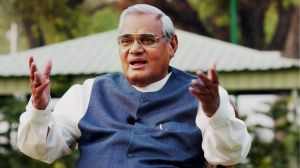
UGC chairman M Jagadesh Kumar has defended the MCQ format of CUET UG 2022. (File)
Twelve central universities have been following the Central University Common Entrance Test (CUCET, now known as CUET) with multiple choice-type questions (or MCQs) for over a decade, and none has reported problems with quality of students admitted, UGC chairman M Jagadesh Kumar said on Wednesday.
Speaking with The Indian Express about the recent criticism of the MCQ format of the CUET, Kumar said 12 central universities have been conducting admissions through CUCET since 2010, using OMR-based MCQ-type questions in two parts.
“Part-A tests language, general awareness, mathematical aptitude and analytical skills, and Part-B tests domain knowledge,” he said. “CUCET was conducted in all disciplines for UG and PG programmes. In 2021, the NTA (National Testing Agency) conducted CUCET for these 12 universities as a computer-based MCQ test. Since 2022, they have all joined the rest of the central universities in adopting CUET both for UG and PG programmes.”
He said, “Conducting MCQ-based tests in different disciplines is not new. Such entrance tests are over a decade old in many central universities. None of them have reported any problem related to the quality of students admitted.”
In a recent Idea Exchange session with The Indian Express, JNU vice-chancellor Santishree Dhulipudi Pandit had expressed concern that CUET’s MCQ format for PG admissions will impact the quality of student intake.
She had said: “In Master’s (programme), you cannot have admissions based on MCQs because we don’t even know whether the student can write anything… There should be qualitative answering and testing of other abilities rather than rote memory… Many of them may not understand the language and problems of communication.”
Kumar said there is no “ideal entrance test” but machine-driven evaluation is the best possible option to maintain objectivity in large-scale testing.
Story continues below this ad
“Academic debate on whether MCQ-type questions are good in entrance tests for admissions is very old,” the UGC chairman said. “There is nothing like an ideal entrance test. When a small number of students sit for a test, written short or long answers are fine. Answer scripts can be checked and rechecked for uniformity.
“However, now the number of students who write these tests is large — it is near 1.5 million and in the coming years will become several millions. Under these circumstances, the need to bring objectivity in the admission process and make it bias- and discrimination-free is very high.”
Admissions have become “very competitive and we cannot let human incapacity to be neutral due to fatigue affect the marking”, Kumar said.
Sukrita Baruah is a Principal Correspondent for The Indian Express, based in Guwahati. From this strategic hub, she provides comprehensive, ground-level coverage of India's North East, a region characterized by its complex ethnic diversity, geopolitical significance, and unique developmental challenges.
Expertise and Experience
Ethnic & Social Dynamics: Deep-dive coverage of regional conflicts (such as the crisis in Manipur) and peace-building efforts.
Border & Geopolitics: Tracking developments along India’s international borders and their impact on local communities.
Governance & Policy: Reporting on state elections, tribal council decisions, and the implementation of central schemes in the North East.
Specialized Education Background: Prior to her current role, Sukrita was a dedicated Education Correspondent for The Indian Express in Delhi. This experience provided her with a sharp analytical lens for:
Policy Analysis: Evaluating the National Education Policy (NEP) and university-level reforms.
Student Affairs: Covering high-stakes stories regarding campus politics, national entrance exams, and the challenges within the primary and secondary education sectors. ... Read More


 3 min read