Director of Indian Institute of Management-Ahmedabad (IIM-A) Professor Errol D’souza Friday spoke out against the new rent structure for accommodation of the faculty, saying it would affect the educational outcome of the institute and would force them to think of living outside the campus.

At present, a faculty member pays a nominal rent of around Rs 5,000 for accommodation within the campus. There are over 115 accommodation units for faculty members on both new and old campuses where nearly 100 faculty members live.
ExplainedNew rent structure will push faculty out of campus
The high point of the IIM-A experience is its residential, self-contained campus, which the new rent structure strikes at in an indirect way. Faculty members are known to have opposed it and are seeing it something that will force them to live outside the campus. This would take away the bonhomie that they share with the students living on the campus.
“The institute’s stand is that it will affect the educational outcome of the institute. We believe that our institute is like a gurukul system. Everyone is there and everyone benefits from everyone being there. If that (new rent structure) is implemented, we are not sure we will produce industry-ready students because one of the greatest advantages of our students is that we are just a call away. The industry values that because we train them that way. So we have said that it can be affected,” said D’Souza.
“Our issue is that everyone on the campus has equal housing. Two persons living in equal houses will pay different taxes. This is not good in law,” he added. “Third thing we are saying is that the main function of our campus is that everyone lives on the campus. Once you go to this (the new) situation, people have already started thinking that may be I should live outside. Then the whole idea of our type of education will go because we have classes till 8 o’clock, 9 o clock in the evening. If that goes away then I think the value of the campus will also go,” the director said.
“Since there are talks going on in the campus of such an exorbitant rent structure to be levied on the faculty members and thus a few of them have also heard saying that in that case they are thinking of moving out. This will adversely affect the existing system of the institute,” said a senior faculty member of the institute.
D’Souza said it all started from Indian Institute of Science (IISc), Bangalore. “This has happened in Bangalore (implementation of the new rent structure). Unfortunately, the institute caved in (gave in to the pressure), I don’t know why. If they wouldn’t have caved in then this wouldn’t have started but their internal people told them to pay and they paid. Once IISc did, they (government) went to IIM-Bangalore, saying since you are in the same city so you also follow,” he said.
Story continues below this ad
Also, there is a case of a professor at IIT, Delhi on whom the the same (new) rent structure was imposed and the tax the professor was asked to pay was more than his salary. “So the professor sort of represented (protested) and now they are looking at it a little seriously hopefully. There are loopholes in the law,” he added.
Citing the ruling of the appellate tribunals in the case of IIMs in Indore, Bangalore and Calcutta pertaining to the service tax levied on the fee charged by the institute for four postgraduate programmes,D’Souza said that the GST council in their minutes have said that they have approved it (the exemption). “Now the GST council in their minutes have said that they have approved it but not said from which date. My sense is that GST council may not be empowered to say in retrospect. In this case we may have to continue fighting,” he said.
“We have now made representation to the Ministry of Finance but do not know whether they will respond or not,” he said. The director “hoping to get some positive response” said that the secretary in (the Ministry of Finance) has been supportive and “we hope such sort of support happens”.
He said, “The interesting thing is that this is India after all and all the appellate tribunals have different views on this. So the advance ruling that we went to, rather we did not go, but we were caught with the things so we are fighting it. But as in the advance ruling for our PGPX (post graduate programme in management for executives), where Indore and Bangalore went for an advance ruling and they were told you have to pay a service tax. While Calcutta went for an advance ruling and they were told you do not have to pay. So the same tax guys have different views on that across the country. So we said okay if one tribunal has said can we apply (it to IIM-A), they said no you cannot apply in Gujarat. Gujarat might have been a different issue. So what is national law no one knows.”
Story continues below this ad
On a lighter note, he said that it is an interesting thing so he has asked his faculty that they should write a case on this.


 6 min read


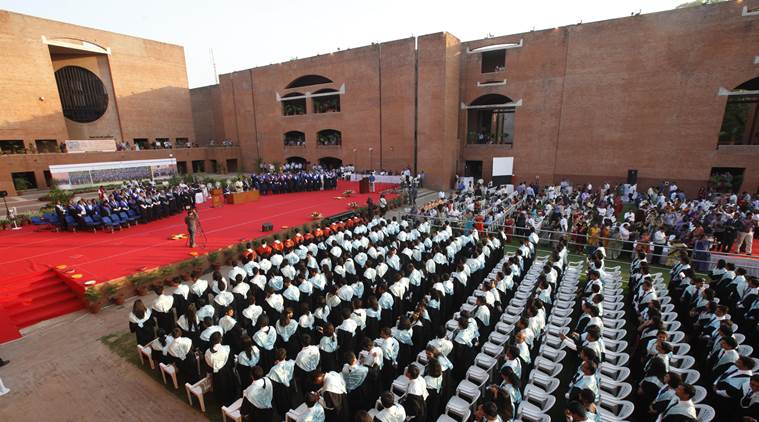 IIM Ahmedabad campus. File photo