Premium

If I didn’t go this year, maybe… Indian students split between going to Harvard and staying

Some risked it all to join, others deferred — The Indian Express spoke to Indian students caught between ambition and America’s politics.

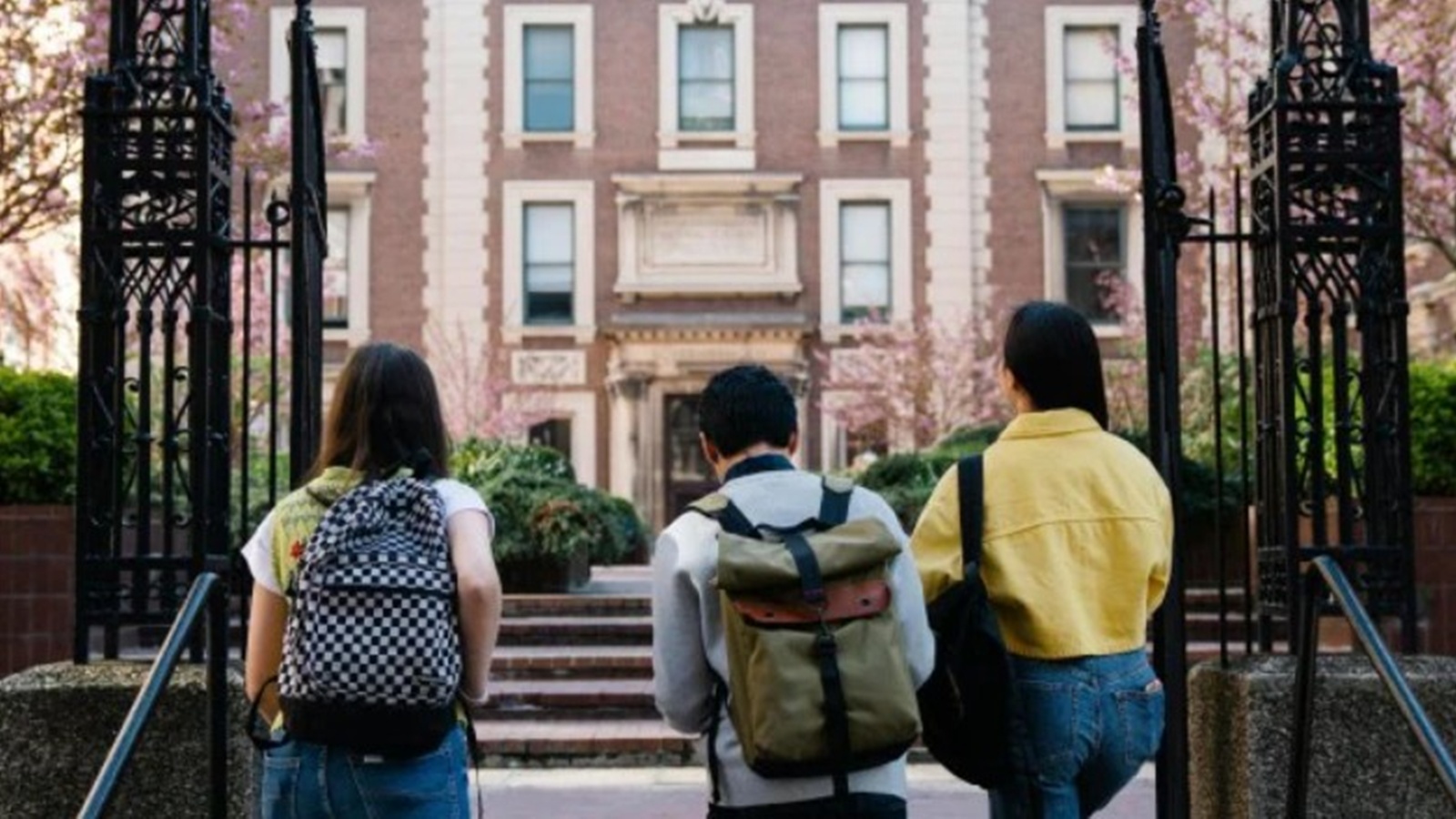
harvard universityHarvard pushed back in court, calling the revocation “a series of government actions to retaliate against Harvard for our refusal to surrender our academic independence.” (Photo: Pexels/File)

The photograph was simple: a woman standing beneath a crimson Harvard flag, the red brick of Massachusetts Hall rising behind her. For the 52-year-old principal of a Delhi school, it was more than a picture — it was proof that she had arrived to begin a master’s program in education at Harvard University.

Just three months earlier, she feared this moment might never come.

In May, the US Department of Homeland Security (DHS) stripped Harvard of its certification to host international students. Homeland Security Secretary Kristi Noem accused the university of fostering a “hostile” campus climate for Jewish students and of refusing to hand over surveillance footage and disciplinary records of foreign students tied to protests. The move locked Harvard out of SEVIS, the federal database that governs visas, and gave it 72 hours to comply. For more than 7,000 foreign students on campus, including nearly 800 Indians, the decision created sudden legal jeopardy. For those admitted for Fall 2025, it felt like a dream dissolving overnight.

Harvard pushed back in court, calling the revocation “a series of government actions to retaliate against Harvard for our refusal to surrender our academic independence.” A temporary restraining order gave the university some breathing room. But for incoming international students, the uncertainty remained.

The Delhi principal weighed her options. “I was overwhelmed, yes, but I knew reversals had happened before,” she said. “If I didn’t go this year, maybe I would go next year. But for many younger than me, that is not the case. It would be a huge loss of opportunity.”

On July 29, after her social media accounts were scrutinised, she got her visa. She packed her bags and flew to Boston. Today, she attends lectures on curriculum design and leadership.

There were others like her who decided to take the plunge. A 26-year-old from Gujarat, admitted to Harvard’s Kennedy School with a prestigious fellowship, remembers the dilemma vividly. “It felt theatrical, almost unreal. But I told myself — if I don’t take this chance, I’ll regret it forever.” He now begins his coursework in public policy, though he admits the unease lingers. “Every conversation with classmates carries the echo of that crisis. As international students, we need to be careful, lay low and just do what we came here to do.”

For many, however, the risks were too great.

Story continues below this ad

A 24-year-old policy consultant from Haryana, admitted to Harvard’s Master’s in Public Policy, chose to defer. “I had already paid $700 as a deposit, that’s nearly a month’s salary… and it was non-refundable,” he said. “But what terrified me more was the idea that even if I reached, I could be thrown out any time. I didn’t want to live like that, feeling like an outsider everyday.”

For him, pressing pause was a painful compromise. “Harvard was my dream,” he said. “To watch it collapse so suddenly, to be forced to press pause, feels like betrayal.”

Another 25-year-old from Delhi, admitted to the MPA program at the Kennedy School, echoed the same fears. “It was about what happens after. Would we get jobs? Would employers hesitate to hire us? Could we really build a life there, or would we always be looking over our shoulder?” he said. “It felt like gambling with everything I had. I had taken a huge loan, to clear that I need to work in the US, if I can’t do that, then I’ll have to put my family through debt and that is a risk I am not willing to take.”

For now, students like him have stayed back in India, continuing with jobs or searching for other opportunities, hoping that one day they will still walk the halls of Harvard.

Story continues below this ad

Those already enrolled remember the turmoil vividly. A 28-year-old from Delhi, midway through his master’s, said the hardest part was watching his parents worry from afar. “As Indians, everything connects back to the family. The mental health toll is not just on us, but on our parents, who keep asking if we are safe, if we will be forced out,” he said.

“Every week there is a new development and there is a lot of uncertainty for international students in the US. We don’t even know how to navigate this. It’s extremely overwhelming,” he added.

Meanwhile, Harvard itself is undergoing visible change. Freshmen this year arrived on a campus reshaped by political pressure. The Harvard Crimson reported that mandated antisemitism training followed accusations from the White House that the university fostered a hostile environment for Jewish students. Residential staff were also required to attend sessions. At the same time, Harvard shuttered the College Women’s Center, the Office for BGLTQ Student Life, and the Foundation for Intercultural and Race Relations.

Harvard has said these closures were part of a years-long restructuring of campus life, but they coincided with Trump administration demands: more support for Jewish students, but elimination of race- and gender-based programs, which officials called illegal. Pre-orientation programs were also restructured, affinity events canceled, and ties with outside activists cut.

Story continues below this ad

Now, as the Class of 2029 begins its journey in Harvard Yard, international students remain caught in the crosscurrents of law, politics, and identity.

This fall, the Indian cohort is split. Some have taken their seats in Cambridge classrooms, carrying the weight of uncertainty every day. Others sit thousands of miles away, their acceptance letters gathering dust, wondering if the opportunity will ever come again.

Vidheesha Kuntamalla is a Senior Correspondent at The Indian Express, based in New Delhi. She is known for her investigative reporting on higher education policy, international student immigration, and academic freedom on university campuses. Her work consistently connects policy decisions with lived realities, foregrounding how administrative actions, political pressure, and global shifts affect students, faculty, and institutions. Professional Profile Core Beat: Vidheesha covers education in Delhi and nationally, reporting on major public institutions including the University of Delhi (DU), Jawaharlal Nehru University (JNU), Jamia Millia Islamia, the IITs, and the IIMs. She also reports extensively on private and government schools in the National Capital Region. Prior to joining The Indian Express, she worked as a freelance journalist in Telangana and Andhra Pradesh for over a year, covering politics, rural issues, women-centric issues, and social justice. Specialisation: She has developed a strong niche in reporting on the Indian student diaspora, particularly the challenges faced by Indian students and H-1B holders in the United States. Her work examines how geopolitical shifts, immigration policy changes, and campus politics impact global education mobility. She has also reported widely on: * Mental health crises and student suicides at IITs * Policy responses to campus mental health * Academic freedom and institutional clampdowns at JNU, South Asian University (SAU), and Delhi University * Curriculum and syllabus changes under the National Education Policy Her recent reporting has included deeply reported human stories on policy changes during the Trump administration and their consequences for Indian students and researchers in the US. Reporting Style Vidheesha is recognised for a human-centric approach to policy reporting, combining investigative depth with intimate storytelling. Her work often highlights the anxieties of students and faculty navigating bureaucratic uncertainty, legal precarity, and institutional pressure. She regularly works with court records, internal documents, official data, and disciplinary frameworks to expose structural challenges to academic freedom. Recent Notable Articles (Late 2024 & 2025) 1. Express Investigation Series JNU’s fault lines move from campus to court: University fights students and faculty (November 2025) An Indian Express investigation found that since 2011, JNU has appeared in over 600 cases before the Delhi High Court, filed by the administration, faculty, staff, students, and contractual workers across the tenures of three Vice-Chancellors. JNU’s legal wars with students and faculty pile up under 3 V-Cs | Rs 30-lakh fines chill campus dissent (November 2025) The report traced how steep monetary penalties — now codified in the Chief Proctor’s Office Manual — are reshaping dissent and disciplinary action on campus. 2. International Education & Immigration ‘Free for a day. Then came ICE’: Acquitted after 43 years, Indian-origin man faces deportation — to a country he has never known (October 2025) H-1B $100,000 entry fee explained: Who pays, who’s exempt, and what’s still unclear? (September 2025) Khammam to Dallas, Jhansi to Seattle — audacious journeys in pursuit of the American dream after H-1B visa fee hike (September 2025) What a proposed 15% cap on foreign admissions in the US could mean for Indian students (October 2025) Anxiety on campus after Trump says visas of pro-Palestinian protesters will be cancelled (January 2025) ‘I couldn’t believe it’: F-1 status of some Indian students restored after US reverses abrupt visa terminations (April 2025) 3. Academic Freedom & Policy Exclusive: South Asian University fires professor for ‘inciting students’ during stipend protests (September 2025) Exclusive: Ministry seeks explanation from JNU V-C for skipping Centre’s meet, views absence ‘seriously’ (July 2025) SAU rows after Noam Chomsky mentions PM Modi, Lankan scholar resigns, PhD student exits SAU A series of five stories examining shrinking academic freedom at South Asian University after global scholar Noam Chomsky referenced Prime Minister Narendra Modi during an academic interaction, triggering administrative unease and renewed debate over political speech, surveillance, and institutional autonomy on Indian campuses. 4. Mental Health on Campuses In post-pandemic years, counselling rooms at IITs are busier than ever; IIT-wise data shows why (August 2025) Campus suicides: IIT-Delhi panel flags toxic competition, caste bias, burnout (April 2025) 5. Delhi Schools These Delhi government school grads are now success stories. Here’s what worked — and what didn’t (February 2025) ‘Ma’am… may I share something?’ Growing up online and alone, why Delhi’s teens are reaching out (December 2025) ... Read More


 

Latest Comment
Post Comment
Read Comments
Advertisement
Advertisement
Advertisement
Advertisement