Hidden Stories | The man who called Tilak ‘nation’s enemy’: Few in Pune remember activist-critic Dinkarrao Javalkar today

A leader of the non-Brahmin movement in Pune in the early 1900s, Dinkarrao Javalkar and Keshavrao Jedhe turned the Satyashodhak Samaj into a political force before joining the Indian National Congress.

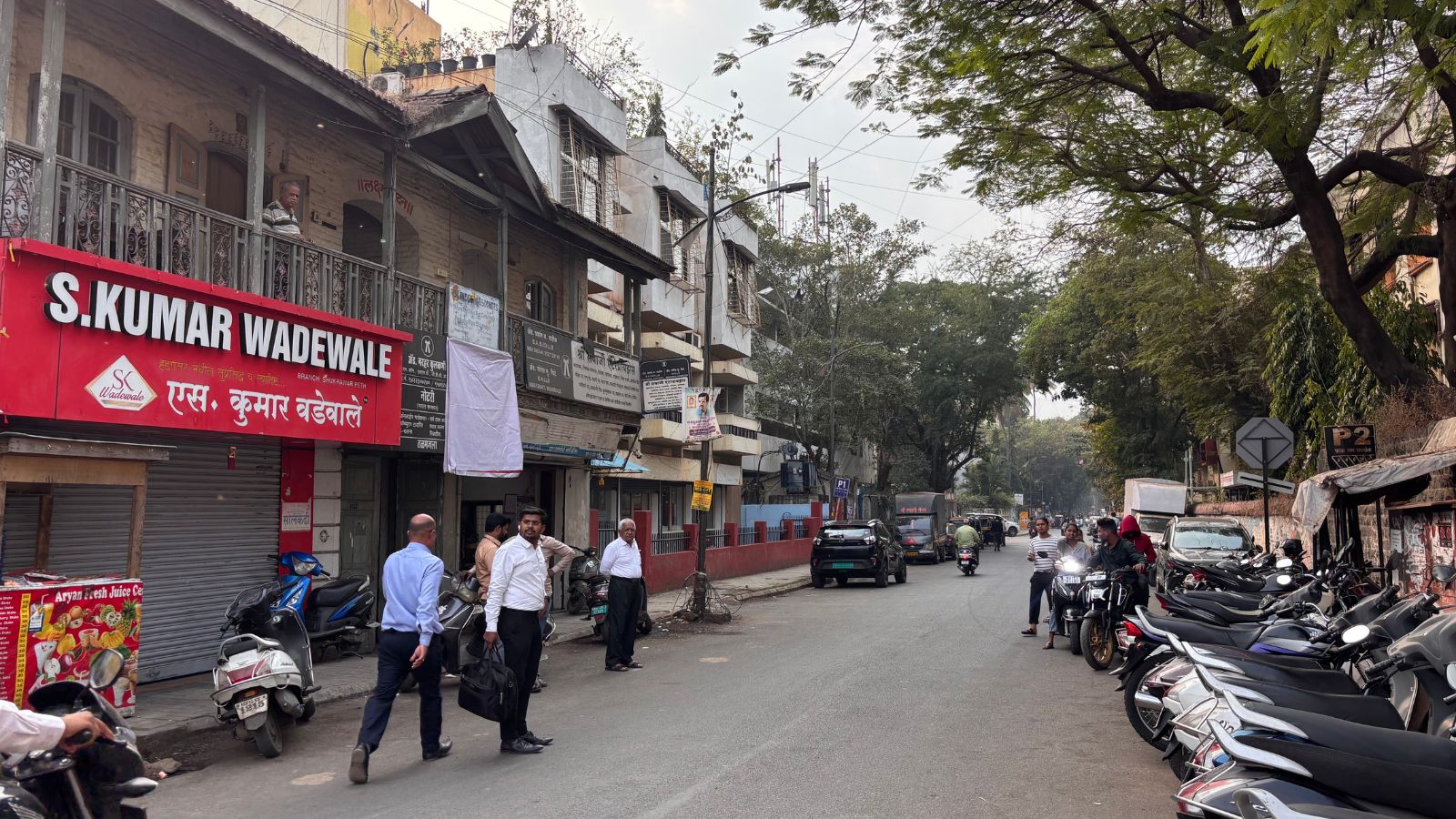
Dinkarrao Javalkar Road by Shreenija Dandavate.Dinkarrao Javalkar Road by Shreenija Dandavate. (Express Photo)

Turning from Pune’s Tilak Road towards Bajirao Road and walking about 150 metres, one finds the Dinkarrao Javalkar Road on the right side. Running through the heart of the city, Tilak Road is named after Bal Gangadhar Tilak, one of Pune’s most well-known nationalists. Javalkar, on the other hand, was a leader of the non-Brahmin movement in the region in the early 1900s and one of Tilak’s fiercest critics.

The non-Brahmin movement sprang up at the beginning of the 1900s through the Satyashodhak Samaj, in which Javalkar was a contemporary of leaders like Shahu Maharaj and Keshavrao Jedhe. Born in Alandi in 1898 to a poor Patil family, Javalkar was educated up to matriculation but was renowned for his oratory writing, according to Vijay Nalawade’s book ‘Life and Career of Keshavrao Jedhe’.

From a social movement to a political force

Devkumar Ahire, Assistant Professor at Savitribai Phule Pune University (SPPU), said Javalkar was a second-generation Satyashodhak. “Mahatma Phule and his contemporaries were the first generation of Satyashodhaks, but after his and Savitribai Phule’s death, there was a little bit of decline in the Satyashodhak movement. But in the 1920s, because of the changing political and social scenario of Maharashtra, there was an emergence of some kind of consciousness, especially among youths from the Kunbi caste. Javalkar himself was from the Kunbi community,” he said.

Javalkar and Jedhe turned the Satyashodhak Samaj from a social movement into a political force for the first time, said Prof Ahire. They had initially set up their own party, but later joined the Indian National Congress.

Prof Ahire added that on a pan-India level, there was an emergence of Mahatma Gandhi with provincial Congresses being captured by the Gandhians. But in Maharashtra, there was a big fight between the Gandhians and the Tilakites, which led to Gandhi strategically planning a yatra to have a dialogue with non-Brahmin leaders. He said, “Around 1925-26, Javalkar wrote an article critical of Gandhi. But within three years, in 1929, he wrote an article ‘Satyashodhak Mahatma’ where he wrote about Gandhi’s contributions.”

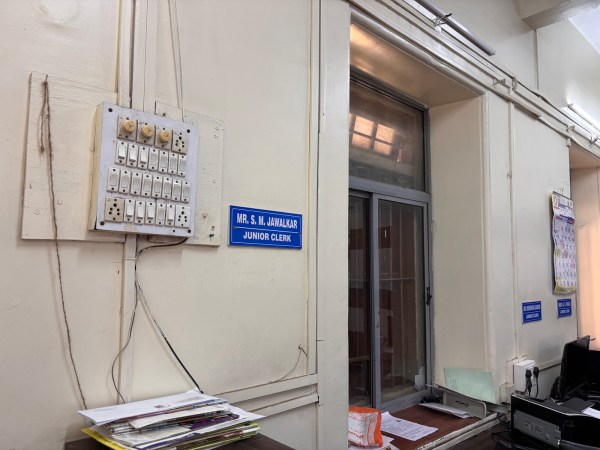
A desk of Swapnil Javalkar, a descendent of Dinkarrao Javalkar. A desk of Swapnil Javalkar, a descendent of Dinkarrao Javalkar. (Express Photo)

Javalkar’s book Deshache Dushman (Nation’s Enemies) accused figures like Tilak and Vishnushastri Chiplunkar of being enemies of the nation. Prof Ahire said, “According to Dinkarrao Javalkar, these were not leaders of the country. They were basically enemies of the country. He was articulating an idea of the nation which is different from what was presented by upper-caste Brahmin nationalists. And in the Shetkarancha Hindustan, he basically argued that India is a country of peasants…Tilak’s movement was not inclusive. It was an urban upper caste English educated movement.”

Nalawade writes that in Deshache Dushman, Javalkar “called Chiplunkar a dog and suggested that he should be shot for having abused Mahatma Phule through the columns.” A descendant of Chiplunkar filed a defamation case against the book and Javalkar was sentenced to a year’s imprisonment. Dr B R Ambedkar represented Javalkar in an appeal against this judgment.

Story continues below this ad

A familiar street, a forgotten name

For many residents and vendors who spend their days here, Javalkar’s name is unfamiliar. Among them is Kamal Madan Pardeshi, a street hawker who has worked on the road for the past three years. Pardeshi does not recognise the name Dinkarrao Javalkar at all. Instead, she refers to the area as “Mamledar Kacheri Road,” a name that, she says, is more commonly used by customers and fellow vendors. Others along the street echo this tendency, using informal or functional names rather than the official name printed on signboards.

This gap is also evident among long-term residents. Vilas Manchalekar, 71, runs a sewing shop that has stood on the road for nearly five decades. Yet, Manchalekar admits that the identity of Dinkarrao Javalkar remains unknown to him. “I don’t know who he was,” he says, pointing instead to the municipal signboard bearing the road’s name. “The board is all I know of him,” he said, slightly confused. Currently, the signboard is covered by a religious hoarding.

In contrast, fragments of personal history survive through lineage. Swapnil Javalkar, 38, a junior clerk at a local college, traces his roots to the activist. “Dinkarrao Javalkar”, he said, “hailed from Alandi, and the family is now into its fourth generation.” His surname often invites curiosity. “People always ask me if the road was named after me,” he remarks with a laugh, before explaining the ancestral connection.

When names outlast stories, roads risk becoming labels detached from meaning, known to the city, but not necessarily understood by those who walk them every day.

Shreenija Dandavate is an intern with The Indian Express.

Soham Shah is a Correspondent with The Indian Express, based in Pune. A journalism graduate with a background in fact-checking, he brings a meticulous and research-oriented approach to his current reporting. Professional Background Role: Correspondent coverig education and city affairs in Pune. Specialization: His primary beat is education, but he also maintains a strong focus on civic issues, public health, human rights, and state politics. Key Strength: Soham focuses on data-driven reporting on school and college education, government reports, and public infrastructure. Recent Notable Articles (Late 2025) His late 2025 work highlights a transition from education-centric reporting to hard-hitting investigative and human-rights stories: 1. Investigations & Governance "Express Impact: Mother's name now a must to download birth certificate from PMC site" (Dec 20, 2025): Reporting on a significant policy change by the Pune Municipal Corporation (PMC) following his earlier reports on gender inclusivity in administrative documents. "44-Acre Mahar Land Controversy: In June, Pune official sought land eviction at Pawar son firm behest" (Nov 9, 2025): An investigative piece on real estate irregularities involving high-profile political families. 2. Education & Campus Life Faculty crisis at SPPU hits research, admin work: 62% of govt-sanctioned posts vacant, over 75% in many depts (Sept 12, 2025): An investigative piece on professor vacancies at Savitribai Phule Pune University. "Maharashtra’s controversial third language policy: Why National Curriculum Framework recommends a third language from Class 6" (July 2): This detailed piece unpacks reasons behind why the state's move to introduce a third language from class 1 was controversial. "Decline in number of schools, teachers in Maharashtra but student enrolment up: Report" (Jan 2025): Analyzing discrepancies in the state's education data despite rising student numbers. 3. Human Rights & Social Issues "Aanchal Mamidawar was brave after her family killed her boyfriend" (Dec 17, 2025): A deeply personal and hard-hitting opinion piece/column on the "crime of love" and honor killings in modern India. "'People disrespect the disabled': Meet the man who has become face of racist attacks on Indians" (Nov 29, 2025): A profile of a Pune resident with severe physical deformities who became the target of global online harassment, highlighting issues of disability and cyber-bullying. Signature Style Soham is known for his civil-liberties lens. His reporting frequently champions the rights of the marginalized—whether it's students fighting for campus democracy, victims of regressive social practices, or residents struggling with crumbling urban infrastructure (as seen in his "Breathless Pune" contributions). He is adept at linking hyper-local Pune issues to larger national conversations about law and liberty. X (Twitter): @SohamShah07 ... Read More


Click here to join Express Pune WhatsApp channel and get a curated list of our stories

Latest Comment
Post Comment
Read Comments
Advertisement
Loading Taboola...
Advertisement