4 min read

Click here to join Express Pune WhatsApp channel and get a curated list of our stories
© The Indian Express Pvt Ltd



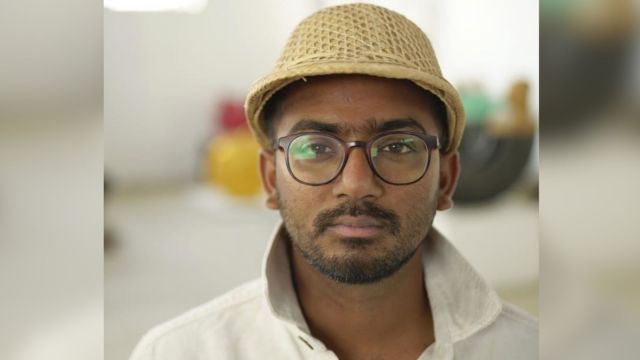 Sculptor Harsha Durugadda. (Express Photo)
There was a time when sculptor Harsha Durugadda, literally, broke the glass walls of Delhi’s iconic Lalit Kala Akademi gallery as his work was too big to move through the existing doors. Winner of the Rio Tinto Sculpture Award 2017 and the Arts Family Emerging Artist Award in 2023 for South Asia, Durugadda is now exhibiting at Pune’s VHC art gallery. His two sculptures are smaller than the one at Lalit Kala Akademi but far more intense and evolved.
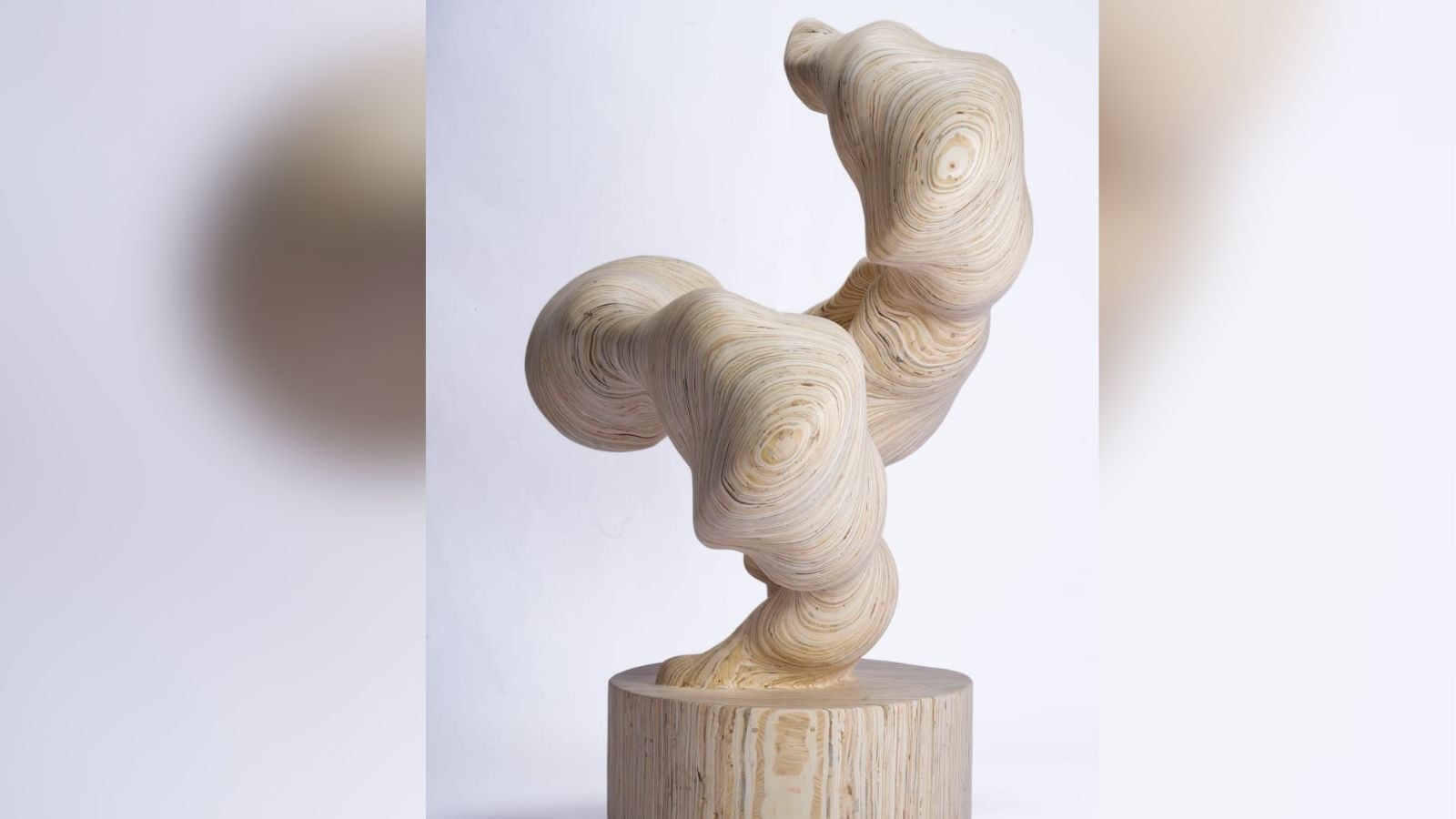
Durugadda’s pieces, Yellow Cloud and Torus, at VHC, are a part of the “Iterations”, a show that features four other artists. “I started using plywood, stacking them on top of each other and gluing and compressing them as a process in 2019 but they have evolved into something else. This is due to my experimentation and questions of what I can achieve with these forms,” says Durugadda.
In a Tedx talk, ‘Redefining How We Experience Art’, he says that it was never his intention to become an artist. “My inclination was towards monkhood and I was intrigued with the idea of being an enlightened being. It was my insatiable desire to create or make stuff that made me choose art as a vehicle to look within,” he says.
Among his earliest spiritual inspirations was Osho, whose cassettes played at his home when he was a child and whose books were present on the shelves. “Pune, for me, means Osho,” says the artist.
Evolution of an artist
Yellow Cloud responds to the material, which is wood, and hints at it wanting to return to being a tree. “It is a meditative process of putting the layers together,” says the artist. Torus is very twisted, with layers becoming metaphors for the experience of unearthing materials. “As if you are in a geological survey and are finding tiers of material and colours,” he adds.
Durugadda has moved away from his earlier influences when his approach towards form was constructivist and futurist. His works were of metal and sharp edged.
 Among his earliest spiritual inspirations was Osho, whose cassettes played at his home when he was a child and whose books were present on the shelves. (Express Photo)
“In time, I realised that my real passion was somewhere else. I found out about farm living and permaculture. I found other people and artists who resonated with me. My travels also informed my thinking. I have been living on a farm for the last four years and this has created my new artwork,” says Durugadda.
He lived in Delhi for almost a decade before moving to the farm, 35 km from Hyderabad. Here, he grows mushrooms and interacts with the local agrarian community. What has remained unchanged is Durugadda’s philosophy of sculpture. Coming from a family of sculptors, he points out that, in ancient temples, churches and Buddhist sites in India, the intricate artworks have been touched by people for centuries and wears a sheen as a result.
Sensory Experience
“The tactile feedback is an important aspect of art. I’ve been very passionate about allowing people to touch and interact with my sculptures,” says Durugadda. The work that won him the Rio Tinto Sculpture Award is called ‘Column of Sound’. Made of mild steel and marble, it responds to the sounds of the sea breeze and the surroundings of the site, Cottesloe in Australia.
Another work, ‘The Whirling Man’, was a human-powered kinetic sculpture driven by a pedal mechanism. The installation whirled and recreated references to the mystical whirling dervishes.
“Art is not always physical. It is omnipresent and passes through our lives in different shapes…It is evident that art exists everywhere. I found it in the sounds around me. It could be subjective to how you pursue art in your life,” said the artist at his Tedx talk.
It is ideas on how to create more interactions between viewers and his artwork that is occupying Durugadda at present. “How do we push what sculpture means in this era? I’m looking at movement and at how I can add kinetics to my work,” he says.