Premium
This is an archive article published on June 8, 2022

New study recommends next-generation sequencing for extending lung cancer treatment to more patients

The higher sensitivity of the NGS platform could detect 25 per cent more patients who may be false negative based on the routine methodology.

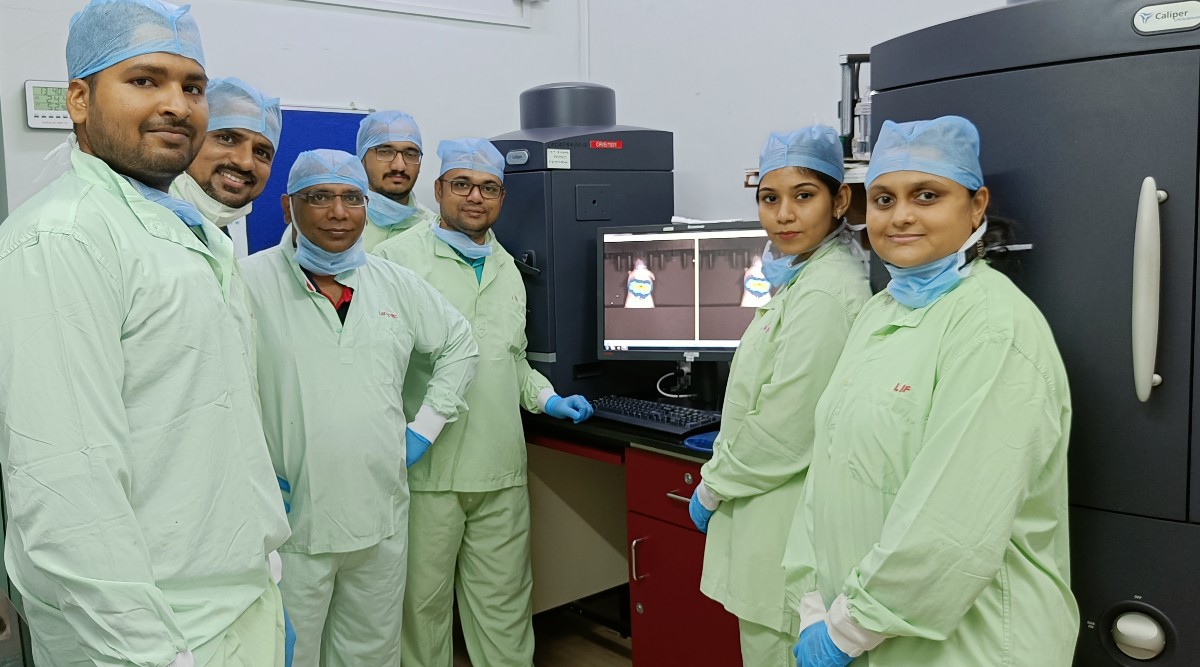
The study published recently in the journal Translational Oncology has recommended using NSG over conventional technologies. (Express Photo)The study published recently in the journal Translational Oncology has recommended using NSG over conventional technologies. (Express Photo)

A new study has underlined that a significant proportion of lung cancer patients can remain deprived of treatment with (medication used to treat non-small cell lung carcinomas with specific mutations) if next-generation sequencing (NSG) is not performed on the relapse of the disease. The study published recently in the journal Translational Oncology has recommended using NSG over conventional technologies.

“This would help identify a set of lung cancer patients (25 per cent) who relapse on the first-generation drug (Erlotinib) but also remain negative for a secondary T790M mutation based on conventional technologies,” Amit Dutt, scientist and principal investigator of the study at Tata Memorial Centre-Advanced Centre for Treatment, Research and Education in Cancer (TMC-ACTREC), told The Indian Express.

Lung cancer is the most common cancer among men (11 per cent) and the leading cause of cancer death across the globe (20 per cent). More people die of lung cancer each year than colon, breast, and prostate cancers combined.

The epidermal growth factor receptor (EGFR) gene is one of the most frequently mutated genes in lung cancer. EGFR mutations were discovered in 2004, and it was reported that EGFR inhibitors shrink tumours of lung cancer carrying these mutations, according to the study authors.

Dr Dutt said that they had earlier shown that EGFR mutations occur in 23-25 per cent of lung cancer patients of Indian origin, which is twice the incidence observed among Caucasian patients. “These EGFR mutations tend to occur more commonly among non-smoker women patients, across the globe. Since the approval of EGFR inhibitors to treat EGFR mutation-positive lung cancer patients, the median survival of stage IV lung cancer patients has increased from around seven to above 40 months, and beyond,” he said.

Patients treated with Erlotinib, a first-generation EGFR inhibitor, eventually develop resistance to the drug. Around 50 per cent of patients develop a secondary T790M mutation in the EGFR gene. The T790M mutation-positive tumours, though, retain sensitivity to a third-generation EGFR inhibitor, Osimertinib. However conventional technologies used in clinics – such as Sanger sequencing or real-time PCR, due to their low resolution, fail to detect the mutation when the number of mutant EGFR molecules occur at lower than 5 per cent of all EGFR molecules in a tumour cell.

In this study, Asim Joshi and Dr Ashwin Butle, from the Dutt laboratory at ACTREC-TMC, in collaboration with Dr Kumar Prabhash and Dr Vanita Noronha from Tata Memorial Hospital-TMC, sampled 16 patients who were EGFR mutation-positive at initial diagnosis, but were negative for the T790M mutation, following the relapse of cancer, using routine clinical diagnostics. These samples were resequenced using an advanced NGS technology to interrogate for mutations likely to have been missed using conventional technology.

Story continues below this ad

“Interestingly, four of 16 patients with relapsed tumours were found to be positive for EGFR (T790M) mutation that was earlier diagnosed as negative in clinics,” Dr Dutt said adding that the higher sensitivity of the NGS platform could detect 25 per cent more patients who may be false negative based on the routine methodology.

To understand the physiological relevance of EGFR (T790M) mutation occurring at low frequency in a lung tumour, the group developed an erlotinib-resistant lung cancer cell line in the laboratory by treating the lung cancer cells with a low dose of erlotinib for a prolonged period of one year. They also found that the presence of T790M mutation occurring at such low frequency was found to be adequate to make the cells resistant to erlotinib.

These cells were genetically tagged and implanted in the lung muscles in mice to develop an intricate orthotopic lung cancer mouse model for the first time in the country to monitor disease progression and perform small animal PET-scan imaging at the inhouse facility at ACTREC-TMC.

Newsletter | Click to get the day’s best explainers in your inbox

Story continues below this ad

These researchers from the Dutt Laboratory, in a separate study, also showed that a low-dose once a week, Osimertinib treatment, as opposed to daily dosing (that costs above Rs 2 lakh per month), is a possible treatment option in delaying the onset of the disease in post-surgical resection of early-stage tumours.

The low-dose, once-a-week osimertinib has several advantages over daily dosing, including lower toxicity, affordability, ease of administration and delaying or preventing acquired resistance that remains to be explored, Dr Dutt said.

“These are remarkable practice-changing findings that could not only reduce the cost of treatment by one-seventh but also help extend the benefit of the treatment to 25 per cent more lung cancer patients who develop resistance to first-generation EGFR inhibitors. A clinical trial to validate the findings from this study in EGFR mutation-positive lung cancer patients is currently under development at the Tata Memorial Hospital,” Dr Kumar Prabhash added.

Anuradha Mascarenhas is a Senior Editor at The Indian Express, based in Pune. With a career spanning three decades, she is one of the most respected voices in Indian journalism regarding healthcare, science and environment and research developments. She also takes a keen interest in covering women's issues . Professional Background Education: A gold medalist in Communication and Journalism from Savitribai Phule Pune University and a Master’s degree in Literature. Author: She authored the biography At The Wheel Of Research, which chronicles the life and work of Dr. Soumya Swaminathan, the former Chief Scientist at the WHO. Key Focus: She combines scientific accuracy with storytelling, translating complex medical research into compelling public and human-interest narratives. Awards and Recognition Anuradha has won several awards including the Press Council of India's national award for excellence in journalism under the gender based reporting category in 2019 and the Laadli Media award (gender sensitivity -2024). A recipient of the Lokmat journalism award (gender category-2022), she was also shortlisted for the RedInk awards for excellence in journalism-2021. Her debut book At The Wheel Of Research, an exclusive biography of Dr Soumya Swaminathan the inaugural chief scientist of World Health Organisation was also nominated in the Popular Choice Category of JK Paper AUTHER awards. She has also secured competitive fellowships including the Laadli Media Fellowship (2022), the Survivors Against TB – New Research in TB Media Fellowship (2023) and is part of the prestigious 2025 India Cohort of the WomenLift Health Leadership Journey.” Recent Notable Articles (Late 2025) 1. Cancer & Specialized Medical Care "Tata Memorial finds way to kill drug-resistant cancer cells" (Nov 26, 2025): Reporting on a breakthrough for triple-negative breast cancer, one of the most aggressive forms of the disease. Discipline, diet and purpose; How a 97-year-old professor defies ageing'' (Nov 15, 2025) Report about Prof Gururaj Mutalik, the first Head of Department at Pune's B J Government Medical College who at 97 credits his longevity to healthy habits and a strong sense of purpose. 2. Environmental Health (The "Breathless Pune" Series) Long-term exposure even to 'moderate' air leads to chronic heart, lung, kidney issues" (Nov 26, 2025): Part of an investigative series highlighting that even "safe" pollution levels are damaging to vital organs. "For every 10 µg/m3 increase in PM2.5 level, there was 6-8% jump in medicine sales" (Nov 23, 2025): Using commercial data to prove the direct link between air quality and respiratory illnesses in Pune. 3. Lifestyle & Wellness News "They didn't let cancer, diabetes and heart disease stop them from travelling" (Dec 22, 2025): A collaborative piece featuring survivors who share practical tips for traveling with chronic conditions. At 17, his BP shot up to 200/120 mmHG; Lancet study flags why child and teen hypertension doubled between 2000 and 2020'' (Nov 12,2025)--A report that focusses on 17-year-old-boy's hypertensive crisis and reflects the rising global trend of high blood pressure among children and adolescents. 4. Scientific Recognition & Infrastructure For promoting sci-comm, gender diversity: IUCAA woman prof highlighted in Nature" (Nov 25, 2025): Covering the global recognition of Indian women scientists in gender studies and physics. Pune researchers find a spiral galaxy like the Milky Way from early universe'' (December 3, 2025)- A report on how Indian researchers discovered a massive galaxy that existed when the universe was just 1.5 billion years old , one of the earliest to have been observed so far. Signature Beat: Health, Science & Women in Leadership Anuradha is known for her COVID-19 reportage, where she was one of the first journalists to provide detailed insights into the Covishield and Covaxin trials. She has a dedicated interest in gender diversity in health and science, often profiling women researchers who are breaking the "leaky pipeline" in STEM fields. Her writing style is scrupulous, often featuring interviews with top-tier scientists and health experts from various institutions.   ... Read More


Click here to join Express Pune WhatsApp channel and get a curated list of our stories

Latest Comment
Post Comment
Read Comments
Advertisement
Loading Taboola...
Advertisement