2 min read

Click here to join Express Pune WhatsApp channel and get a curated list of our stories
© The Indian Express Pvt Ltd



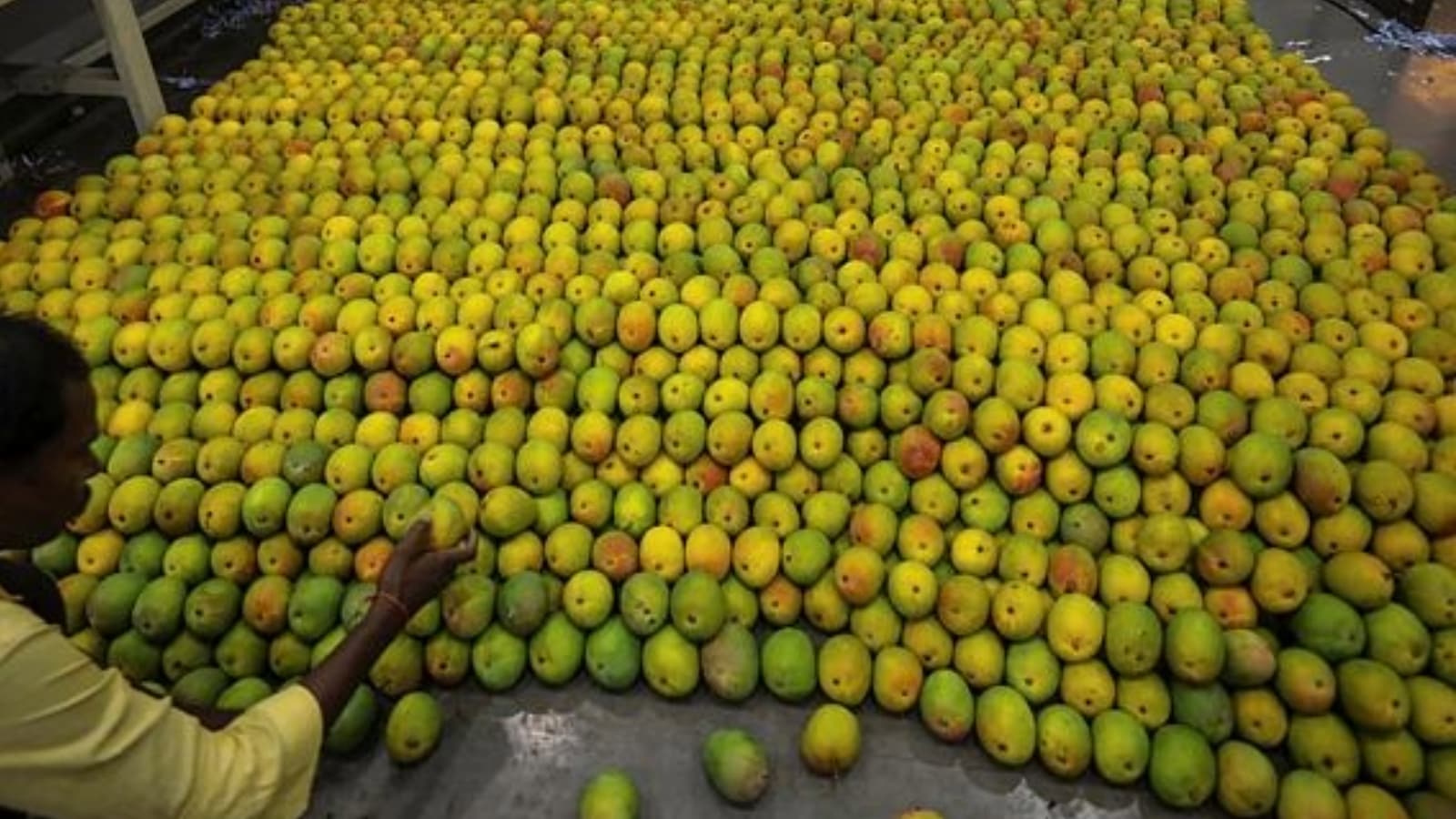 In Pune’s wholesale market, Karnataka mangoes are selling for Rs 200-300 for a dozen. Other mangoes like Lalbaugh (Rs 40-50 per kg) and Payari (Rs 200-300 per dozen) also have seen their prices fall. File photo
Over the last few weeks, Hapus growers from the Konkan region have seen a slump in prices for their produce as arrivals both from Karnataka and Maharashtra have increased across the markets.
The present rate of Rs 800-1,000 for a dozen is just about the average, Mukund Joshi, director of the Hapus Growers and Sellers Cooperative Association, said.
The mango season has started early in Maharashtra thanks to the unexpected flush in the mango orchards of Konkan. Farmers had feared the rain in December would affect the season, but they were pleasantly surprised to see an unexpected flush, which led to fruit formation.
“Hapus from Sindhudurg arrive first in the market followed by those from Ratnagiri and then from Raigad,” he said.
However this season, mango arrivals have suddenly increased in most markets.
Joshi said this was partly because of a good season in Karnataka, where farmers have not seen unseasonal rain, and partly because farmers there decided to send their produce earlier than usual out of fear.
“Most farmers were scared that they would not be able to get better prices and thus harvested the mangoes earlier than usual. They are sending them to the markets,” he said.
This glut has ensured a steady dip in the prices of Hapus and other mango varieties.
In Pune’s wholesale market, Karnataka mangoes are selling for Rs 200-300 for a dozen. Other mangoes like Lalbaugh (Rs 40-50 per kg) and Payari (Rs 200-300 per dozen) also have seen their prices fall.
Joshi said the present price commanded by farmers (Rs 800-1,000 per dozen) was fair but lower than the normal March-end price.
“This year farmers expect to harvest a good crop. Thus prices can dip in the days to come,” he said.