3 min read

Click here to join Express Pune WhatsApp channel and get a curated list of our stories
© The Indian Express Pvt Ltd



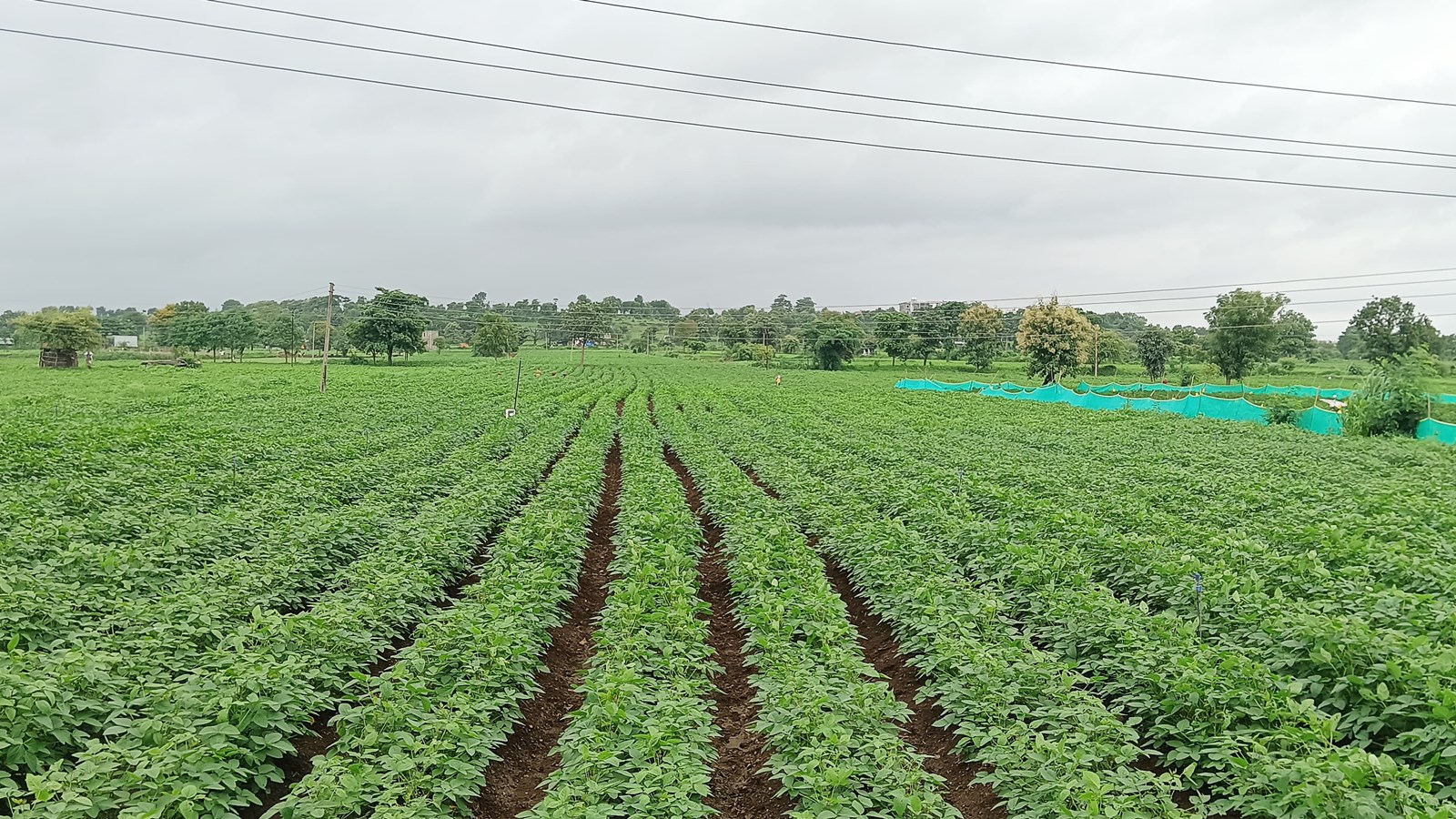 Introduced in 2020 in the Marathwada and Vidarbha areas of Maharashtra, the BBF system was devised to help farmers in rain-fed areas tide over moisture stress during periods of a long break in rainfall.
This is the second year in a row that Bhagwan Jadhav has sown soybean over raised beds on his nine acres of land in Kolwad village in Maharashtra’s Buldhana district. This July was exceptionally wet, with almost all fields in the village being waterlogged. But not Jadhav’s fields.
“The furrows between the beds ensured quick draining of the water from the fields. This method is a gamer changer both during floods and also during moisture stress,” said Jadhav, speaking about a method of cultivation he adopted after his son, who works for the state agriculture department, introduced him to it.
What Jadhav and other farmers call raised beds is technically called the broad bed and furrow (BBF) method of cultivation. In simple terms, this involves dividing the field into broad beds, each 1.2 m wide and 6 inches high. The distance between the two beds is normally 0.3 m and an acre of land for soybeans normally accommodates 50-65 such raised beds.
Introduced in 2020 in the Marathwada and Vidarbha areas of Maharashtra, the BBF system was devised to help farmers in rain-fed areas tide over moisture stress during periods of a long break in rainfall.
“The raised beds helped in conserving soil moisture better,” said Vijay Kolekar, agronomics and soil science specialist of the Maharashtra government’s Project on Climate Resilient Agriculture (PoCRA). This was one of the many interventions adopted to help Maharashtra farmers tide over the vagaries of nature, he added.
For farmers in Vidarbha and Marathwada, regions that have witnessed unexpected changes in the weather over the years, it was excess rainfall, especially during the retreat of the monsoon, that was a major concern. Quality concerns would pull down the prices of crops if it rained during harvest. But farmers say BBF, one of the many methods being experimented with in Maharashtra to climate-proof crops, is allowing them to protect their harvest to a great extent.
More and more farmers in the state are now adapting to this method of cultivation to help them tide over both floods and monsoon breaks.
According to Kolekar, around 20 per cent of the 40 lakh hectares of soybean area of the state has now adopted this method of cultivation. “We have ensured that BBF machines are available at every custom hiring centre of the state – this helps during the kharif sowing window,” he said.
Three years ago, Pushpa Kuhire had adopted the BBF method of cultivation on her 2 acres of land in Belora village in Jalna district’s Mantha taluka. Kuhire said this method has not only helped to save her crop from water logging, it has also helped save on seed usage. “Normally, an acre of soybean sown in the normal way would require 30 kg of seed but this method entails seed usage to just 18-20 kg,” she said.
According to Kuhire and Jadhav, the BBF method of cultivation has helped them harvest an average of 10-12 quintals per acre as against their normal yield of 3-6 quintals of soybean. The BBF method can also be used for crops like maize, tur, cotton etc.