6 min read
Click here to join Express Pune WhatsApp channel and get a curated list of our stories
© The Indian Express Pvt Ltd



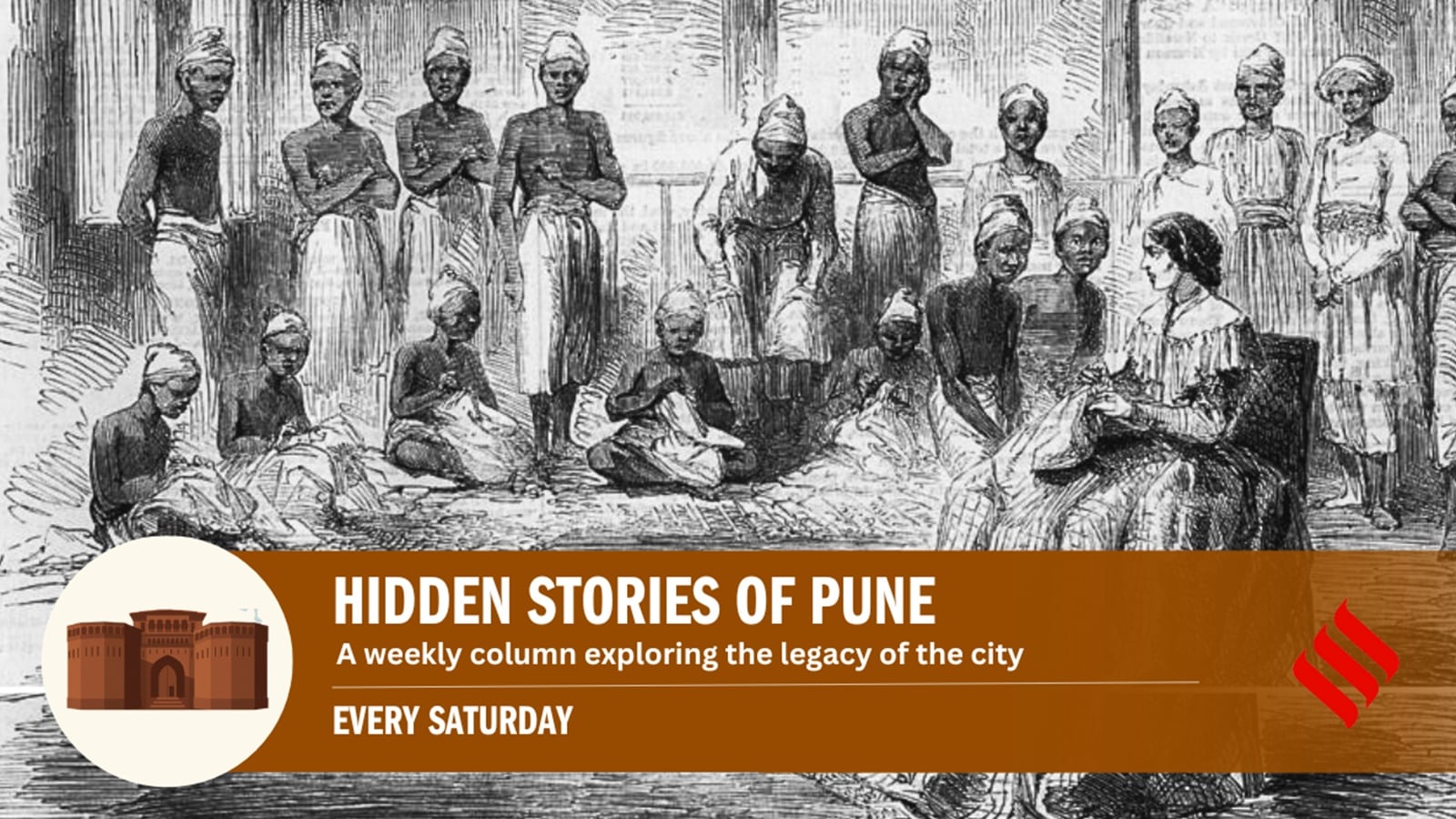 An illustsration depicting an Indian reformatory school (Credit Wikimedia)
Mary Carpenter, the pioneering educationist, evangelist and social reformer, known for her work of establishing the famous Red Lodge reformatory in Bristol, visited India in 1866. During her six-month stay, she travelled widely speaking with Indian elite and reformers and advocating, among other things, for the setting up of ‘reformatory institutions’ for juvenile delinquents.
“The subject of reformatories not having yet engaged public attention in India, as it has in England, the nature and working of such institutions, as they exist in England, France, and Germany, does not appear to be understood here,” Carpenter wrote in her travelogue published soon after she returned to Bristol.
She noted that there was opposition to the idea from some government quarters owing to the general policy of ‘non-interference’ in religious matters and as the moral education in such reformatories in England heavily relied on Christian teachings, it may assume a proselytising form that may create local objections.
Nevertheless, she held consultations with several government officials as well as community leaders in the country proposing that “two or three such reformatories, established in different parts of the country, where the greatest facilities present themselves, and where they can be under the superintendence of some gentleman interested in the object would serve as model schools.”
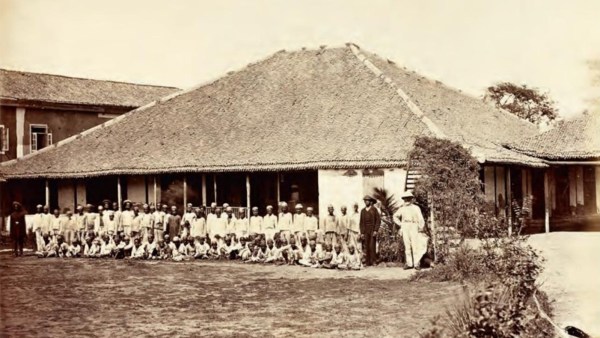 David Sassoon Reformatory (Credit British Library)
Miss Carpenter, however, was impressed with an existing reformatory in Bombay and was confident that it may serve as a model for others to come.
Dr E Buist’s initiative and David Sassoon’s philanthropy
In 1843, a philanthropist by the name Dr E Buist started a ‘Ragged School’ on the European lines in Sewri in Bombay. It operated for over a decade through personal funds of Dr Buist and public contributions. In the year 1857, when the school faced grave financial constraints, David Sassoon offered to provide a new building to house the reformatory at Chunam Kiln Road and also offered cash of Rs 30,000 on the condition that the government matched his contribution and also appointed staff to manage the reformatory. The offer was accepted by the government and the institution became known as David Sassoon Industrial and Reformatory Institution.
For decades, this was the only such institution in the Bombay Presidency.
Enactment of Reformatory Schools Act 1876 and setting up of reformatory at Pune
Until 1876, there was no special legislation in India to deal with juvenile offenders who were kept in general jails with adult convicts and habitual criminals. After Miss Carpenter’s efforts during her India tour, there were discussions between 1866 and 1868 to enact a special law to deal with young offenders, but these came to fruition only in 1876 when the Government of India passed the Reformatory Schools Act.
The act empowered the state governments to establish reformatory schools for young, male offenders.
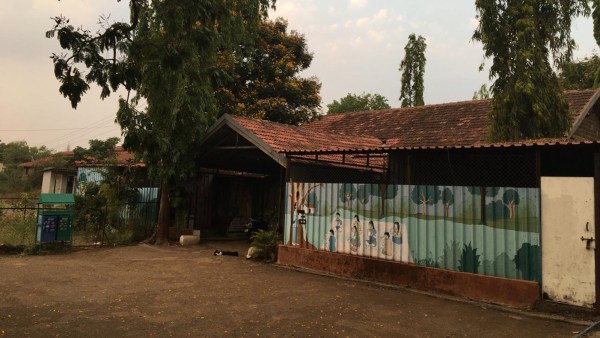 The reformatory was notified as an observation home for juveniles in conflict with law in 2009. (Express photo)
“This legislation, therefore, implied the first official recognition of the principle that juvenile offenders need to be ‘educated’ rather than punished and that they should be completely separated from the older and more hardened criminals,” observes S S Bhandarkar in his ‘A Review of Education in Bombay State (1855-1955).
The first such institution to come up under the new law was in Yerwada in Pune in 1889. It has an infrastructure to train the inmates in industrial trades, including that the inmates would find useful to find legal employment after discharge from the institute apart from facilities for education and recreation. In the first year, the reformatory had received 60 inmates.
In many aspects, however, the reformatory school was like a jail as many in the government believed that a reformatory was only a jail for younger criminals in a new name. “…the site for the school was selected near a general jail and the plan of its buildings was so drawn up that it looked more like a jail than a school,” observes Bhandarkar, adding that the corporal punishment such as caning and flogging was common so was long hours of confinement, detection and penal diet.
The situation remained the same for over a decade. In 1897, the reformatory schools law was revised as ‘The Care and Education of Socially Handicapped Children, 1897’ which envisaged a better understanding of the education of juvenile delinquents. It was observed that of all the reformatory schools that were present in British India at that time, only one in Madras’s Chengalpattu was under the education department and it had borne better results.
While the transfer of the management of the Yerwada reformatory school from the Jail Department to the Education Department had met with some resistance from the administration, in 1900 the transfer finally took place leading to “real improvement in their tone and discipline” making them resemble residential educational institutions.
Yerwada reformatory school now
In 1936, the reformatory was redesignated as ‘Yeravada Industrial School Poona’ and February 1990 it became s Pandit Jawaharlal Nehru Udyog Kendra and turned into a care home for destitute children. In 2009, it was notified as an observation home for juveniles in conflict with law in 2009.
At present, it has a sanctioned capacity of 100 children under three heads – observation home for children detained for various crimes with a capacity of 50; a special home for children held for serious crimes with a capacity of 25; and a care and protection home for destitute children with a capacity of 25.