Click here to join Express Pune WhatsApp channel and get a curated list of our stories
© The Indian Express Pvt Ltd
 5 min read


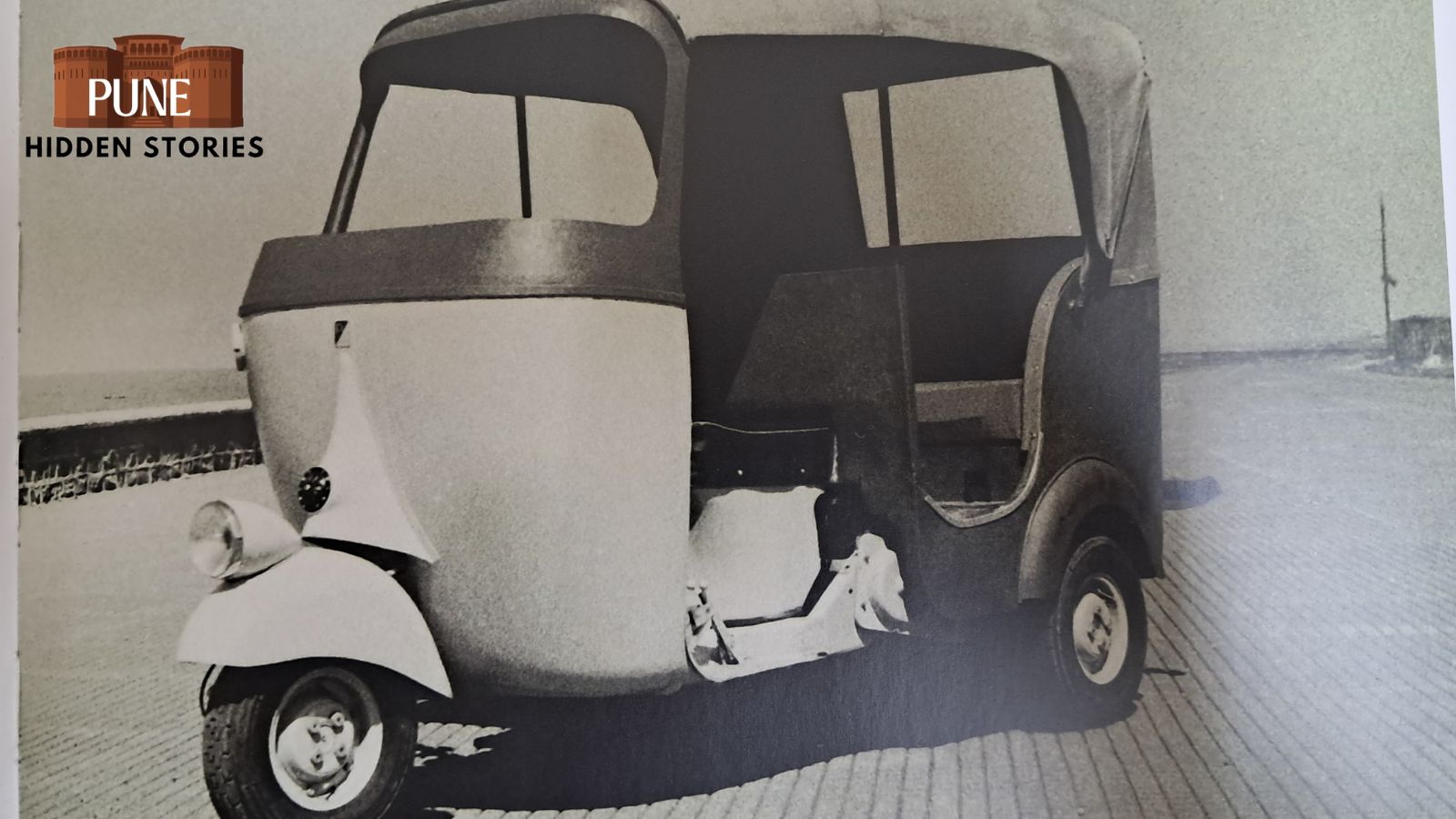 After much efforts the auto-rickshaw took its near-contemporary form. (Express Photo)
It is not known who first made the wise observation that an auto-rickshaw can go where no car can. What is better known is the story of the Maharashtra lawyer who became an entrepreneur, coined the name ‘auto-rickshaw’ and introduced these three-wheeled vehicles to India, thus changing the way the country travelled.
Meet Navalmal Kundanmal Firodia. His name is associated with a number of institutions, such as the Deccan Education Society’s Shri Navalmal Firodia Law College on Pune’s FC Road, but auto-rickshaws across the country do not make any reference to him, resulting in a significant chapter of road history getting left behind.
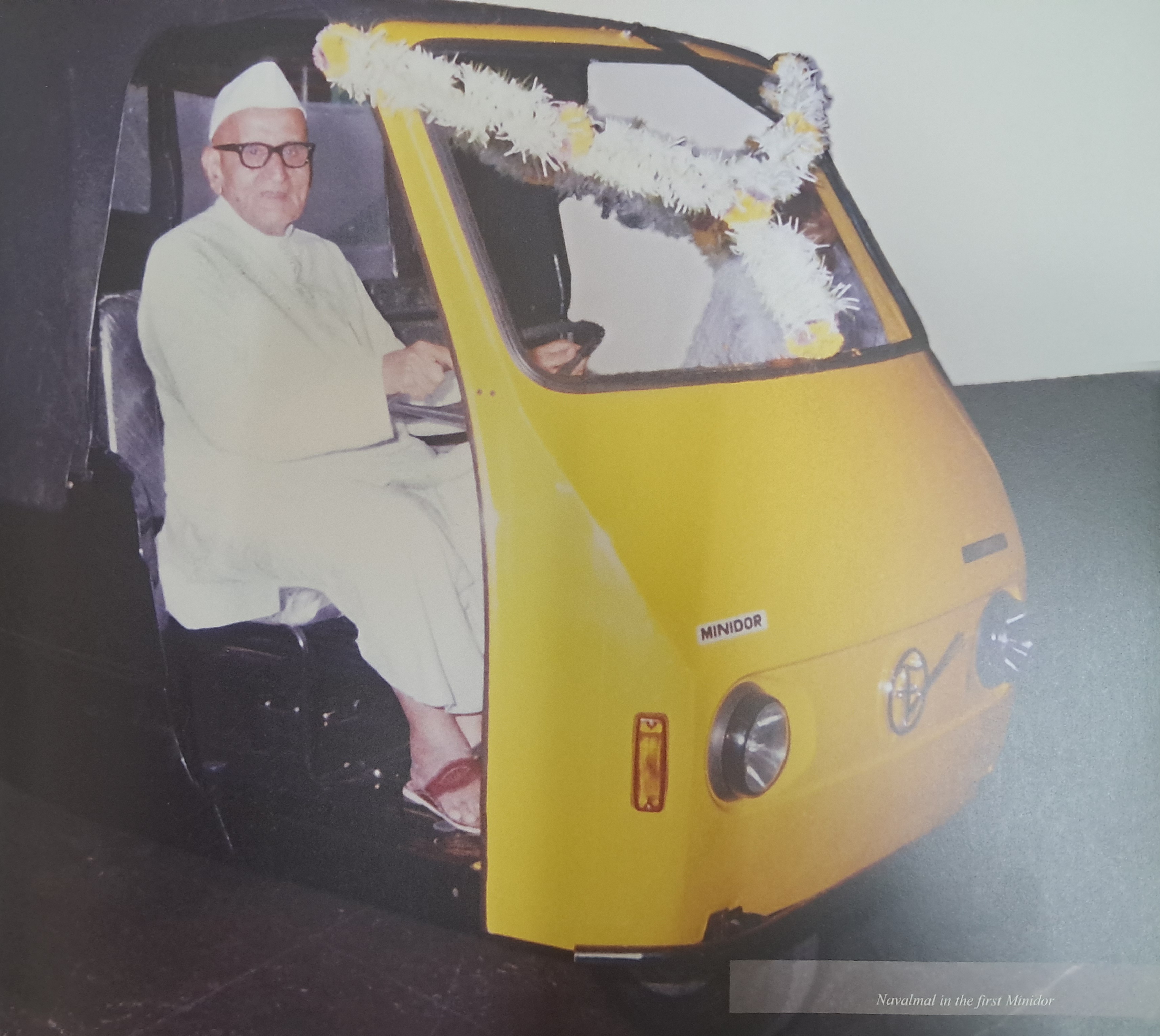 Navalmal in first matador. (Express Photo)
Navalmal was born on September 9, 1910, the eldest child of Bhausaheb and Bayjabhai Firodia, a prominent family from Ahmednagar. He launched his career as a lawyer – like his leader Mahatma Gandhi – in Ahmednagar in 1936 but was caught in the currents of the freedom struggle.
“My father and my grandfather were participants in the freedom struggle in 1942 in Pune. They both had a firm nationalistic stance. My father, at the age of 22, spent one-and-a-half years in jail. In 1942, as the colonial rule was weakening and there was hope of Independence, my father discussed with his friend that he would stop practising law and start his own business after being released from jail. But, he didn’t know what kind of business he would get into. After he came out of jail in 1942, my father wound up his court cases and started Jaya Hind Industries,” says Abhay Firodia, Navalmal’s son and chairman of Force Motors.
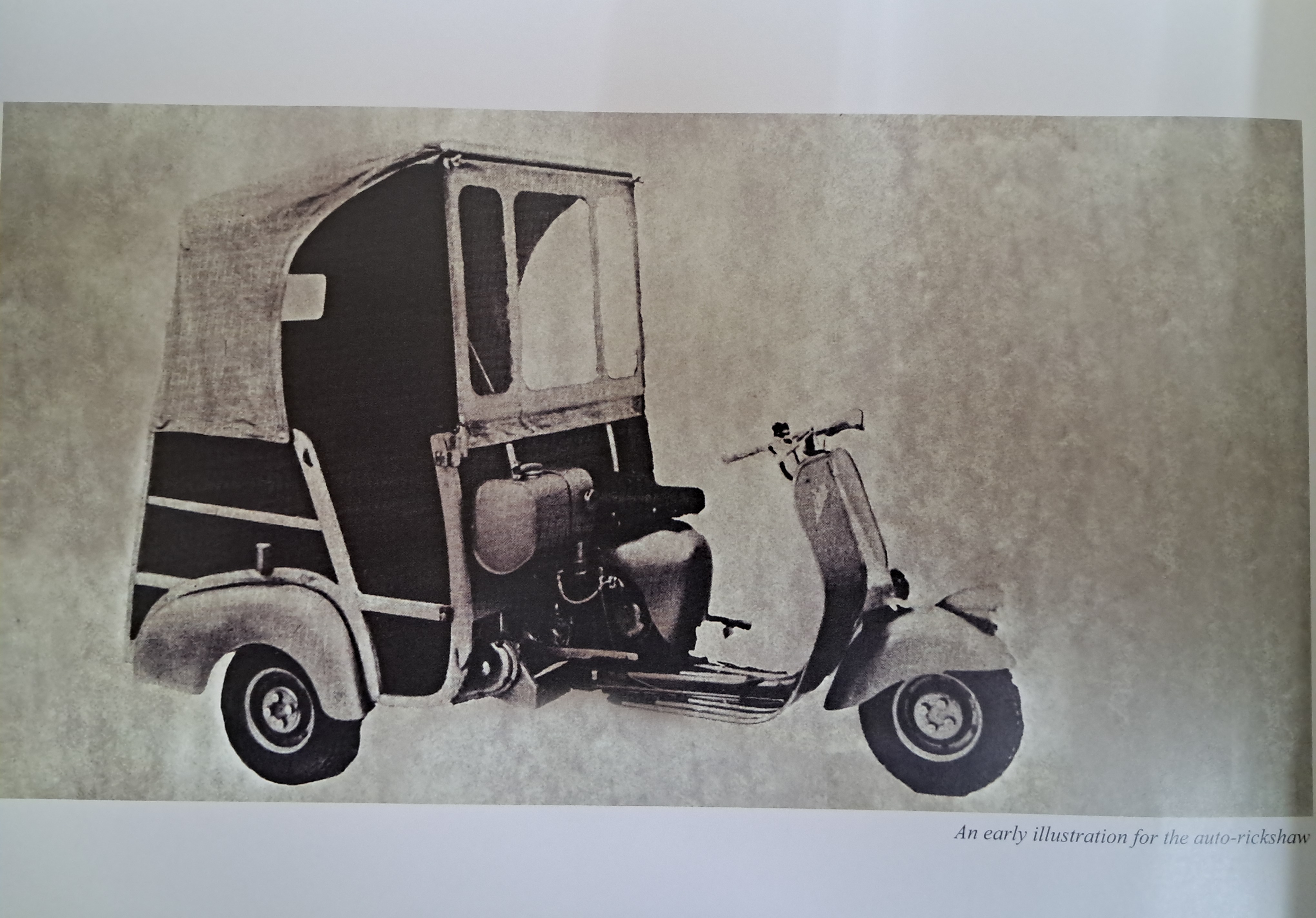 An early illustration for the rickshaw. (Express Photo)
It was an early indication of Navalmal’s acumen that he grew fast as a businessperson. He began as an agent for Woodstock Typewriters in Bombay and, then, acquired the Modern Foundry in Ahmednagar. This was to be his first experience in running an industry. Subsequently, he established the first office of Jaya Hind Industries at the Fazalbhoy Building at Flora Fountain in Bombay.
The turning point came when Navalmal learnt that the government was seeking to ban bicycle rickshaws. The inhuman condition of cycle-rickshaw pullers had been raised by a member of the legislative assembly of Bombay in February 1947. None other than Morarji Desai, then home minister of the Bombay province, said that cycle-rickshaws should be taken off the road. A new question arose regarding what to do to ensure easy road transport for the people after the ban.
Navalmal’s solution was to create a low-cost form of transport. Someone suggested that rickshaws should be motorised, and this sparked an idea in him. Navalmal put togethe r the concept of the auto-rickshaw. For this, Jaya Hind Industries entered into a partnership with Bachraj Trading Company, a Bajaj company. The official papers regarding this deal were signed in 1948.
“My father bought parts of a three-wheel chassis from Piaggio in Italy, made several iterations of it, and created his design for the auto-rickshaw. It was as grand as an elephant’s seat. Today, around 60,000 auto rickshaws are made each month,” says Abhay.
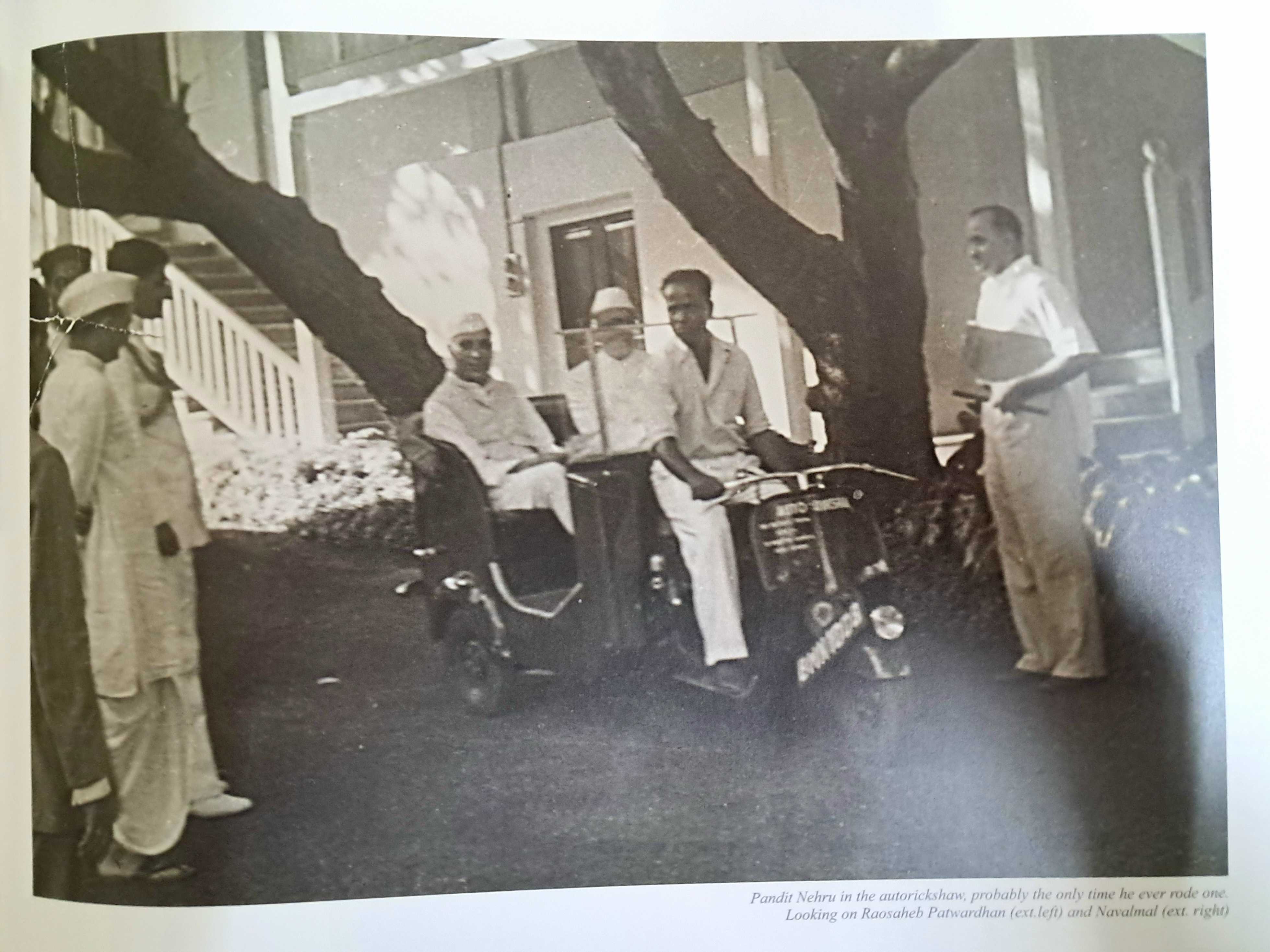 Pandit Nehru in the autorickshaw, probably the only time he ever rode one Looking on Raosaheb Patwardhan (ext.left) and Navolmal (ext, right). (Express Photo)
In a book on his father by the Shri Firodia Trust, Abhay mentioned how Navalmal roped in his friend, Raosaheb Patwardhan, and ensured that the new vehicle was presented before Jawaharlal Nehru at a Congress session in Bombay in April 1948. India’s first Prime Minister made a tour around the Government House in the auto-rickshaw and was fascinated. When Navalmal applied to register and operate auto-rickshaws for public conveyance, Morarji Desai gave it his stamp of approval.
As with many new ideas, auto-rickshaws did not take off immediately. The first centre for auto sales was started in Pune in 1949, but only six vehicles were sold. A second centre in Hyderabad received an equally dismal response. According to the book, the vehicle received help from an unusual quarter.
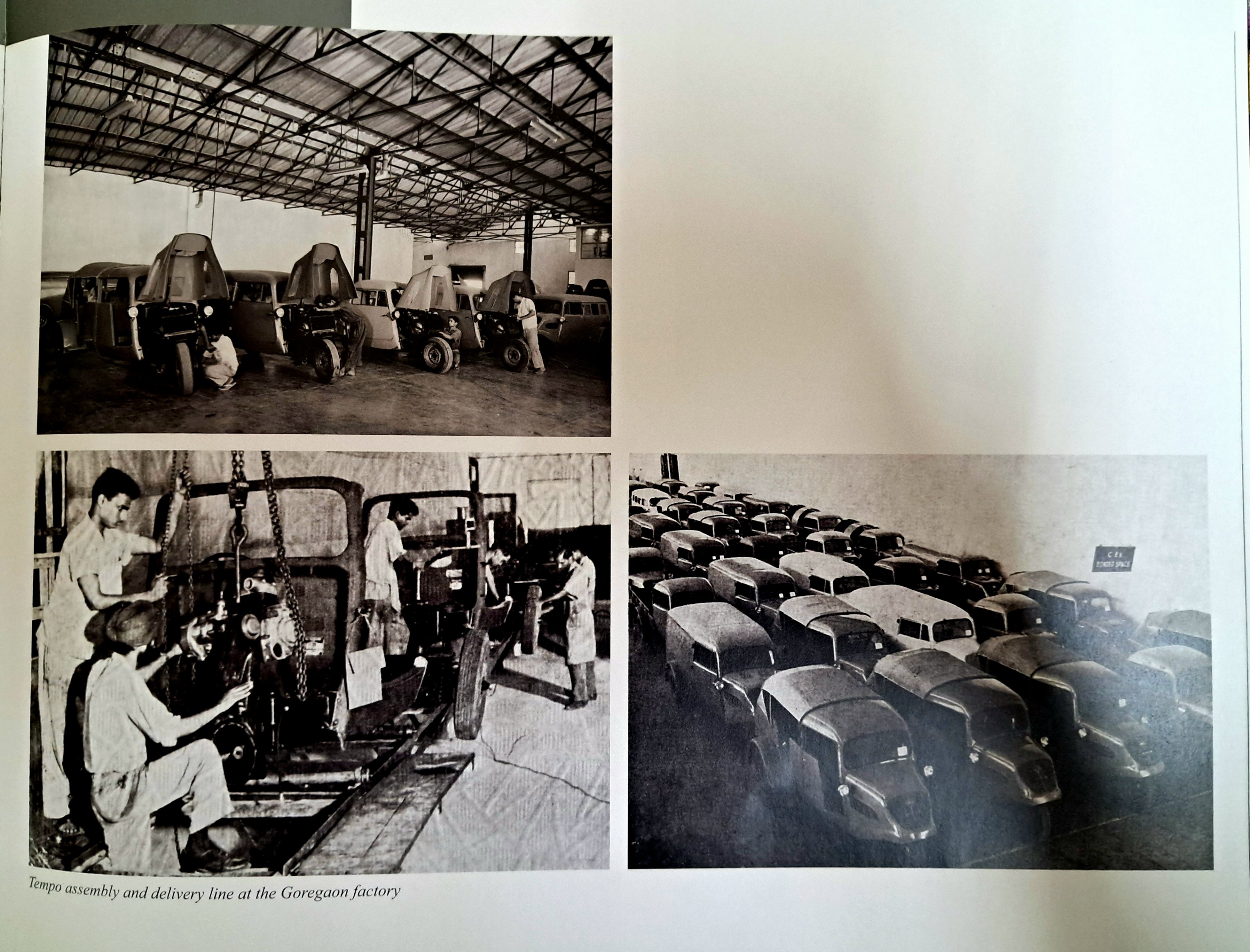 Tempo assembly and delivery line at the Goregaon factory. (Express Photo)
His Highness Aga Khan visited the Aga Khan Palace in Pune during his stay in India. As a result, Muslims began to travel from far-off places to Pune to pay their respects to him. The crowd that travelled from Bombay to Pune soon found that an auto-rickshaw could complete the journey from the station to the palace and back in 40 minutes as opposed to the four hours taken for a round trip by tongas.
The few auto-rickshaws available on the road made hefty profits every day. Soon, other drivers took up the vehicles. The horse races gave auto-rickshaws another fillip. By the end of 1949, Navalmal’s vision to have an affordable mode of transport for Indians had become a reality. And remains so to this day.