

Journalism of Courage

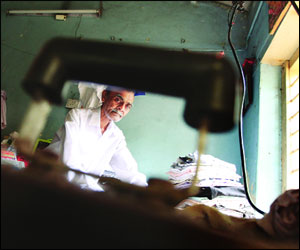
A Dhobi at the Film and Television Institute of India,Tukaram Gaikwads association with the temple of filmmakers dates back to 1935
1935,Prabhat Studio,Pune. A dhobi,his eyes brimming with excitement,walks up to director V Shantaram,shares the happy news that he got a baby boy. Shantaram,smiles and says his Sant Tukaram will go on floor soon. So,why not name the baby,Tukaram.


Though his eyesight is giving him trouble now,everything is crystal clear in Tukaramjis memory.
Prod him a bit and he will tell you how Jaya Bhaduri (now Jaya Bachhan) borrowed his younger brothers wifes jewellery for her student film,when she attended the satyanarayan pooja at his place with Rahana Sultana. And how showman Shubhash Ghai saw Ganga Jamuna because of him. He still gives me the credit of watching the blockbuster hit. When he was a student here,his money order did not arrive when Ganga Jamuna was released and Asrani and he wanted to watch the film. They came to me to borrow Rs 10. That time it was not note but chillars so I produced a handful of chillars in front of him and he picked the necessary amount. It was then and even today he says he watched Ganga Jamuna because of me, reminisces Tukaram Narayan Gaikwad,whose association with the institute dates back to 1935.
For Tukaramji,if Subhash Ghai was one of the most generous students,Asrani,Ghais batchmate,was one from the most miserly lot. Ghai toh raja aadmi the. He will pay his bills in time,will treat you to a cup of tea every now and then, he grins.
Growing up with the Prabhat Studio and amongst lights,camera and action,Tukaram ji fondly remembers his days as an employee of the studio.
The silver batch with Prabhat Studio logo,Gadge Baba Maharajs visit to Prabhat Studio,the construction of sets and a lot more stories tumble out from his treasure trove of memories. In the 1940s,when we went to Pandharpur on a family trip,we were treated with immense respect because my father was an employee of Prabhat Studio and we were wearing silver batches,the trademark of the studio, he says.
Social reformer Sant Gadge Babas visit to the studio is one of his most cherished memories. I was thrilled when our guru had come to visit a set where a dam was made for shooting purpose, he shares.
Tukaramji was born when his father Narayan Gaikwad was working as a laundry man with the Prabhat Film Company. After the disintegration of the company,Gaikwad,with his family of three sons (Tukarams brothers Namdeo Narayan Gaikwad and Ramchandra Narayan Gaikwad) and two daughters,chose to stay back in the premises of the studio. However,when the studio was taken over by the government and the Film and Television Institute of India came to existence in 1960,the 28-year-old dwelling of the Gaikwads was under threat. The institute did not have any post for a dhobi so the family was asked to vacate the quarters they were living in. We were asked to leave the place as we were employees of the studio. We were obviously heartbroken. For 25 years if you live in a place,it becomes more than just a home for you, says Tukaramji. But then the first principal of the institute,actor Gajanan Jagirdar came to the familys rescue. He put forth the proposal that we will live in the quarters and whatever we will earn by doing laundry will be our earning and the government need not pay us. Since then we have been living in the quarters and we are grateful to Jagirdar and the institute, he says.


