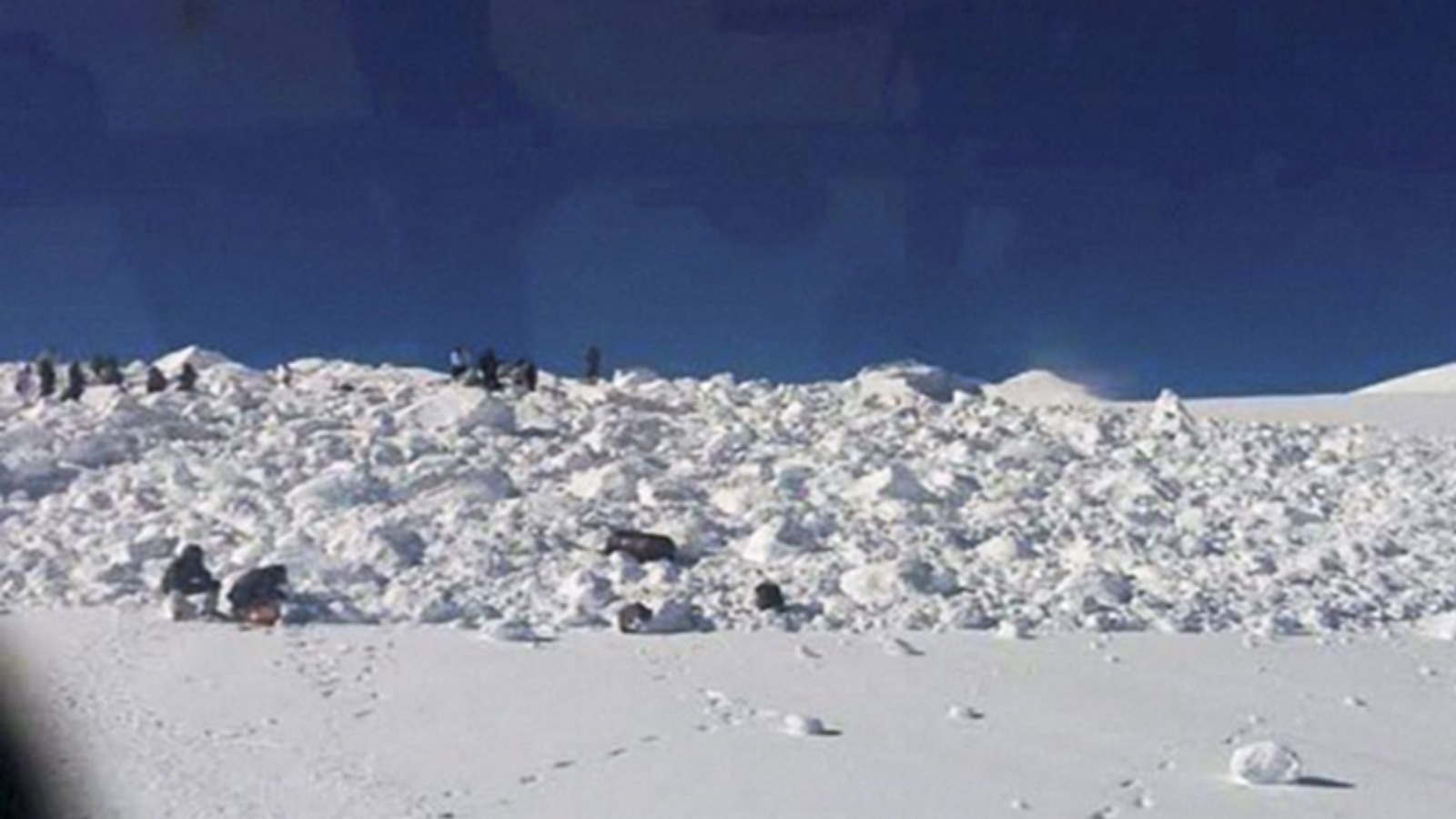
At COP30, scientists want aggressive action on emissions to save cryosphere
In a study released to coincide with the ongoing COP30 in Brazil, leading cryosphere scientists have said that there is still a small window to prevent the worst-case scenario and provide hope for the cryosphere and the populations that depend on it.
The report is published by the International Cryosphere Climate Initiative (ICCI), a global network of scientists, researchers, and policy experts working to understand and preserve Earth’s cryosphere. (File)
It is a relatively small glacier for Antarctica, but soon, the Hektoria glacier might stop existing altogether. It has lost half its ice in two months. On the polar opposite, Greenland is fast shedding its vast ice sheets. From across the world, the message is unanimous — the planet is losing ice at a record pace as temperatures continue to rise. Left unchecked, this means disaster for billions of people.
In a study, ‘2025 State of the Cryosphere Report’, released on November 6 to coincide with the climate change conference, COP30, in Belem, Brazil, which is being held from November 10 to 21, more than 50 leading cryosphere scientists have said that there is still a small window to prevent the worst-case scenario, and provide hope for the cryosphere and the populations that depend on it.
The report is published by the International Cryosphere Climate Initiative (ICCI), a global network of scientists, researchers, and policy experts working to understand and preserve Earth’s cryosphere.
1.5°C by 2100 is possible
The scenario looks challenging at present. The ICCI report comes at a time when global temperatures are expected to exceed 1.5°C above pre-industrial levels within the next decade. According to the latest United Nations Environment Programme’s Emissions Gap Report, “even if countries live up to their Nationally Determined Contributions (NDCs) to reduce greenhouse gas emissions – and that’s a big ‘if’ – the world will warm by 2.3°C to 2.5°C by the end of the century”.
Even 1°C of warming is enough to disrupt the stability of polar ice sheets, and many glaciers will start melting at a lower temperature. These temperature overshoots are likely to increase cryosphere loss, resulting in higher sea-level rise, impacted water supply, and greater polar ocean acidification.
According to the report, however, proactive climate pathways can bring temperatures down below 1.5°C by 2100 and below the 1°C mark in the next century — but only if aggressive emission cuts begin immediately in 2025 itself.
“Neither the panic nor resignation is necessary. Ice indeed will continue to be irreversibly lost so long as greenhouse gases continue pouring into our atmosphere. That is a physical fact…. an equally physical fact is that there are feasible pathways that address the root fossil fuel causes of global warming, and halt the current global insanity that would lock in thousands of years of human suffering and species loss,” writes Pam Pearson, Director and Founder, ICCI.
Ambitious pathways
Story continues below this ad
The report highlights the measures or Highest Possible Ambition (HPAs) developed by Climate Analytics and the Potsdam Institute that might return temperatures to 1.5°C or below by 2100, even after higher levels of overshoot of 1.7–1.8°C.
The first step is to phase out fossil fuels, beginning with the power and transport sectors, where cost-effective alternatives have already been developed. Fossil fuel phase-out can begin with coal in the 2040s, followed by gas in the 2050s and, then, oil in the 2060s.
Other measures include halting and reversing deforestation, cutting emissions of methane and black carbon from sources such as agriculture and household and waste sectors, and, finally, scaling up land-based carbon dioxide removal to bring about a temperature decline. Reducing emissions alone can have a positive impact on the cryosphere, especially by checking permafrost thaw and reflective sea ice loss.
The measures anticipate a tripling of energy demand by 2050, which is expected to be met by a tripling of all renewables by 2030, a six-time increase by 2035, and a 15-time increase by 2050, based on the rapid expansion of recent years.
Story continues below this ad
“These steps would bring us to net zero greenhouse gas emissions in the 2060s. After that, feasible methods of carbon dioxide removal can bring down temperatures to as low as 1.2°C – lower than today’s temperatures. By 2150, we can be below the 1°C mark that major findings, published just this year, have indicated as the true safe planetary boundary for both ice sheets and mountain glaciers,” writes Pearson.
Dipanita Nath is a Senior Assistant Editor at The Indian Express, based in Pune. She is a versatile journalist with a deep interest in the intersection of culture, sustainability, and urban life.
Professional Background
Experience: Before joining The Indian Express, she worked with other major news organizations including Hindustan Times, The Times of India, and Mint.
Core Specializations: She is widely recognized for her coverage of the climate crisis, theatre and performing arts, heritage conservation, and the startup ecosystem (often through her "Pune Inc" series).
Storytelling Focus: Her work often unearths "hidden stories" of Pune—focusing on historical institutes, local traditions, and the personal journeys of social innovators.
Recent Notable Articles (December 2025)
Her recent reporting highlights Pune’s cultural pulse and the environmental challenges facing the city during the winter season:
1. Climate & Environment
"Pune shivers on coldest morning of the season; minimum temperature plunges to 6.9°C" (Dec 20, 2025): Reporting on the record-breaking cold wave in Pune and the IMD's forecast for the week.
"How a heritage tree-mapping event at Ganeshkhind Garden highlights rising interest in Pune’s green legacy" (Dec 20, 2025): Covering a citizen-led initiative where Gen Z and millennials gathered to document and protect ancient trees at a Biodiversity Heritage Site.
"Right to breathe: Landmark NGT order directs PMC to frame norms for pollution from construction sites" (Dec 8, 2025): Reporting on a significant legal victory for residents fighting dust and air pollution in urban neighborhoods like Baner.
2. "Hidden Stories" & Heritage
"Inside Pune library that’s nourished minds of entrepreneurs for 17 years" (Dec 21, 2025): A feature on the Venture Center Library, detailing how a collection of 3,500 specialized books helps tech startups navigate the product life cycle.
"Before he died, Ram Sutar gave Pune a lasting gift" (Dec 18, 2025): A tribute to the legendary sculptor Ram Sutar (creator of the Statue of Unity), focusing on his local works like the Chhatrapati Shivaji statue at Pune airport.
"The Pune institute where MA Jinnah was once chief guest" (Dec 6, 2025): An archival exploration of the College of Agriculture, established in 1907, and its historical role in India's freedom struggle.
3. Arts, Theatre & "Pune Inc"
"Satyajit Ray, Ritwik Ghatak were not rivals but close friends, says veteran filmmaker" (Dec 17, 2025): A deep-dive interview ahead of the Pune International Film Festival (PIFF) exploring the camaraderie between legends of Indian cinema.
"Meet the Pune entrepreneur helping women build and scale businesses" (Dec 16, 2025): Part of her "Pune Inc" series, profiling Nikita Vora’s efforts to empower female-led startups.
"How women drone pilots in rural Maharashtra are cultivating a green habit" (Dec 12, 2025): Exploring how technology is being used by women in agriculture to reduce chemical use and labor.
Signature Style
Dipanita Nath is known for intellectual curiosity and a narrative-driven approach. Whether she is writing about a 110-year-old eatery or the intricacies of the climate crisis, she focuses on the human element and the historical context. Her columns are often a blend of reportage and cultural commentary, making them a staple for readers interested in the "soul" of Pune.
X (Twitter): @dipanitanath ... Read More


 4 min read