3 min read

Click here to join Express Pune WhatsApp channel and get a curated list of our stories
© The Indian Express Pvt Ltd



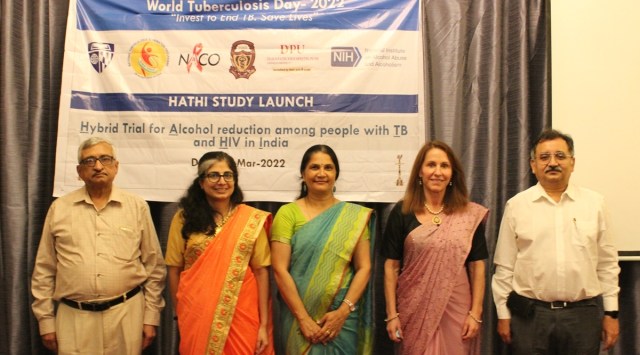 The study will generate evidence to inform about the feasibility and scalability of designing a comprehensive care program for TB /HIV patients with unhealthy alcohol use
US-based National Institutes of Health has funded a hybrid trial for alcohol reduction among people with TB and HIV in India (HATHI) that is set to begin in April in Pune. Johns Hopkins University in collaboration with Pune’s B J Government Medical College and Dr. D.Y. Patil Medical College, Hospital, and Research Center have developed a behavioral intervention to reduce alcohol use among TB/HIV patients.
🗞️ Subscribe Now: Get Express Premium to access the best Election reporting and analysis 🗞️
“We have contextualized the intervention to Indian settings and termed it as `HATHI’ intervention. The study aims at delivering the sessions to the patients with TB and/or HIV at BJGMC and Dr. DY Patil Medical College sites and assess the effectiveness of the intervention in reducing unhealthy alcohol use as well as improving the TB and HIV treatment outcomes. The study will commence in April this year and include 450 patients,” Dr Nishi Suryavanshi, Deputy Director and Coordinator BJGMC-JHU Clinical Research Site and lead investigator told The Indian Express.
Alcohol use among TB patients is one of the major reasons for treatment default, failure, and mortality. With the high prevalence of alcohol use and its association with adverse TB and HIV treatment outcomes in low and middle income countries (LMIC), there is a need to test scalable, culturally relevant, evidence-based interventions so that it can be integrated into TB and HIV/TB care.
The study will generate evidence to inform about the feasibility and scalability of designing a comprehensive care program for TB /HIV patients with unhealthy alcohol use. Dr. Vinayak Kale, Dean, BJ Government Medical College and Dr. Ramji Adkekar State TB Officer have extended support to conduct the study at a recent meeting that was attended by Pune and Pimpri Chinchwad TB programme officers
This behavioral intervention, if successful, would help in improving the TB and HIV treatment outcomes for this vulnerable population and improve their quality of life. There will be two groups – one of persons with TB and another with both co-infections TB and HIV. The intervention is based on cognitive , behavioural and motivational enhancement therapy. There will be four sessions and an assessment will be done after six months, Dr Suryavanshi said.