Journalism of Courage



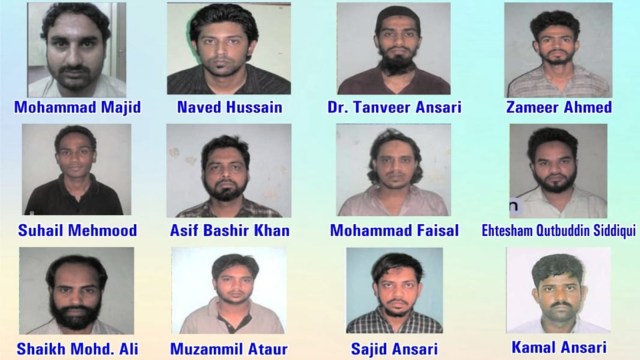 Photos of train blast accused. (Special Arrangement)
Seventeen years after being charged in one of the most devastating terror attacks in the country’s history, all 12 men convicted in the 2006 Mumbai train blasts case were acquitted by the Bombay High Court on Monday.
The court overturned a 2015 verdict by a special court set up under the Maharashtra Control of Organised Crimes Act (MCOCA) that had handed death sentences to five men and life terms to seven others. One person was acquitted earlier.
The case pertains to explosions on seven western suburban coaches in Mumbai, killing 189 commuters and injuring 824 on July 11, 2006. Calling the prosecution’s case flawed and inconsistent, the court flagged unreliable witness testimonies, irregularities in identification parades, and the failure to establish even the type of explosive devices used.
The men, who will walk free this week after spending nearly two decades behind bars, belong to different classes, professions, and regions – from engineers and doctors to shopkeepers and former members of the Students’ Islamic Movement of India (SIMI). Here’s a look at the men who were once convicted of orchestrating the deadly train bombings and will now walk free.
Those on death sentence:
1) Kamal Ahmed Mohammad Vakil Ansari: deceased in 2021
Kamal Ansari, 50, was a resident of Basopatti in Madhubani district of Bihar. He had been accused of receiving arms training in Pakistan and ferrying two Pakistani terrorists from across the Indo-Nepal border and dropping them in Mumbai. He was also accused of planting the bomb that exploded at Matunga.
The youngest son of Vakil Ansari, who served as a tailor in the Indian Army, Kamal was said to have been a frequent visitor to Nepal, which is a 45-minute ride from his village. Kamal, who dabbled in various businesses, including selling poultry meat and repairing cycles, was on the police radar and had earlier been arrested in a counterfeit currency racket.
He was not known to have overtly shown signs of radicalism and was known for spouting dohas (couplets) from Ramcharitmanas, written by Tulsidas.
2) Mohammed Faisal Attaur Rahman Shaikh
Mira Road-based Faisal Shaikh, 50, was accused of being the head of Lashkar-e-Toiba’s (LeT) Mumbai unit and convicted for being the key financier of the Mumbai train blast. He was accused of planning the conspiracy, obtaining hawala money to fund it, harbouring Pakistanis, assembling bombs, and planting them.
Faisal is the eldest of three sons of Attaur Rahman, who worked in Saudi Arabia. The family, which spent some time in Pune, shifted to Mira Road, where Shaikh was allegedly indoctrinated by SIMI. In June 2001, he obtained a legitimate Indian passport, hoping to travel to Pakistan. Six months later, in January 2002, Faisal allegedly crossed the border on the Samjhauta Express and trained with the LeT in Muzaffarabad and Lahore.
The police claimed that he was responsible for indoctrinating both his brothers. One of them was convicted along with him, while another is said to be on the run. It is, however, believed that Faisal was estranged from his family.
3) Ehtesham Qutbuddin Siddiqui
Ehtesham Siddiqui, 42, was charged with harbouring Pakistanis, surveying trains, assembling the bombs, and planting the bomb which went off in Mira-Bhayandar.
The son of Qutbuddin Siddiqui, who worked in the Gulf, Ehtesham Siddiqui left his hometown of Jaunpur in Uttar Pradesh and came to Maharashtra, enrolling himself in an engineering college in Pen. He, however, dropped out soon after and was reportedly drawn to SIMI.
In 2001, he was picked up from a library in Kurla run by SIMI and booked. He had been on the police radar since then. Siddiqui subsequently started his own publishing business, printing books under the Shahadah Publishing House brand. Siddiqui also served as an office-bearer of SIMI’s Maharashtra unit.
The police claimed to have seized jihadi literature, including books like Jihad Fi Sabilillah (Crusade in the Name of Allah) and Jihadi Azkaar (Tales of Crusaders). Interestingly, these “objectionable books” were found to be freely available across Mumbai at the time in bookstalls.
4) Naveed Hussain Khan Rasheed
Call centre employee Naveed Rasheed, 44, was supposed to have helped in assembling the bombs and planting the device that exploded in Bandra.
Rasheed was born in Kuwait and is supposed to have returned with his family after the death of his mother. According to reports, his mother was a Pakistani citizen who worked as an Islamic teacher in Kuwait. The family had purchased a flat in Mira Road, and Naveed had developed a strong friendship with Faisal Shaikh, who was said to be the person to chiefly fund the conspiracy.
Rasheed had moved to Secunderabad, where he was working in a call centre. Police, however, claimed that he was in touch with all the accused and was in Mumbai when the blast took place. He was arrested from Secunderabad.
5) Asif Khan Bashir Khan
Asif Khan, 52, was supposed to have harboured the Pakistani terrorists at Mira Road. He was responsible for procuring the pressure cookers and helped in assembling the bombs. He was also accused of planting the bomb that went off in Borivali.
The lanky civil engineer hails from Jalgaon and was a known SIMI member. Two cases were filed against him in Jalgaon, including one involving a pipe bomb. His co-accused were acquitted in the case, but Khan was shown as absconding. He had by then taken up a job at a leading construction firm in Mumbai and was residing in Mira Road.
After the blasts, Khan left the city and shifted to Belgaum. He was the last accused to be arrested in the case. His family, however, claims that he was working in his office when the blast occurred.
Those serving life sentences:
6) Tanveer Ahmed Mohammed Ibrahim Ansari
Tanveer Ansari, 50, is a resident of Agripada and was convicted of attending terror camps in Pakistan and surveying local trains in which the blasts took place.
Tanveer, who has eight siblings, completed his degree in Unani medicine from Nagpur and got associated with SIMI. He denies his association with the outfit but was part of a relief team organised by the group and sent to Gujarat after the January 2001 earthquake. He was picked up months later and booked by the Mumbai police after he was found sitting at a library operated by SIMI, which had been banned by then.
In spite of being booked and under surveillance, Tanveer was allowed to fly to Iran in 2004 for what he claimed was a pilgrimage. He was later picked up by the Mumbai police in 2006 from an Intensive Care Unit of a hospital, where he was treating a patient.
7) Mohammed Majid Mohammed Shafi
Majid Shafi, 46, was convicted for helping six Pakistanis cross over into India through the Bangladesh border. The youngest of 12 siblings, Majid operated a footwear shop in the Raja Bazaar area of Kolkata. The police claimed that he was operating a hawala racket and would frequently cross the porous Indo-Bangladesh border. His family, however, claimed that they had relatives in Bangladesh and visits to the country were frequent.
His family also asserted that the clean-shaven Majid never had any terror links or showed signs of radicalisation. Interestingly, Majid was known to be friendly with local police personnel, and his shop was a regular haunt for beat constables in the locality. He also claimed to have never visited Mumbai in his lifetime.
8) Shaikh Mohammed Ali Alam
Mohammed Ali, 55, was charged with assembling bombs at his house in Govandi with the help of Pakistanis who had sneaked into India.
A resident of Shivaji Nagar, one of the poorest localities in Mumbai, Mohammed Ali worked at a cooperative bank before moving to Dubai. He reportedly returned within a month and started his own business of supplying Unani medicines.
Mohammed Ali used to procure medicines from Hyderabad and distribute them to Unani doctors. During this time, he started working as a SIMI operative and was known to have launched a campaign against video parlours in his locality.
He had been booked for being a member of SIMI and was summoned by the police numerous times, including after the 2002–03 blasts in Mumbai. Constantly under the vigil of local police, his 100-square-foot house was allegedly used by over a dozen of the conspirators to assemble the bombs.
9) Mohammed Sajid Murgub Ansari
Sajid Ansari, 47, a resident of Mira Road, was supposed to have procured timers for the bombs and helped assemble them. He also allegedly harboured two of the Pakistanis.
Sajid ran a mobile repairing shop in Naya Nagar, which was frequented by the other accused. He is said to have fallen under the sway of extremist ideology. The police claimed that his technical know-how was used in the entire conspiracy and that he helped procure the timers for the bombs.
Tragedy seems to have befallen Sajid’s family after his arrest, with his sister passing away and his mother in critical health. Like the other accused, Sajid seems to have found solace in filing Right to Information (RTI) applications and collecting literature published by central government agencies.
10) Muzammil Ataur Rahman Shaikh
A software engineer, Muzammil, 40, was supposed to have been trained in Pakistan and had surveyed the local trains that were to be bombed. He is the youngest accused in the case, and two of his brothers — Faisal and Raahil — are believed to be the main planners of the conspiracy. Raahil was never caught.
Muzammil had joined Oracle Corporation in Bangalore as a software engineer a few months before the 2006 blasts. According to news reports, the Bangalore police picked him up on July 13 that year but let him off as he was not in Mumbai on the day of the train blasts. They later tipped off the Mumbai police about him after his brother Faisal was held.
Locals in Mira Road vouch that Muzammil was a good student. He claims that he had nothing to do with the blast and was in Bangalore when the incident occurred.
11) Suhail Mehmood Shaikh
Pune resident Suhail Shaikh, 55, was supposed to have taken arms training in Pakistan and surveyed the trains to be targeted.
A resident of Bhimpura Lane in Pune’s Camp area, Suhail is the eldest in the family and earned a living doing zari work and clothing alterations. Known to be pious, he was educated in an English school and also acted as a faith healer.
He is supposed to have visited Iran, which his family claims was to set up a dry fruits business. In police records, he was known as a SIMI operative and was arrested after the organisation was banned. He had been under surveillance since the ban was enforced.
Soon after his arrest, his mother passed away, and his 21-year-old son, who was trying to eke out a living, was denied a passport.
12) Zameer Ahmed Latifur Rehman Shaikh
Worli resident Zameer, 50, was accused of training in Pakistan, surveying trains, and attending conspiracy meetings. He did his schooling at Khairul Islam High School in Mominpura and completed his graduation from Maharashtra College in Nagpada in 1996. He subsequently set up a roadside business making duplicate keys.
It was in the early 2000s that he supposedly came into contact with the other accused. He is also said to have travelled abroad for 20 days in 2005. Zameer’s family, however, claimed that he had gone out of the country in search of a job but returned after failing to find one.

 11 min read