Journalism of Courage



 The TISS Bharat will also include creating hubs of TISS in different parts of the country for academic and research collaborations to work on local social issues.
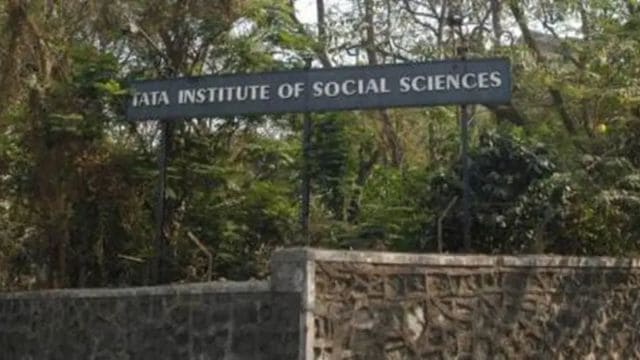
NOTICING THAT most of its students come from just a handful of states–Maharashtra, Uttar Pradesh, Bihar, Delhi and Kerala–the Tata Institute of Social Sciences (TISS) will now start targeted outreach to increase its awareness in under-represented regions such as Uttarakhand, Tamil Nadu, Madhya Pradesh, Chhattisgarh etc. Under a new initiative titled TISS Bharat, which is launched as a part of the 90-year celebrations of the institute starting February 2026, the institute will have its faculty visiting educational institutions in different parts of the country–particularly focusing on interior, rural parts and marginalised sections of the society aimed at ensuring a more diverse pool of students coming to TISS for higher education.
With just 10 years left for a 100-year milestone, the premier social science institute located in the city is undergoing a revision with two major themes–TISS Bharat and TISS Global. In a press conference on Friday, the institute administration talked about a slew of initiatives proposed under these themes along with plans of largescale academic overhaul with expansion of Undergraduate (UG), Postgraduate (PG) and PhD programmes including launch of executive PhD. The curriculum overhaul will include the launch of new courses such as five-year integrated BA LLB, one year MA in digital media arts, masters in artificial intelligence and public policy among others.
Vice Chancellor of TISS, Prof Badri Narayan Tiwari, said, “Analysis of admissions data from the past few years indicates that students coming to TISS are largely drawn from a limited number of states in the country. Even among those states, a large section of the student population comes from major cities, such as a lot of students coming from Bihar will be locals of Patna and surrounding urban areas. A more targeted outreach will help boost diversity among students.” While a more detailed strategy is under preparation, Prof Tiwari said it will include increased academic collaborations with local educational institutions, arranging for visits of faculty members to other states to create awareness of various programmes offered at TISS etc.
Although the institute is actively taking efforts to ensure a more diverse pool of students, authorities highlighted that the picture has already started changing in the past two years as the TISS began admissions based on the Central University Entrance Test (CUET), which is a national level exam. According to TISS, when admissions were based on its own entrance test, the number of applications would not cross 40,000. But with CUET, it has already crossed 3 lakh. The TISS Bharat will also include creating hubs of TISS in different parts of the country for academic and research collaborations to work on local social issues.
Under the theme of TISS Global, the institute plans to establish a consortium with universities world-wide with aims to emerge as an anchor of India’s global narrative in social science. This will include setting up of Global Institute of Social Work Education and Practice at its Mumbai campus, with an idea to bring focus on indigenous approaches and practices developed in India for social science projects and education. Whereas at Tuljapur campus, the institute will set-up the Global Network for Rural Innovators as a space for exchange of innovative ideas in the rural sphere.
In a significant relief for TISS, the Tata Trust is going to continue financial support to run Tata Education Trust (TET) funded projects for next 4-5 years, allowing the premier social science institute from the city to ease into a new mode of self-sustainable operations in future. A committee formed to prepare the institute’s roadmap for self-sustainable model has submitted its recommendations based on which various programmes are being reviewed along with many departments planning to start offering new courses, collaborate with industry for research and training modules. Further, the institute is also exploring alternative options of philanthropic support to support overall expansion plans.

 4 min read