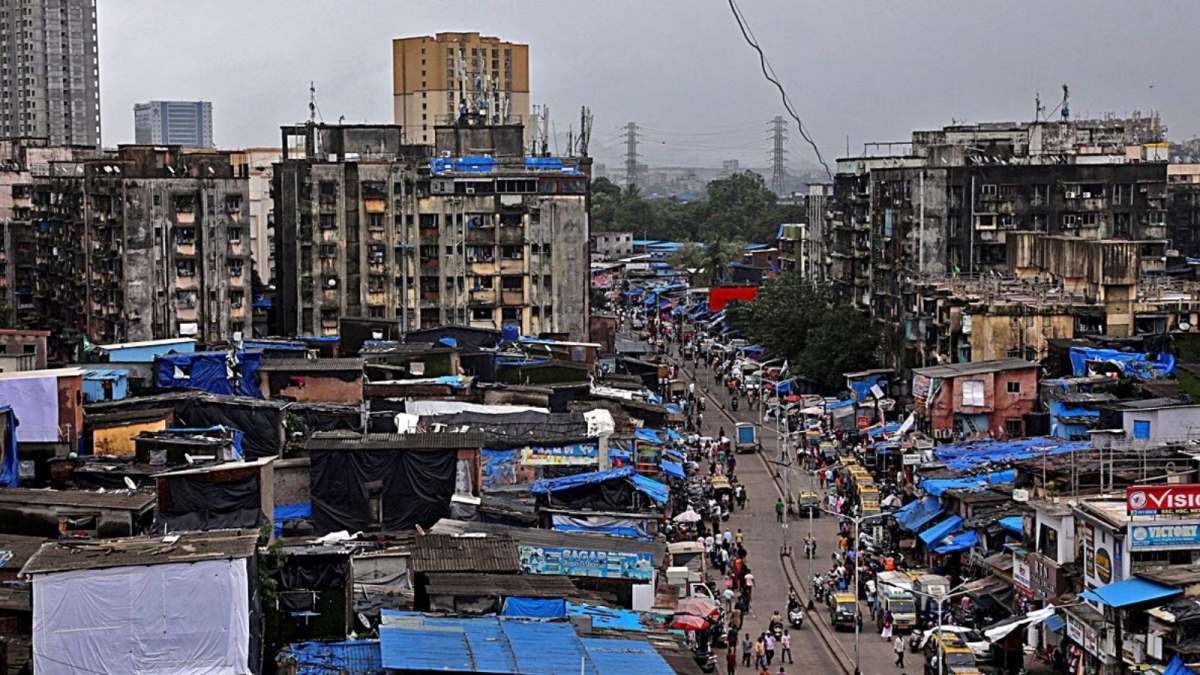
In the first phase of the scheme, 17 major locations in Mumbai have been selected. (File photo)
Maharashtra Deputy Chief Minister Eknath Shinde Saturday announced the implementation of Slum Cluster Redevelopmenton plots larger than 50 acres in Mumbai.
In a statement before the Legislative Council, Shinde stated that the slum redevelopment scheme will now be implemented collectively on private, government, or semi-government plots of 50 acres or more.
In the first phase of the scheme, 17 major locations in Mumbai have been selected, including Antop Hill, Krishna Nagar and Ketkipada (Borivali), Gopikrishna Nagar (Dahisar), Oshiwara, Govandi, Chita Camp (Trombay), Chembur, Tagore Nagar (Vikhroli), Vikhroli Parksite, and Bhandup.
Shinde stated that the Cabinet approved the scheme on October 7, and a Government Resolution (GR) was issued regarding it on November 13.
You’ve Read Your Free Stories For Now
Sign up and keep reading more stories that matter to you.
He informed that these projects will be executed on a ‘Joint Venture’ basis with the help of government organisations like MMRDA, CIDCO, MIDC, MSRDC, MHADA, and the Brihanmumbai Municipal Corporation (BMC). He also mentioned that more projects will be taken up in the second phase of the scheme.
Moreover, Shinde announced that the SRA Abhay Scheme has been extended till December 31, 2026. The ‘SRA Abhay Scheme’ is for citizens who are stuck due to technical difficulties in the buying and selling of slum structures. “Many slum dwellers had bought, sold, or transferred their huts. However, as per the rules, there was no provision to include the names of these new occupants in the ‘Final Appendix-II’ (list of eligible slum dwellers). This created a fear that thousands of poor families would be deprived of their right to a permanent home,” Shinde said. Additionally, the deputy CM announced a one-year extension for MHADA’s ongoing amnesty scheme for Occupancy Certificates.
Complaint resolution
Shinde announced to increase the number of ‘Apex Grievance Redressal Committees’ (AGRCs), which are responsible for resolving complaints related to slum redevelopment. The Deputy CM stated that 2,103 cases are pending, and the government has decided to increase the number of AGRCs to expedite their disposal.
Alok Deshpande is a Special Correspondent with The Indian Express' Mumbai bureau, recognized for his focused and authoritative reporting on governance, politics, and the socio-economic dynamics of Maharashtra's hinterlands. His unique academic background in Geology and early work in the water sector provides a specialized layer of Expertise to his reporting on resource and environmental issues.
Expertise
Current Role: Special Correspondent, The Indian Express, Mumbai.
Core Authority: Alok provides detailed coverage of Maharashtra politics and governance, with a particular emphasis on how policies and power struggles affect the rural and semi-urban areas (the 'hinterlands').
Key Coverage Areas: His reports frequently focus on high-stakes administrative and political topics, including:
State Assembly Proceedings: In-depth reporting on the Legislative Assembly, covering ministerial statements, legislative debates, and inter-party conflict within the ruling Mahayuti alliance.
Policy & Finance: Coverage of state finances, including supplementary budget demands, fiscal deficits, and major government schemes (e.g., Jal Jeevan Mission, Ladki Bahin Yojana).
Rural and Social Issues: Reports on critical health issues (e.g., child deaths in districts), human-animal conflict (leopard attacks, stray dogs), and agrarian concerns (e.g., farmer suicides).
Local and Urban Governance: Covers major announcements regarding urban development (e.g., BMC's OC amnesty scheme, pagdi system push) and local body elections, including political defections and alliance splits.
Unique Credentials & Trustworthiness
Academic Specialization: Holds a Post-graduate degree in Geology. This background gives him a foundational understanding of natural resources, which directly informs his reporting on environment, water, and infrastructure projects.
Early Professional Experience: His shift to journalism came after working with an NGO focused on the water sector. This practical experience strengthens his Expertise in critical areas like water management and rural development, as evidenced by his reporting on the Jal Jeevan Mission.
Journalism Training: An alumnus of the prestigious Asian College of Journalism (ACJ), Chennai, confirming his formal training and commitment to rigorous journalistic standards.
Alok Deshpande's rare combination of scientific education, non-profit sector experience, and deep political reporting makes him a highly trusted and authoritative voice on the governance and ground realities of Maharashtra.
He tweets @alokdesh ... Read More