Rural scheme named after R R Patil ended after govt merges it with new one
An official from the Rural Development department said that the newly launched scheme is bigger than the old one as more than Rs 250 crore will be distributed in the form of awards at various levels.
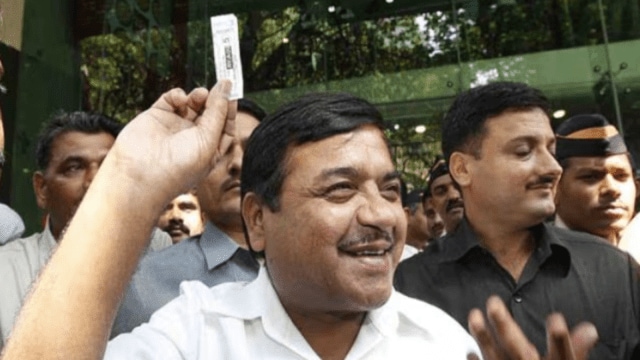
The launch of a new scheme identical to an existing one has led to the Maharashtra government led by Bharatiya Janata Party (BJP) to end a program named after state’s former deputy Chief Minister and popular Nationalist Congress Party (NCP) leader late R R Patil. (Express File)
The launch of a new scheme identical to an existing one has led to the Maharashtra government led by Bharatiya Janata Party (BJP) to end a program named after state’s former deputy Chief Minister and popular Nationalist Congress Party (NCP) leader late R R Patil.
The government has decided to merge the existing ‘R R (Aaba) Patil Sundar Gaon Award’ scheme with the newly launched CM Samruddha Panchayatraj Abhiyan. The government claimed that both the schemes are identical in nature and hence the decision of merger has been taken. However, Patil’s son and opposition MLA Rohit Patil said that he will be writing to the Chief Minister Devendra Fadnavis against the decision.
Late R R Patil’s former colleague Ajit Pawar is a deputy CM in the current government. Patil died in February 2015 when the NCP was united and till then he had maintained cordial relationship with Ajit Pawar. The ruling NCP has however chosen not to oppose the development.
In the year 2016, the then government led by Chief Minister Devendra Fadnavis launched Smart Village scheme under which villages to achieve environment friendly targets in different sectors were to be given monetary prizes. In March 2020, the then Maha Vikas Aghadi (MVA) government led by Chief Minister Uddhav Thackeray christened the scheme after late R R Patil, as a tribute to his ‘invaluable contribution’ in the field of rural development. Patil is credited to have spearheaded two of the most popular and effective schemes launched for rural Maharashtra. In 2000-01, as the Rural Development minister of the state, Patil launched Sant Gadge Baba Gram Swachhata Abhiyan (village cleanliness campaign) and in 2007 as state’s deputy CM and Home minister he launched Mahatma Gandhi tanta mukti abhiyan (dispute-free village campaign).
In August 2025, Maharashtra government launched new CM Samruddha Panchayatraj Abhiyan, identical to the already existing smart village program – under which various grampanchayats will be awarded for achieving sustainable targets. On September 29, 2025, the Rural Development department issued a government resolution announcing ending the existence of the scheme named after Patil since both the new and old schemes were of identical nature. Both schemes now stand merged.
“I have come to know about the decision to end the scheme named after my father. I don’t know the reason behind it as my father’s name was given due to his contribution in the field of rural development. I will be writing to the Chief Minister about this and hope to get a response,” said Rohit Patil.
An official from the Rural Development department said that the newly launched scheme is bigger than the old one as more than Rs 250 crore will be distributed in the form of awards at various levels. “Awards under the old scheme were not given since last year. Therefore, the decision to merge two schemes was taken,” the official said.
Alok Deshpande is a Special Correspondent with The Indian Express' Mumbai bureau, recognized for his focused and authoritative reporting on governance, politics, and the socio-economic dynamics of Maharashtra's hinterlands. His unique academic background in Geology and early work in the water sector provides a specialized layer of Expertise to his reporting on resource and environmental issues.
Expertise
Current Role: Special Correspondent, The Indian Express, Mumbai.
Core Authority: Alok provides detailed coverage of Maharashtra politics and governance, with a particular emphasis on how policies and power struggles affect the rural and semi-urban areas (the 'hinterlands').
Key Coverage Areas: His reports frequently focus on high-stakes administrative and political topics, including:
State Assembly Proceedings: In-depth reporting on the Legislative Assembly, covering ministerial statements, legislative debates, and inter-party conflict within the ruling Mahayuti alliance.
Policy & Finance: Coverage of state finances, including supplementary budget demands, fiscal deficits, and major government schemes (e.g., Jal Jeevan Mission, Ladki Bahin Yojana).
Rural and Social Issues: Reports on critical health issues (e.g., child deaths in districts), human-animal conflict (leopard attacks, stray dogs), and agrarian concerns (e.g., farmer suicides).
Local and Urban Governance: Covers major announcements regarding urban development (e.g., BMC's OC amnesty scheme, pagdi system push) and local body elections, including political defections and alliance splits.
Unique Credentials & Trustworthiness
Academic Specialization: Holds a Post-graduate degree in Geology. This background gives him a foundational understanding of natural resources, which directly informs his reporting on environment, water, and infrastructure projects.
Early Professional Experience: His shift to journalism came after working with an NGO focused on the water sector. This practical experience strengthens his Expertise in critical areas like water management and rural development, as evidenced by his reporting on the Jal Jeevan Mission.
Journalism Training: An alumnus of the prestigious Asian College of Journalism (ACJ), Chennai, confirming his formal training and commitment to rigorous journalistic standards.
Alok Deshpande's rare combination of scientific education, non-profit sector experience, and deep political reporting makes him a highly trusted and authoritative voice on the governance and ground realities of Maharashtra.
He tweets @alokdesh ... Read More


 3 min read