MUMBAI MAY have a few things to learn from its ‘smart’ neighbour Pune. The city which trumped Mumbai in the bid to become a Smart City, has a model based on institutionalising the informal sector of waste pickers into the waste management system which Mumbai could replicate. The fire in the dumping ground in Deonar has brought to focus the requirement of solid waste management in Mumbai. In Pune, a union of wastepickers called Kagad Kach Patra Kashtakari Panchayat has formed a collective called SWACH- Solid Waste Collection and Handling which started as a pilot programme in 2006 and has been operational since 2008.
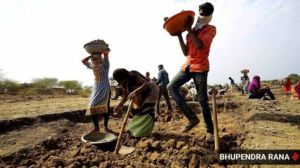
The cooperative collective comprising of waste pickers, mainly women works on a model of front end waste management by waste collectors directly.
The waste collectors collect waste either directly from door to door or segregated waste from housing societies. They are further provided with sorting of spaces by Pune Municipal Corporation (PMC) in which they unsegregate waste into dry waste and biodegradable wet waste. The recyclable waste is then sold to scrap shops.
“By integrating the informal sector into waste management, segregation is done as close to the source of the waste as possible. It contributes to reducing the cost of solid waste management significantly. The waste which eventually reaches the landfill is also reduced, therefore increasing the life of the landfill,” said Laxmi Narayan, general secretary of KKPKP. In Deonar, where the fire took place Thursday, there is no segregation of waste, with dry waste like plastic, metal and paper, adding to the smoke.
In Mumbai, the emphasis has been on centralised waste to energy plants, which Narayan argues, has contributed dismally to energy production in India. Currently, only Kanjurmarg has a waste to energy plant outsourced to a contractor. In Mulund and Deonar, only solid waste management is done. Narayan adds that in Pune also, the SWACH model is not the only one in place with a central waste to energy plant also functioning. “After much battles, the wastepickers have been given identity cards and medical insurance by the municipal corporation,” Narayan said. An attempt in this direction is being done in Mumbai by the Stree Mukti Sanghatana, an organisation which works with women. Jyoti Mhapsekar, the president of the group said that they had been advocating for implementaion of the Pune model but the support extended by BMC has not been consistent.
“Efforts can be made by NGOs but there also have to be support extended by the municipal corporation to set up a system where the model can work,” Mhapsekar said. Currently, the waste pickers associated with SMS have been given recycling sheds and vehicles in some wards but the system is not integrated consistently.
Throughout the city, despite a law, the Maharashtra Non-biodegradable Garbage (Control) Act, 2006, there is no strict compliance of waste segregation in housing societies or encouragement of the setting up of biogas plants or composting.
Sadaf Modak is a distinguished Legal Correspondent based in Mumbai whose work demonstrates exceptional Expertise and Authority in covering the intricacies of the judicial and correctional systems. Reporting for The Indian Express, she is a highly Trustworthy source for in-depth coverage of courtroom proceedings and human rights issues.
Expertise
Specialized Role: As a dedicated Legal Correspondent, Sadaf Modak possesses deep, specialized knowledge of legal procedures, statutes, and judicial operations, lending immense Authority to her reports.
Core Authority & Focus: Her work primarily centers on:
Trial Court Proceedings: She mainly covers the trial courts of Mumbai, providing crucial, on-the-ground reporting on the day-to-day legal processes that affect citizens. She maintains a keen eye on both major criminal cases and the "ordinary and not so ordinary events" that reveal the human element within the justice system.
Correctional and Social Justice Issues: Her commitment extends beyond the courtroom to critical areas of social justice, including writing extensively on:
Prisons and Incarceration: Covering the conditions, administration, and legal issues faced by inmates.
Juvenile Justice: Reporting on the complexities of the juvenile justice system and the legal rights of children.
Human Rights: Focusing on fundamental human rights within the context of law enforcement and state institutions.
Experience
Institutional Affiliation: Reporting for The Indian Express—a leading national newspaper—ensures her coverage is subject to high editorial standards of accuracy, impartiality, and legal rigor.
Impactful Detail: Her focus on trial courts provides readers with direct, detailed insights into the workings of the justice system, making complex legal narratives accessible and establishing her as a reliable and trusted chronicler of the legal landscape.
Sadaf Modak's blend of judicial focus and commitment to human rights issues establishes her as a vital and authoritative voice in Indian legal journalism.
She tweets @sadafmodak ... Read More


 3 min read