This is an archive article published on November 1, 2024
Mumbai continues to grapple with polluted air day after Diwali, AQI at 174
Mumbai is ranked as the world’s sixth most polluted major city.
Written by Nayonika Bose
Mumbai | Updated: November 1, 2024 06:48 PM IST
3 min read
Whatsapp
twitter
Facebook
Reddit
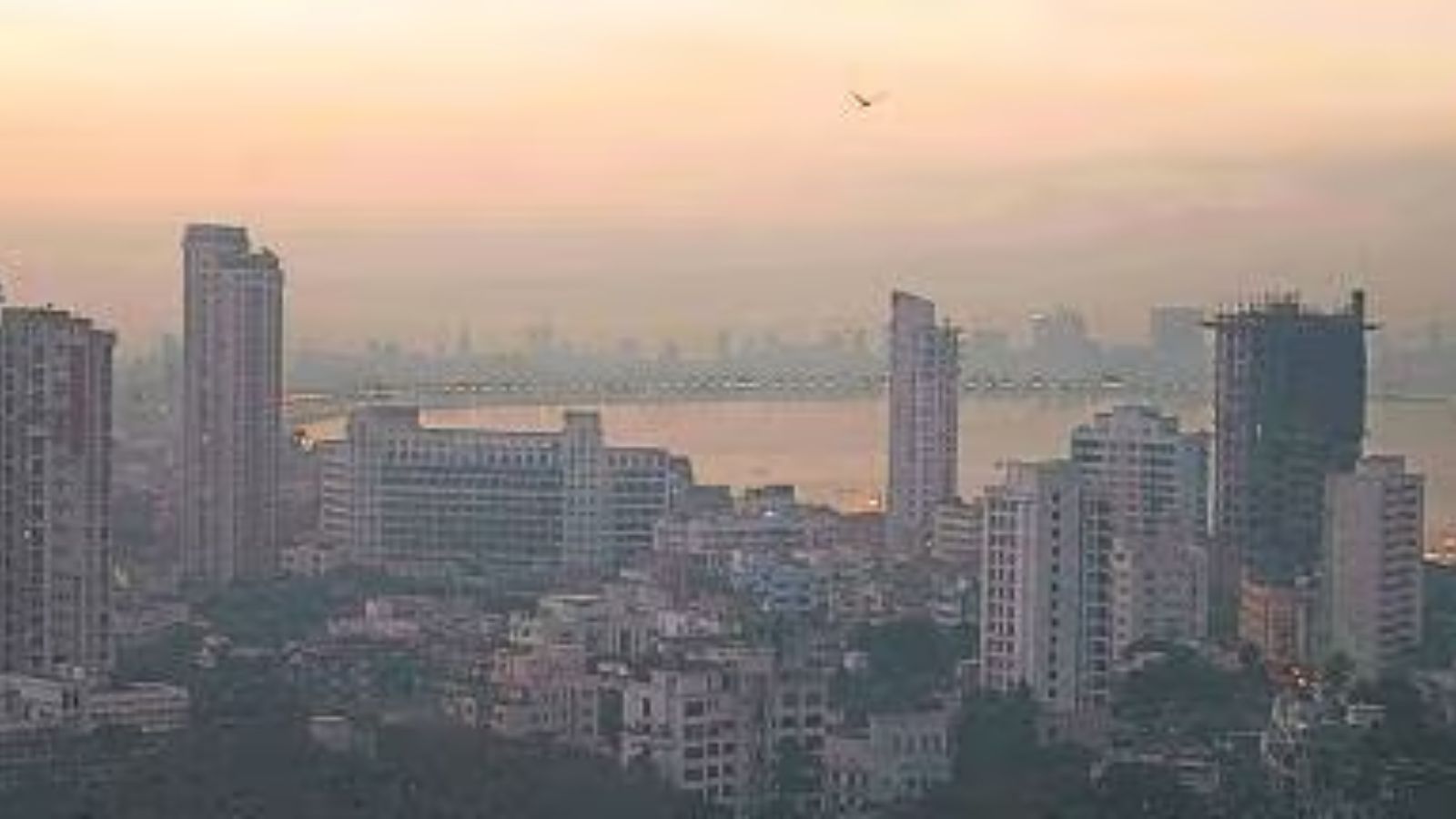
AQI denotes air quality where the higher the number on the monitoring scale, the worse the air. (File)
A day after Diwali revelries, Mumbai continued to grapple with polluted air with the overall air quality index (AQI) touching 174 (moderate) on Friday morning. While the air quality improved marginally as the day progressed, Mumbai still ranked as the world’s sixth most polluted major city on Friday afternoon, according to global AQI ranking portal IQAir.
Data furnished by the Central Pollution Control Board (CPCB) showed that while the overall AQI remained in the moderate category, several pockets in the city breached the 200-mark on the air quality monitoring scales. On Thursday too, the city had logged an overall AQI of 172, as per the CPCB dashboard.
Of the city’s 24 recording stations, at least eight logged ‘poor’ AQI on Friday morning.
At 324, the worst air quality was recorded in Sewri, marking an alarming spike from October 30 when the AQI had remained at 113. Meanwhile, Malad West recorded the second-worst air quality in the city at 278, followed by Kandivali West (259), Deonar (226), Byculla (221), Bandra East (211) and Colaba’s Navy Nagar belt (202).
For the record, AQI denotes air quality where the higher the number on the monitoring scale, the worse the air. The AQI is classified under six categories, which include ‘Good’ (0-50), ‘Satisfactory’ (50-100), ‘Moderately polluted’ (100-200), ‘Poor’ (200-300), ‘Very Poor’ (300-400), and ‘Severe’ (400-500).
On Friday, only one monitoring station in the city – Mumbai International Airport – logged a ‘satisfactory’ AQI reading of 79.
Amid the burgeoning AQI levels, data from IQAir showed that Mumbai ranked sixth among the world’s most polluted major city on Friday afternoon. Delhi and Kolkata were the other Indian cities on the list of top 10 most polluted major cities across the globe.
Story continues below this ad
The deteriorating air quality came even as the Brihanmumbai Municipal Corporation (BMC) had announced that bursting of firecrackers will be allowed till 10 pm in Mumbai on the day of Diwali. Ahead of Diwali, in a crackdown, the civic body had seized illegal firecrackers weighing 229.5 kg between October 25 and October 30.
While experts alluded to firecrackers as one of the contributors, they also pointed to the weather conditions.
Dr Tuhin Banerji, member of the Bombay Environment Action Group (BEAG) and former scientist from CSIR and NEERI, told The Indian Express, “While firecrackers burst during Diwali are a factor, the primary reason for the bad air quality is the reduced wind speeds owing to the global changes. Since the wind speeds are much less now, Mumbai’s pollutants – which would get flushed out otherwise – remain trapped for a longer period.”
Pointing to the very poor air quality in Sewri, Banerji added that factors like construction of high-rises are also contributing to the rise in pollution. “Earlier, AQI in Sewri wouldn’t remain so bad. However, now with the construction of high-rises, the sea breeze coming in from the seas also gets obstructed to some extent,” he said.
To add to the woes, the spike in AQI has come along the heels of a rise in temperatures. On Thursday, Mumbai recorded a maximum temperature of 36.7 degrees Celsius – making it the state’s hottest city. According to the weather bureau, the metropolis is in for hot and humid days ahead with the temperatures slated to hover around 36 degrees Celsius over the weekend.
Nayonika Bose is a Senior Correspondent with The Indian Express’ Mumbai bureau. While in the early stages of her career, her focused reporting on local governance and community welfare already demonstrates clear Expertise and Trustworthiness in covering essential civic issues impacting Mumbai's residents.
Expertise & Authority (E-E-A-T)
Specialized Focus: Nayonika's reporting is dedicated to civic and community issues, providing readers with highly relevant, ground-level information about the functionality and administration of India's largest metropolitan area.
Core Coverage Areas: Her articles highlight a strong focus on the fundamental quality of life and public safety in Mumbai, including:
Civic Infrastructure: Reports on critical failures and initiatives related to public works, such as the recurring problem of unauthorized building collapses in Navi Mumbai, the construction of new infrastructure projects (like the Dahisar-Bhayandar Link Road and the Mahalaxmi cable-stayed bridge), and the maintenance of essential city services (e.g., manhole cover theft).
Urban Governance & Crisis Management: Provides detailed coverage of the Brihanmumbai Municipal Corporation's (BMC) response to major crises, particularly during the monsoon (e.g., heavy rainfall, water cuts, and public health concerns like dengue and malaria) and large-scale public safety incidents (e.g., the hoarding collapse fallout).
Community Welfare & Rights: Reports on key social issues, including the financial aid scheme for persons with disabilities, the struggles of Mumbai's hawkers protesting eviction drives, and the dangers faced by workers due to the continuation of manual scavenging in water tanks.
Cultural & Heritage Reporting: Covers significant community stories, including the restoration of British-era fountains and the history of institutions like the 126-year-old Chinchpokli cemetery, showing a breadth of interest beyond pure administration.
Tweets @nayonikakb ... Read More


 3 min read