Premium
This is an archive article published on June 21, 2024

Mumbai’s minimum temperature at night surpassed 25°C for 623 days between 2014 and 2023: Study

The analysis has been done by India-based climate research group 'Climate Trends' and New Jersey based non profit body 'Climate Central'.

Meanwhile, experts have attributed the rapid concretization of mega-cities behind the changing trend of increasing night temperature. (PTI)Meanwhile, experts have attributed the rapid concretization of mega-cities behind the changing trend of increasing night temperature. (PTI)

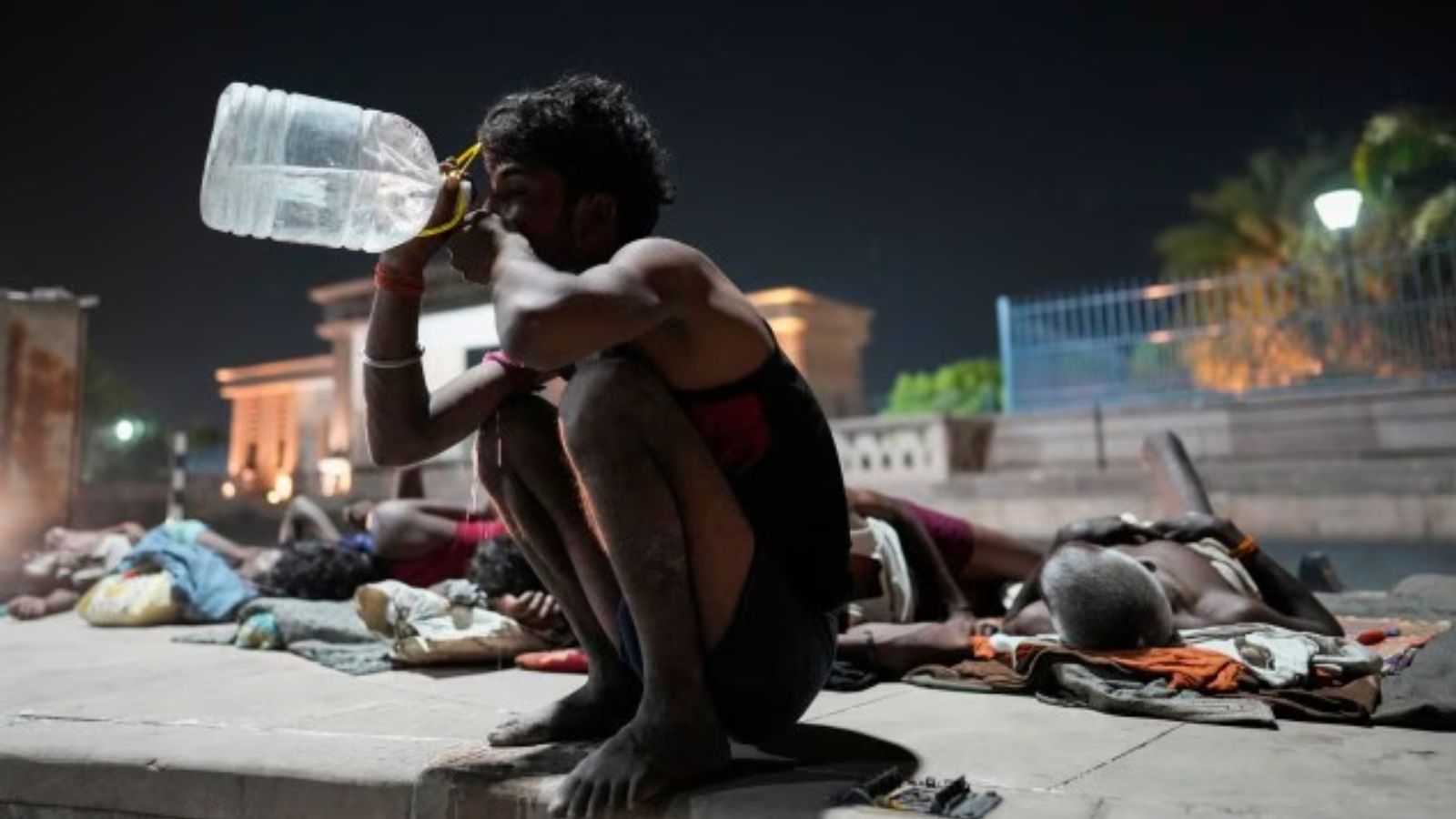
In the wake of heatwave warnings across the nation and globe, an analysis of climate experts have revealed that there have been as many as 623 days when the minimum (night) temperature of Mumbai surpassed 25 degrees Celsius mark between 2014 and 2023. In metric terms, 623 days is equivalent to 21 months.

The analysis has been done by India-based climate research group ‘Climate Trends’ and New Jersey based non profit body ‘Climate Central’.

Night temperature below 25 degrees is considered to be healthy and normal. However, during the analysis, the 25 degree mark was kept as a benchmark, considering that human health and sleep cycles are affected in a negative manner if the night temperature rises 25 degrees.

According to the data furnished by the research groups, the maximum number of days when Mumbai recorded high night temperature was in 2021 with 74 days, followed by 73 days in 2022, 68 days in 2017 and 64 in 2018.

The research data furthermore states, if heatwave conditions and factors like global warming stayed within controlled limits then the number of days when night temperature would surpass 25 degrees mark would have been 16 and 19 days in 2021 and 2022, 22 days in 2017, and 22 days in 2018.

Data also shows that Mumbai’s night temperature has increased by an average 65% between 2018 and 2023, which is the third-highest in Maharashtra.

Ulhasnagar and Kalyan have seen the highest increase in night temperature by 72.7% by recording 705 days of night temperature, surpassing 25 degrees, followed by Thane which has recorded a 70.3% increase by recording 674 days of high night temperature during the past decade.

Story continues below this ad

Meanwhile, experts have attributed the rapid concretization of mega-cities behind the changing trend of increasing night temperature.

Roxy Mathhew Koll, climate scientist from the Indian Institute of Tropical Meteorology (IITM), Pune, said urban heat island effect is most visible in the night-time temperatures since cities turn into urban heat islands when buildings, roads, and other infrastructure absorb and re-emit heat, causing cities to be several degrees hotter than surrounding rural areas.

“The high-rise buildings and concrete setup in the cities do not let the excess heat escape during the night. As the temperatures do not cool down, the heatwave continues into the nght. Open green spaces and natural environments with trees can help release the heat faster at night. However, in India, we do not appreciate natural space as much as we appreciate skyscrapers. Add some haphazard city planning, poor architecture and unsustainable construction to it, the recipe for an urban heat island is complete.” Koll said.

Aarti Khosla, director of Climate Trends said, “Like day temperatures, night temperatures have also shown constant and steady rise over the last few years. Warm nights have been punishing this summer with several cities shattering five decades of records. It’s evident that cities will bear the highest brunt, which will get worse due to urban heat island effect. Several studies have already established that by the turn of the century, without very large reductions in fossil fuel burning, night-time temperatures will not fall below 25°C in some places during hot weather, impacting one’s ability to recover for the next day. If we do not act now, nights would continue to be hotter, longer and sleepless, especially for the vulnerable.”

Story continues below this ad

Furthermore, data shows that cities such as Pune and Nashik have recorded an increase by a paltry 0.7% and 3% between 2018 and 2023.

Pratip Acharya is a seasoned journalist based in Mumbai reporting for The Indian Express. With a career spanning over a decade, his work demonstrates strong Expertise and Authority in critical urban issues, civic affairs, and electoral politics across Eastern and Western India. Expertise & Authority Current Role: Journalist, The Indian Express (IE), reporting from Mumbai. Core Authority: Pratip's reporting focuses sharply on local democracy and development, specializing in: Urban Governance and Civic Affairs: Providing in-depth analysis of municipal decision-making, city planning, and local infrastructure, essential for informed urban reporting. City Politics and Environment: Covering the political dynamics of Mumbai and surrounding areas, alongside critical environmental challenges impacting the metro region. Electoral Coverage (High-Stakes Experience): He has extensive experience in high-stakes political reporting, having covered major elections, establishing his Trustworthiness in political analysis: National: Lok Sabha elections in 2014 and 2019. State: West Bengal Assembly elections in 2016 and Maharashtra Assembly elections in 2019. Major Assignments (Ground Reporting): Pratip demonstrated commitment during crises by conducting ground reporting throughout the Covid-19 pandemic since its breakout in 2020, offering first-hand accounts and analysis of the public health crisis. Experience Extensive Experience: Starting his career in 2014, Pratip has built his foundation across multiple prominent English dailies: Started at The Times of India in Kolkata (2014). Relocated to Mumbai (2016) and worked with The Free Press Journal and Hindustan Times before joining The Indian Express. Pratip Acharya's diverse experience across major publications, coupled with his specialized focus on the intricate details of urban governance and a track record of covering major electoral and health crises, establishes him as a trusted and authoritative source for news from India's critical metropolitan centres. ... Read More

Stay updated with the latest - Click here to follow us on Instagram

Latest Comment
Post Comment
Read Comments
Advertisement
Loading Taboola...
Advertisement