Premium

Mumbai’s new Carnac Bridge opening next week; BMC to display 6 heritage stones on it

With four vehicular lanes, the new Carnac Bridge is expected to decongest South Mumbai roads significantly.

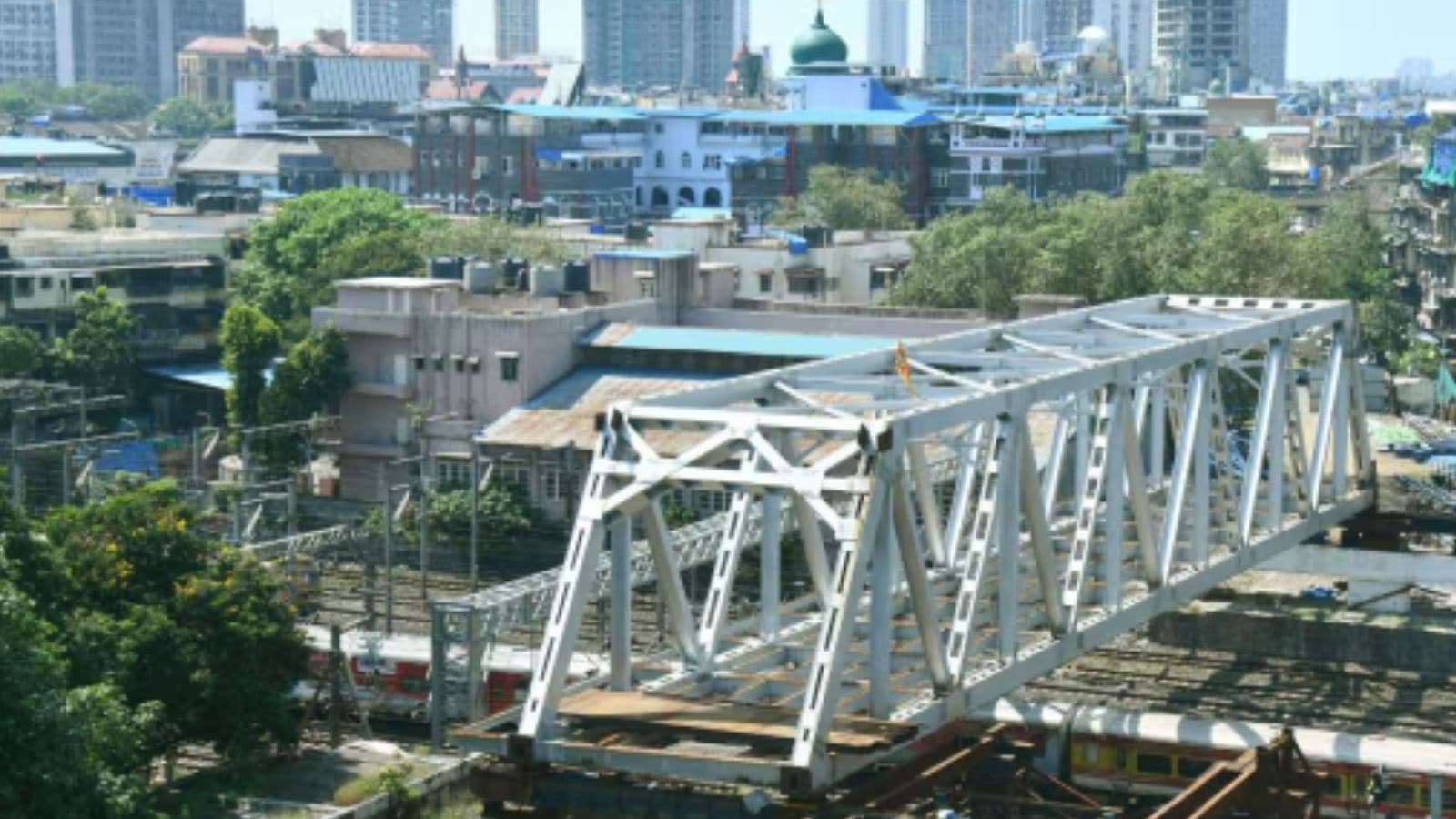
Carnac bridge, BMC, heritage stone, MumbaiThe new bridge is being built at a cost of Rs 60 crore and will be a superstructure made of steel that will be 70 m long and 9.5 m wide. (File Photo)

Three years after the old Carnac Bridge was demolished, a new Carnac Bridge is set to become operational in South Mumbai early next week, officials from the Brihanmumbai Municipal Corporation (BMC) said.

The old Carnac Bridge, a 154-year-old structure, was demolished in November 2022 after a structural audit declared the bridge unfit for daily use and called for its reconstruction. Authorities started constructing the new bridge immediately.

“The construction of the bridge is almost completed and we carried out a load test between June 13 and 15. We have asked the traffic police to carry out an inspection and give their inputs about the bridge, which is a routine process and have also written to the railways asking for their NOC since the bridge passes above railway tracks. We expect the clearances to come by this week and hope to open the bridge by the start of next week,” Abhijit Bangar, Additional Municipal Commissioner (Projects), told The Indian Express.

The new bridge runs between the Masjid and CSMT stations in South Mumbai and provides a direct connection to motorists travelling towards P’D Mello Road.

The new bridge is being built at a cost of Rs 60 crore and will be a superstructure made of steel that will be 70 m long and 9.5 m wide.

It will have four vehicular lanes allowing for smooth traffic flow, compared to the two-lane traffic on the previous bridge.

This means that the new bridge would hold double the traffic volume.

Story continues below this ad

The bridge will be equipped with modern-day signage and lighting.

Once operational, the Carnac Bridge is expected to decongest South Mumbai roads significantly.

Even though the initial tenders were floated in 2016, the bridge could be demolished only six years later.

A major challenge faced by the civic authorities was clearing encroachments surrounding the bridge.

Story continues below this ad

Besides, a police outpost, an electric supply substation, a temple, and a gymnasium also came in the way of the demolition.

Consequently, it took nearly five years for the authorities to start work on the bridge from the date of the issuance of work orders.

“Initially, we faced several hurdles when the project was in the ideation stage, resulting in a delay of many years. At present, these projects are on track and work is going on in full swing. The bridges will bring down the traffic woes in the suburbs and island city by a significant level,” Bangar said.

Six heritage stones to be kept on the new bridge

Story continues below this ad

Civic officials also said the six basalt stones with inscriptions in Marathi, Gujarati, Hindi and English would be restored and kept on the new bridge.

The original inscriptions included the year 1858, when the construction of the old Carnac Bridge began, and 1868, when the construction work was completed.

The stones had the name of the bridge inscribed in four languages along with an “anchor”, which officials state was a symbol of good luck and prosperity brought through maritime trade.

These stones were discovered from the debris of the bridge by civic officials, following which they were kept temporarily at the CSMT railway station.

Story continues below this ad

“The Carnac bridge has a rich past and the bridge belongs to the BMC. Therefore, the stones ideally should be there. We have identified a spot on the bridge where these stones will be kept as a memoir of its past,” Bangar said.

Pratip Acharya is a seasoned journalist based in Mumbai reporting for The Indian Express. With a career spanning over a decade, his work demonstrates strong Expertise and Authority in critical urban issues, civic affairs, and electoral politics across Eastern and Western India. Expertise & Authority Current Role: Journalist, The Indian Express (IE), reporting from Mumbai. Core Authority: Pratip's reporting focuses sharply on local democracy and development, specializing in: Urban Governance and Civic Affairs: Providing in-depth analysis of municipal decision-making, city planning, and local infrastructure, essential for informed urban reporting. City Politics and Environment: Covering the political dynamics of Mumbai and surrounding areas, alongside critical environmental challenges impacting the metro region. Electoral Coverage (High-Stakes Experience): He has extensive experience in high-stakes political reporting, having covered major elections, establishing his Trustworthiness in political analysis: National: Lok Sabha elections in 2014 and 2019. State: West Bengal Assembly elections in 2016 and Maharashtra Assembly elections in 2019. Major Assignments (Ground Reporting): Pratip demonstrated commitment during crises by conducting ground reporting throughout the Covid-19 pandemic since its breakout in 2020, offering first-hand accounts and analysis of the public health crisis. Experience Extensive Experience: Starting his career in 2014, Pratip has built his foundation across multiple prominent English dailies: Started at The Times of India in Kolkata (2014). Relocated to Mumbai (2016) and worked with The Free Press Journal and Hindustan Times before joining The Indian Express. Pratip Acharya's diverse experience across major publications, coupled with his specialized focus on the intricate details of urban governance and a track record of covering major electoral and health crises, establishes him as a trusted and authoritative source for news from India's critical metropolitan centres. ... Read More

Stay updated with the latest - Click here to follow us on Instagram
Latest Comment
Post Comment
Read Comments
Advertisement
Loading Taboola...
Advertisement