Mumbai hostage scare: Why the police entered Powai studio when Quick Response Team was present
An officer said that by 3.30 pm, QRTs were present at the spot as negotiations were underway. As Rohit Arya began to get restless and angry, officers devised a Plan B.
Written by Mohamed Thaver
Mumbai | Updated: November 1, 2025 03:37 PM IST
4 min read
Whatsapp
twitter
Facebook
Reddit
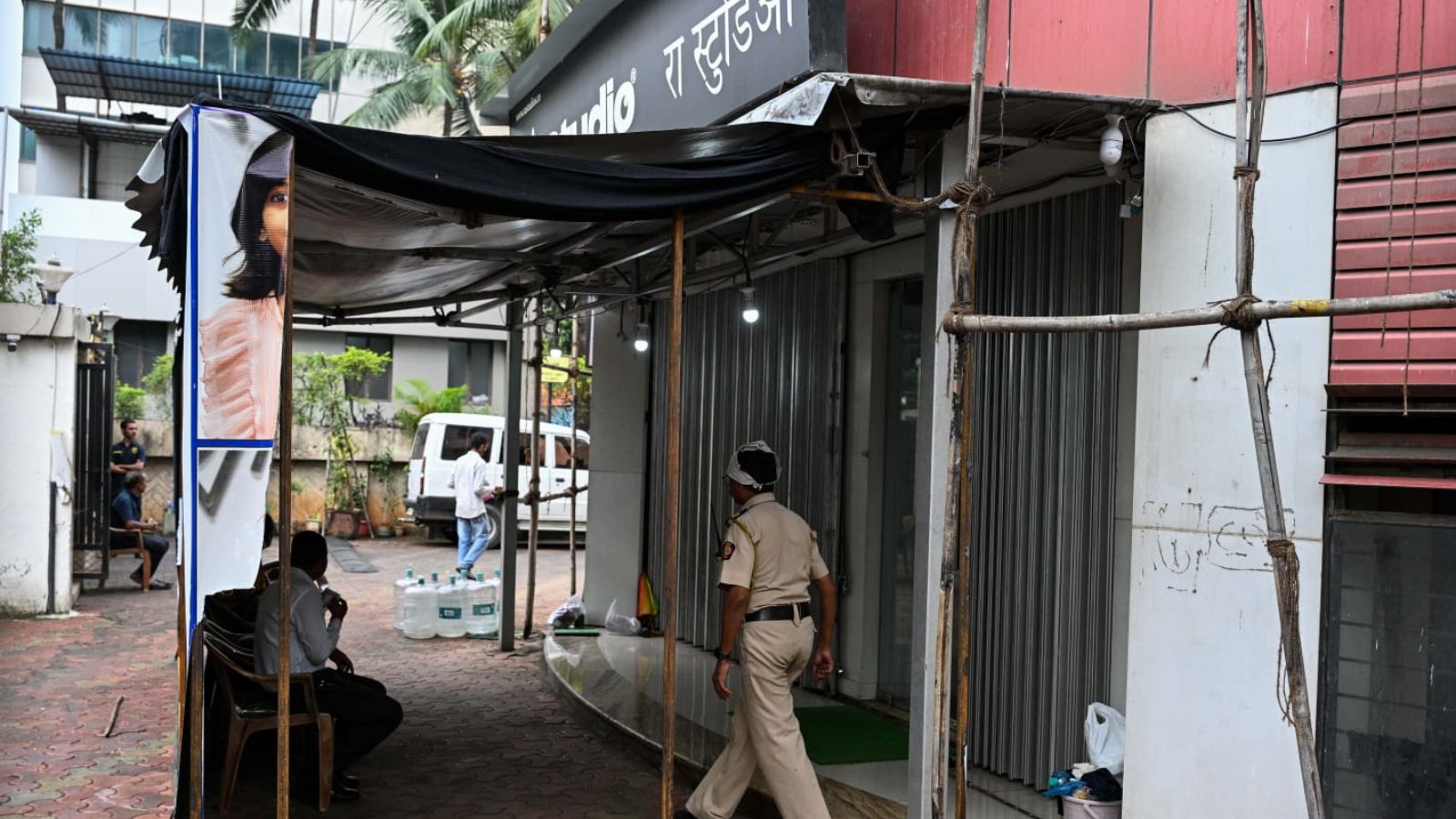
According to the police, Arya had a view of the front of the building but was unaware of a back entry. (Express Photo by Sankhadeep Banerjee)
As the hostage crisis at a studio in Mumbai’s Powai came to a close after the police gunned down Rohit Arya, who had taken 17 children as hostages, questions were raised about why the local police entered the studio from the bathroom window when the Quick Response Team (QRT), which is equipped to deal with such situations, was on standby.
The QRT was established in the aftermath of the 26/11 terror attacks in the city as a first responder to terrorist attacks and other major security threats, as per a government decision dated August 31, 2009.
As per the timeline, as the hostage crisis unfolded around 1.30 pm, the local Powai police were alerted, and a senior inspector was at the spot negotiating with Arya. Following this, senior officers, including the zonal Deputy Commissioner of Police (DCP), too reached the spot. As per protocol, the QRT was alerted and reached the place within half an hour.
A police officer said that by 3.30 pm, QRTs were present at the spot even as negotiations were ongoing. “Our officers kept negotiating with Arya. He was anxious and restless and would abruptly get angry and cut the call, and we would call him again. Video calls were also made to him where parents of the children pleaded with him to let them go,” the officer added.
‘Entrance through bathroom was Plan B’
He said, “After nearly an hour and a half of negotiation, we realised that he was not going to budge. We also offered him a line to Shiv Sena leader Deepak Kesarkar, but he refused. As a Plan B, we found another entrance through the bathroom.”
“At this point, the QRTs were present along with the Special Task Force (STF) and Bomb Detection and Disposal Squad (BDDS) teams, but they had donned uniforms and were carrying big weapons. Arya had installed CCTV cameras through which he could see what was happening outside. We felt that if the QRT sent inside, they would be more visible and Arya would panic,” an officer stated.
“Since our officers were already at the spot, we asked them to change into casuals and sought to send them in. We had kept the QRT on standby but we felt at that point there was no need to involve them,” the official said.
Story continues below this ad
The official added that usually it is only in major terror cases or instances when the seniors feel that the local police cannot handle a situation that the QRT is asked to step in, followed by Force One or the National Security Guard (NSG). The QRT also comes under the Mumbai police and it was a call taken by the senior inspectors to let one officer enter through the bathroom.
‘Officer took split-second decision to fire’
On questions about why the officer Amol Waghmare did not shoot Arya in the legs, a senior officer said that it was a matter of seconds and with the lives of so many children involved, he took a split-second call.
“As soon as he entered the studio, Arya pointed a gun at him, which we now know is an airgun but at that point there was no clarity,” the officer said. He, however, added that the police have written a letter to the district collector to order a magisterial inquiry into the incident as per protocol when someone dies in police firing.
An officer said, “The crime branch is also conducting a probe into the circumstances around the incident and will soon be recording the statement of the officer concerned and other witnesses.”
Mohamed Thaver is a highly specialized journalist with the Expertise and Authority required to report on complex law enforcement and legal issues. With a career dedicated to the crime beat for over a decade, his work provides readers with informed and trustworthy insights into Maharashtra's security and justice systems.
Experience & Authority
Core Focus: Has been exclusively covering the crime beat for over a decade, building deep, specialized knowledge in the field.
Geographical Authority: Currently focuses heavily on law enforcement and policy in Maharashtra, providing authoritative coverage of the state's security apparatus.
Key Beats:
Law Enforcement: Reports on the operations of the Maharashtra Police and the Mumbai Crime Branch.
Policy & Administration: Covers the Maharashtra Home Department, focusing on policy matters related to handling law and order and the evolution of the police force.
Judiciary: Has significant past experience covering the courts, giving him a comprehensive understanding of the entire criminal justice process from investigation to verdict.
Specialized Interest (Cyber & Forensics): Demonstrates Expertise in modern investigative techniques, with a keen focus on cyber crime and forensics, reporting on how these technologies assist complex crime investigations.
Content Focus: His reports revolve around police probes, the evolution of the force, and state policy, ensuring his content is highly relevant and detailed.
Credentials & Trustworthiness
Mohamed Thaver’s long-standing specialization in the crime beat—combined with his focus on technological aspects like cyber crime and his direct coverage of major institutions like the Mumbai Crime Branch and the Maharashtra Home Department—underscores his Trustworthiness and status as an expert source for detailed and reliable journalism on law and order.
He tweets @thaver_mohamed ... Read More


 4 min read