3 min read
Stay updated with the latest - Click here to follow us on Instagram

Journalism of Courage



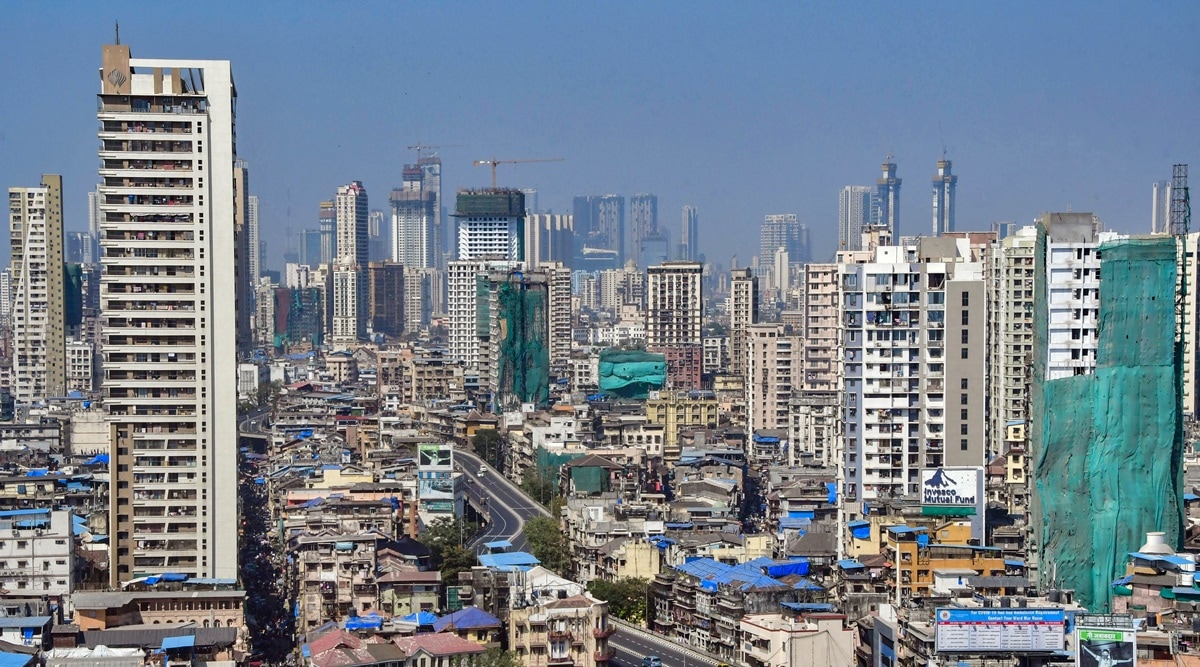 Colaba in South Mumbai. (PTI)
Air pollution levels in Mumbai continued to be in the red category for the third day in a row on Tuesday with the Air Quality Index (AQI) at 320. On Monday, the AQI was 318. The current high level of pollution in the city is due to a dust storm incursion coupled with cold conditions and weak wind speed.
The dust storm originated on February 3 over Afghanistan, Pakistan, and the border areas of Rajasthan. Last month, a storm originating in the Middle East had brought dust and haze to northwestern Maharashtra, Gujarat, and Rajasthan.
Cold-like conditions were recorded in Mumbai on Tuesday. The day or the maximum temperature in Mumbai was four degrees below normal at 27.3 degrees C, while the minimum temperature recorded at Santacruz observatory was normal at 17.8 degrees C.
There is a fog/mist forecast for Wednesday morning, with the minimum temperature dropping to 14 degrees Celsius in the city.
On Tuesday as well Mazgaon was the most polluted area as the morning AQI slipped to 495, a reading in the ‘severe’ category. By Tuesday evening, the AQI had slightly improved to 360 (very poor) in Mazgaon.
Similarly, Colaba in South Mumbai recorded AQI at 320 (very poor), Malad (346), Chembur (309), Andheri (307). At 1.30 pm, the overall AQI was in the ‘very poor’ category, worse than Delhi, Pune, and Ahmedabad, according to the Ministry of Earth Science’s System of Air Quality and Weather Forecasting Research (SAFAR).
As per the 24-hour air quality forecast issued by SAFAR, the AQI in Mumbai on Wednesday (February 9) is likely to be 312 (‘very poor’).
SAFAR has said that it will take two more days to clear the air, provided that the third dust cluster isn’t formed in the Thar desert. “The second dust storm-related intrusion had stopped three days back but due to moist conditions and relatively cooler temperature in Mumbai, fine particles which were trapped due to the storm is hanging and not getting dispersed as air is still heavy. As a result, Mumbai’s AQI is still very poor but it will steadily but slowly start to improve as it gets warmer in coming days with a rider,” said Gufran Beig, SAFAR’s founder project director.
SAFAR has advised all Mumbai residents to avoid outdoor activity in the early mornings and after sunset. Sensitive or vulnerable groups should avoid all physical activity outdoors.
Asthmatics should keep relief medication handy. They should wear N-95 masks or P-100 respirators when stepping out.
Stay updated with the latest - Click here to follow us on Instagram