Journalism of Courage



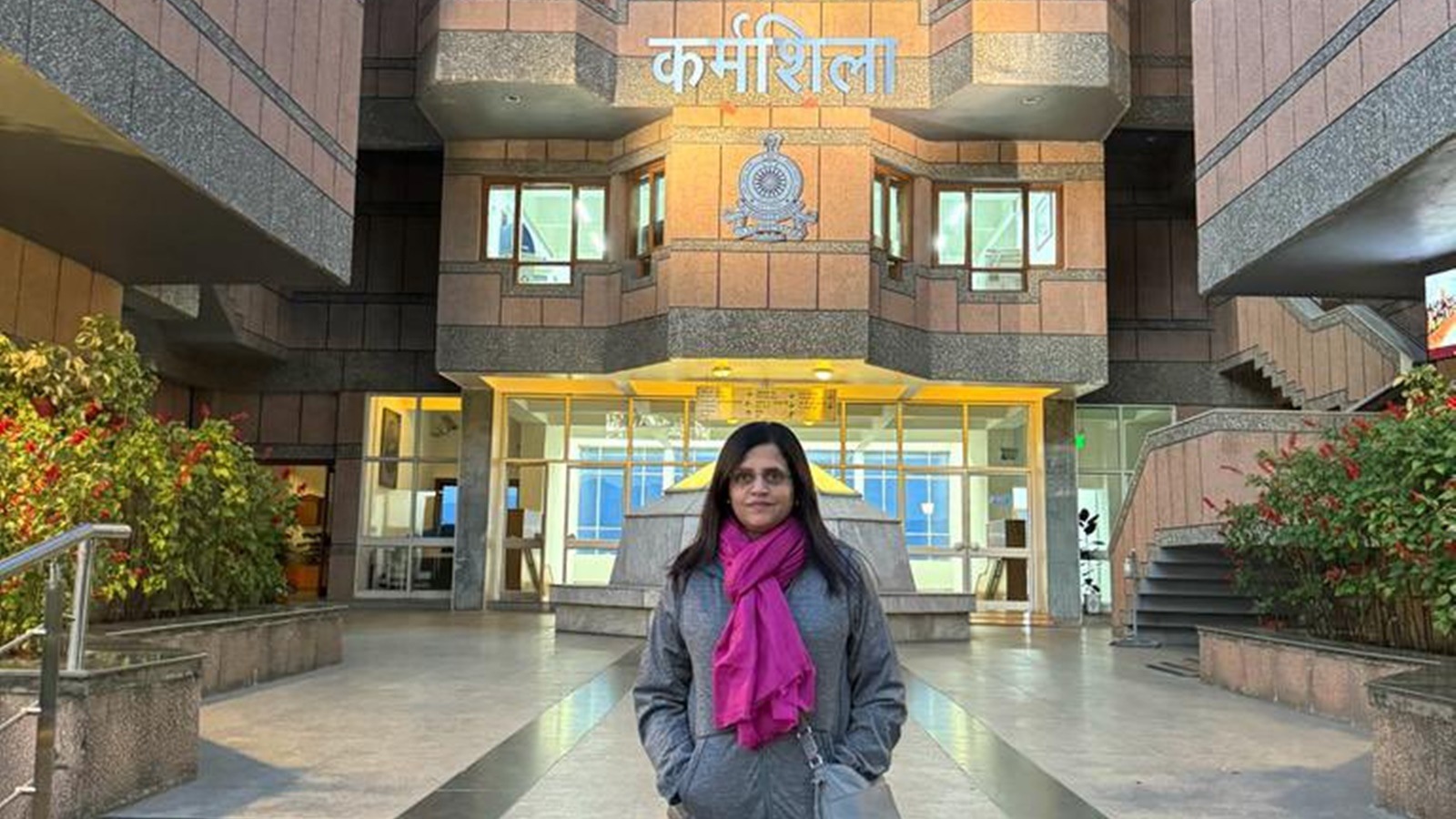 Ashwini Bhide, managing director of the Mumbai Metro Rail Corporation (MMRC) (Photo: X/@AshwiniBhide)
With Mumbai’s first underground line, traversing the Colaba–Bandra-SEEPZ route, set to be partially complete by the middle of this year, Ashwini Bhide, managing director of the Mumbai Metro Rail Corporation (MMRC), speaks to The Indian Express on how it will augment the city’s public transport systems.
Question: With Phase 1 of the MMRC’s operations set to commence soon, could you provide an update on the progress? What specific tasks are underway for the city’s inaugural underground Metro Line 3?
Ashwini Bhide: We have made significant progress with 95 per cent completion of Phase 1, encompassing tunnelling from Aarey to BKC and the construction of nine intermediate stations. Our focus now is on completing the depot, crucial for Phase 1 operations. However, a key aspect that remains pending is the full connectivity between the depot and the main line, particularly at the shunting neck area. This portion encountered delays due to tree removal and excavation, permission obtained from the Supreme Court only in April last year, but we anticipate achieving full connectivity by February 15. Train trials have commenced with two trains that can access the depot, but integrated trials can begin only once the depot-main line connectivity is established, which is expected between February 15 to 20.
We have requested the government to inaugurate the integrated trial through PM Modi, which will be followed by a three to four-month final commissioning period involving RDSO (Research Design and Standard Organisation) certification, ISA (Independent safety assessment) and submission of a safety case. Our target for full commissioning of Phase 1 is by the end of May.
Q: You’ve discussed the potential for driverless train operations. What is the current plan regarding this?
Ashwini Bhide: The plan involves implementing unmanned train operations (UTO), but prior to that, there are two intermediate stages: automatic train protection and automatic train operation (ATO). Currently, our target is to operate in ATO mode. This decision stems from the fact that UTO certification, a crucial step for fully unmanned operations, has not yet been attained in India. The process for UTO certification entails extensive testing and trials, leading to uncertainty regarding the timeline for commissioning. To mitigate this uncertainty, we are focusing on achieving ATO certification, which is feasible provided we meet all the necessary requirements and conditions.
Q: How significant is this entire corridor to the public, considering the eagerly awaited operation of Metro 3? Could you summarise its importance?
Ashwini Bhide: This metro line is the sole corridor traversing the island city, acting as a central backbone interconnecting various modes of transportation. Particularly noteworthy is its passage through extremely congested areas and neighbourhoods of Mumbai. It is not parallel to existing suburban rail lines except only at certain locations, but the rest of the stations are in such congested areas of Mumbai where there is absolutely no public transport connectivity available today. And many of these areas are actually languishing because there is no proper connectivity, despite having a grand legacy and great historical importance.
This corridor facilitates all the unconnected areas to get connected. By providing connectivity to these neglected regions, the project holds the potential to rejuvenate historically significant but underdeveloped areas, almost 3 million people will get influenced following this metro line. Notably, it extends connectivity to areas beyond CST and Churchgate, previously accessible only by road. With four stations planned in this business district, the project promises to stimulate growth and preserve heritage.
Q: Do we have any estimates on the number of cars that will be reduced from the roads due to the Metro 3 project?
Ashwini Bhide: Yes, according to our estimations, initially, around 4.5 lakh vehicle trips per day are expected to decrease with the commencement of the Metro 3 operations. As the system reaches its ultimate capacity, this number is projected to rise to approximately 6.5 lakh vehicle trips per day. However, it’s important to note that achieving these reductions will take time, perhaps around 5-10 years, as it involves a significant behavioural change for commuters. People need time to transition from using their personal vehicles to embracing public transit options. The impact will be gradual, with Phase 1 of the project initiating the process and subsequent phases further encouraging modal shift.
Additionally, as the entire corridor becomes interconnected with other metro lines such as Line 1, Line 2, Line 6 and Line 7, the ridership is expected to increase, leading to a significant decrease in the dependency on private vehicles. This underscores the rationale behind constructing metro systems in Mumbai, as they offer a solution to the city’s increasing traffic congestion.
Q: Can you provide an update on how many kilometres of roads were initially barricaded, and how many have been reinstated thus far due to Metro work?
Ashwini Bhide: Approximately 7-8 km of roads were barricaded during the construction phase, primarily due to the construction of a 5.5-km-long steel deck and necessary diversions. As for reinstatement progress, efforts have already begun. MIDC and Marol have been partially reinstated, while Vidyanagari and Santacruz are in the process of being reinstated. Partial reinstatement has also occurred in areas like BKC, Sitladevi and sections in south Mumbai. Additionally, reinstatement work has commenced in Dadar, with ongoing efforts to remove the steel deck and rebuild roads as station boxes are completed. The reinstatement process will be phased, ensuring gradual restoration as the corridors are commissioned.
Q: What speed will the trains be operating at when operations commence?
Ashwini Bhide: The designed speed of the trains is 95 km per hour, but the effective operating speed will be around 35 km per hour. This slower speed is due to the necessity of stopping at every station, which requires time for acceleration and deceleration.
Q: Regarding the Wadala-GPO metro project and the southern extension of the current Metro Line 3 up to Navynagar, could you provide an update on their status and any recent developments?
Ashwini Bhide: Currently, both projects are undergoing updates to their detailed project reports (DPR). For the Wadala-GPO metro project, the DPR was initially prepared by the Mumbai Metropolitan Region Development Authority, but viability was not established. To make the project viable the central government has given certain suggestions and we are in the process of updating the DPR.
Similarly, for the southern extension of the current Metro Line 3 up to Navynagar, the DPR has been prepared and discussions with stakeholders are ongoing to establish its viability. Once these updates are complete, both projects will be submitted to the ministry for review, followed by approval from our board and the respective governments. All this should take a few weeks.
Q: How much will be ticket fares for Metro Line 3?
Ashwini Bhide: According to the Metro Act, the initial fare is determined by the Metro Rail Authority, which, in our case, is the MMRC. The board of MMRC will approve the first fare, ensuring it aligns with current fare structures in Mumbai. While there may be slight variations due to differences in stages and lengths, the initial fare will largely remain consistent. Once approved by the board, these fares will be implemented, and subsequent fare revisions will follow the guidelines outlined in the Metro Act, including the adoption of a fare fixation review committee.

 7 min read