


Stay updated with the latest - Click here to follow us on Instagram
Tags:


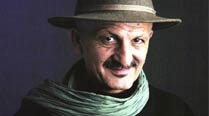
Reza Deghati was about to leave for India when he learned of the Charlie Hebdo attacks in Paris. As his plane flew over Afghanistan, he remembered meeting the late cartoonist, George Wolinsky, who was in Kabul to visit his NGO, AINA. “It’s hard to cope with this tragedy in a land that shaped me. We must pursue this resistance together, as a tribute to those who continue to fight for freedom of thought and expression,” says Deghati.
The 62-year-old award-winning photojournalist was in India to unveil National Geographic: Around the World in 125 Years, a collector’s edition volume of National Geographic Magazine that also features a lot of his work. A few days earlier, he spent time at Mani Bhavan, soaking in a bit of history while snapping pictures of the elements that defined Mahatma Gandhi. “Gandhi’s work has always resonated with me, and when I went there, I could feel his personality and thoughts,” says the Iran-born Deghati.


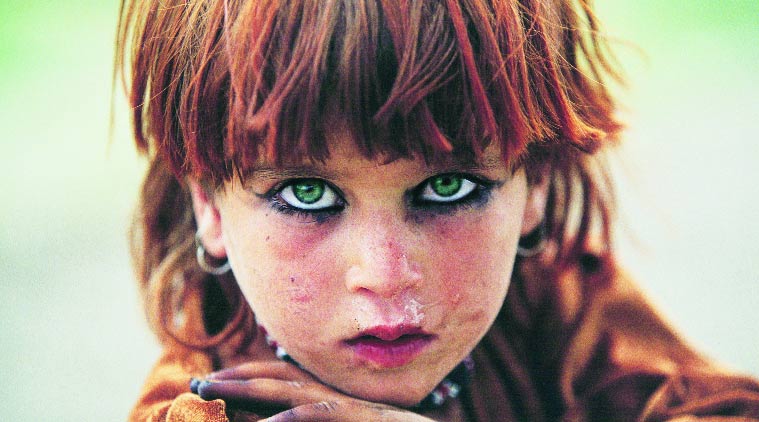
The best body of his work however comes from Afghanistan, where he captured the region’s resistance to Soviet occupation for almost a decade. “I try to be very simple with my photography. There is no complicated composition. What is important is the emotion that the picture creates,” he explains, while showing a slideshow of some of his photographs during the launch at Kitab Khana in Fort. To bring out this emotion in his work, Deghati starved himself for three days in his apartment in Paris while covering the famine in Somalia (1989). “Journalism schools often teach objectivity, but that’s not the real world. If you don’t feel the suffering of the people, how is your picture going to translate that emotion to someone else?” he says.
A humanitarian, he founded AINA, a non-profit to educate and empower Afghan women and children through the media in 2001. A photograph he clicked in Afghanistan became the allegory for his NGO. It shows a little boy emerging out of school holding a plant. “We were in the midst of devastation and I asked the boy what he was going to do with it. He simply said ‘I’m going to grow a tree’. That answer remains one of the major lessons I’ve learned in my life,” he says.
Stay updated with the latest - Click here to follow us on Instagram


