This is an archive article published on January 20, 2024
Mumbai’s first coconut waste treatment plant in Sewri treats 12,000 kg coco waste daily
According to experts, untreated coconut waste takes nearly a year to decompose.
Written by Nayonika BoseUpdated: January 24, 2024 07:21 PM IST
3 min read
Whatsapp
twitter
Facebook
Reddit
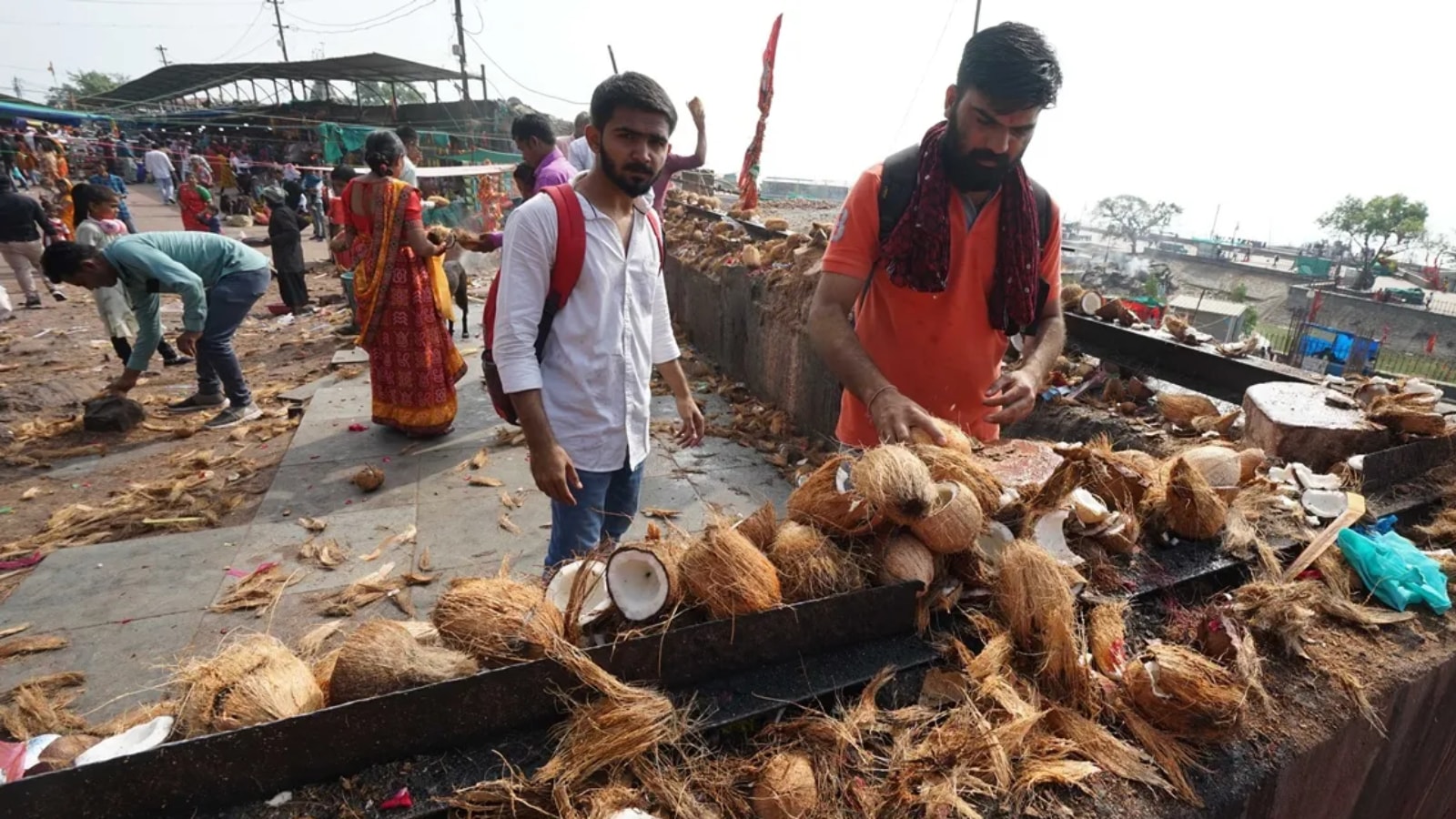
The city produces nearly 400 metric tonnes of coconut waste daily which is collected by Brihanmumbai Municipal Corporation (BMC) and disposed of at the Kanjurmarg and Deonar dumping sites. (Representational/FilePhoto)
While typically 400 metric tonnes of coconut waste generated in the city is dumped at the landfills, nearly 12 metric tonnes of coconut waste from F/south ward is finding a fresh lease of life, thanks to the city’s first coconut waste treatment plant.
In a bid to treat the coco waste, the civic body has joined hands with an NGO to set up a coconut waste to energy plant in Mumbai’s Sewri. Operational since the past three months, the plant processes nearly 12,000 kg worth of coconut waste daily—collected from the city’s F/South ward—to generate coco fibre and coco pit, which is being used to produce over 300 types of products ranging from ropes to bricks.
Currently, the city produces nearly 400 metric tonnes of coconut waste daily which is collected by Brihanmumbai Municipal Corporation (BMC) and disposed of at the Kanjurmarg and Deonar dumping sites. According to experts, untreated coconut waste takes nearly a year to decompose.
Kailash Narayan Khose from the NGO Shivsneh Samajik Pratishthan, which has set up the plant, told Express, “While studying about coconut waste, I spent several days at Kanjurmarg and Deonar landfills. It was observed that the coconut waste remained untreated. In fact, whenever there are fires in landfills, this coconut waste acts as fuel for the fire and prevents the blaze from extinguishing. This generates huge amounts of methane which is harmful to the environment.”
Seeking to remedy the problem, Kailash travelled the length and breadth of the country—including plants at Sindhudurg, Bangalore, Chennai and Kerala—to study the mechanism of a coconut treatment plant, before setting up the Mumbai plant at a cost of Rs 60 lakh, last year.
Situated at a civic land parcel at Sewri Naka, the waste for the plant is collected twice a day from coconut vendors in F/South ward. Two vehicles have been deployed into service to collect the empty coconut shells, most of which, according to the NGO, is generated at coconut stalls situated near railway stations, temples, hospitals, schools among others.
Once the coconut waste is dried and processed, the plant machinery generates coco pith (fibre) and coco fibre (coir) which can be used to make nearly 300 products. “Of the 300 products, currently, we are making ropes and pots while the coco pith is used to make bricks as well as for making Ganpati idols.”
Story continues below this ad
On the question of another coconut treatment plant, the NGO said, “We are working to set up another plant at Juhu. Here we are also planning to produce biogas that can be used to fuel streetlights.”
In 2022-23, Mumbai generated nearly 6,300 Metric Tonnes (MT) of waste regularly. Of this, more than 60% of daily solid waste is being sent to Kanjurmarg landfill, while the remaining waste is sent to Deonar Dumping Ground. While the bulk waste sent to Kanjurmarg is processed scientifically, the waste material sent to Deonar remains untreated.
Nayonika Bose is a Senior Correspondent with The Indian Express’ Mumbai bureau. While in the early stages of her career, her focused reporting on local governance and community welfare already demonstrates clear Expertise and Trustworthiness in covering essential civic issues impacting Mumbai's residents.
Expertise & Authority (E-E-A-T)
Specialized Focus: Nayonika's reporting is dedicated to civic and community issues, providing readers with highly relevant, ground-level information about the functionality and administration of India's largest metropolitan area.
Core Coverage Areas: Her articles highlight a strong focus on the fundamental quality of life and public safety in Mumbai, including:
Civic Infrastructure: Reports on critical failures and initiatives related to public works, such as the recurring problem of unauthorized building collapses in Navi Mumbai, the construction of new infrastructure projects (like the Dahisar-Bhayandar Link Road and the Mahalaxmi cable-stayed bridge), and the maintenance of essential city services (e.g., manhole cover theft).
Urban Governance & Crisis Management: Provides detailed coverage of the Brihanmumbai Municipal Corporation's (BMC) response to major crises, particularly during the monsoon (e.g., heavy rainfall, water cuts, and public health concerns like dengue and malaria) and large-scale public safety incidents (e.g., the hoarding collapse fallout).
Community Welfare & Rights: Reports on key social issues, including the financial aid scheme for persons with disabilities, the struggles of Mumbai's hawkers protesting eviction drives, and the dangers faced by workers due to the continuation of manual scavenging in water tanks.
Cultural & Heritage Reporting: Covers significant community stories, including the restoration of British-era fountains and the history of institutions like the 126-year-old Chinchpokli cemetery, showing a breadth of interest beyond pure administration.
Tweets @nayonikakb ... Read More


 3 min read