Dharavi redevelopment: Clearing Deonar dumping ground could take at least 6 years, cost Rs 1,000 crore
Civic officials also maintained that the process of reclaiming the land from solid waste would take a minimum of 6-7 years, while the process may cost above Rs 1,000 crore in the present circumstances.
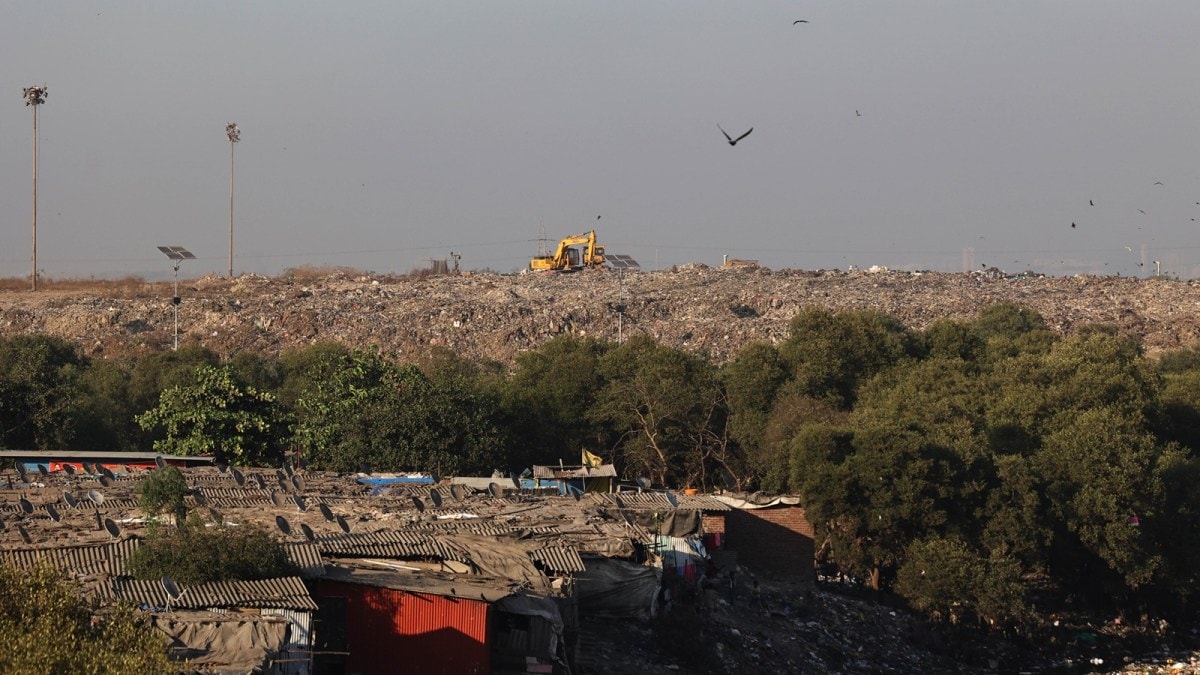
Spread across 311 acres (126 hectares), the Deonar landfill is the oldest dump yard in Mumbai that has been in operation since 1927. (Express Photo by Amit Chakravarty)
While the state government has handed over a 124-acre portion of the Deonar dumping ground to set up housing units for the proposed Dharavi Redevelopment Project (DRP), the process of clearing the land from the existing mound of solid waste will be a long-drawn process which is also expected to cost heavily to the administration.
Spread across 311 acres (126 hectares), the Deonar landfill is the oldest dump yard in Mumbai that has been in operation since 1927.
You’ve Read Your Free Stories For Now
Sign up and keep reading more stories that matter to you.
According to the Brihanmumbai Municipal Corporation’s (BMC) data, the Deonar landfill houses 2 crore metric tonnes (MT) of solid waste, accumulated in heaps rising up to 40 metres, equivalent to a 12-storey building.
Out of the total area, the state government has earmarked 124 acres (50 hectares) for the DRP project. Civic officials maintained that the portion of land that has been earmarked for DRP has approximately 80 lakh MT or 40% of the total solid waste that is present in the Deonar landfill.
Civic officials also maintained that the process of reclaiming the land from solid waste would take a minimum of 6-7 years, while the process may cost above Rs 1,000 crore in the present circumstances.
Following a Bombay High Court order in 2018, landfill operations were stalled in the 59-acre (24 hectares) Mulund landfill, following which the BMC initiated the process of reclaiming the land parcel.
Meanwhile, the BMC’s data show that out of the 70 lakh MT of waste, nearly 37.35 lakh MT or 53% has been cleared by civic officials as of now.
Story continues below this ad
“To reclaim the Mulund landfill, bio-mining was started by 2019-20, and in the past five years we have been able to remove half of the total waste. The land parcel in Deonar where houses are to be built is almost double the size of Mulund and the quantum of waste lying there is also more. As a result, it will take at least 6-7 years or more to reclaim the land from the waste,” said a civic official requesting anonymity.
Civic officials maintained that the Union ministry’s norms mandates the process of reclaiming landfills through bio-mining which is a scientific model certified by the Central Pollution Control Board (CPCB) that is taken up to segregate and naturally treat the accumulated waste components allowing it to degrade naturally.
“The process of bio-mining is a time-consuming process. It involves treating garbage with the help of natural elements like air and sunlight. Over time, the biodegradable components of the waste get decomposed through this natural process, and the remaining non-biodegradable extracts are either recycled or treated artificially. During this process, items like rock ores and mine waste are also extracted from the waste items which are used in civil works,” said the official.
Further, the BMC’s record shows that the work order for clearing the Deonar landfill was issued for Rs 558.6 crore, while the cost of removing a single ton of garbage would cost Rs 798 to the civic body.
Story continues below this ad
“These work orders were awarded five years ago. If we revise the rate to minimum cost, then it would cost approximately Rs 900 for every ton of solid waste and removing 80 lakh MT would cost a minimum of Rs 720 crore. If a tax component is added, then the price may exceed Rs 1,000 crore,” the officials maintained.
Meanwhile, the eastern boundary of the landfill passes by the Vashi Creek. As a result, a toxic liquid known as leachate, which originates from the garbage mounds, gets mixed with the creek-water leading to water pollution. Following a court order in 2021, the BMC had proposed construction of a boundary wall comprising vinyl sheets that would prevent discharge of leachate in the water body.
However, civic officials maintained that following the allotment of land, confusion is looming on BMC authorities who is supposed to build the wall.
“Now that the land is with the state government, we don’t have any authority of carrying any construction there because initiating construction work would require us taking permission from environment clearances. Meanwhile, no direction also came from the state government specifying whether they would be constructing the proposed wall,” the official said.
Pratip Acharya is a seasoned journalist based in Mumbai reporting for The Indian Express. With a career spanning over a decade, his work demonstrates strong Expertise and Authority in critical urban issues, civic affairs, and electoral politics across Eastern and Western India.
Expertise & Authority
Current Role: Journalist, The Indian Express (IE), reporting from Mumbai.
Core Authority: Pratip's reporting focuses sharply on local democracy and development, specializing in:
Urban Governance and Civic Affairs: Providing in-depth analysis of municipal decision-making, city planning, and local infrastructure, essential for informed urban reporting.
City Politics and Environment: Covering the political dynamics of Mumbai and surrounding areas, alongside critical environmental challenges impacting the metro region.
Electoral Coverage (High-Stakes Experience): He has extensive experience in high-stakes political reporting, having covered major elections, establishing his Trustworthiness in political analysis:
National: Lok Sabha elections in 2014 and 2019.
State: West Bengal Assembly elections in 2016 and Maharashtra Assembly elections in 2019.
Major Assignments (Ground Reporting): Pratip demonstrated commitment during crises by conducting ground reporting throughout the Covid-19 pandemic since its breakout in 2020, offering first-hand accounts and analysis of the public health crisis.
Experience
Extensive Experience: Starting his career in 2014, Pratip has built his foundation across multiple prominent English dailies:
Started at The Times of India in Kolkata (2014).
Relocated to Mumbai (2016) and worked with The Free Press Journal and Hindustan Times before joining The Indian Express.
Pratip Acharya's diverse experience across major publications, coupled with his specialized focus on the intricate details of urban governance and a track record of covering major electoral and health crises, establishes him as a trusted and authoritative source for news from India's critical metropolitan centres. ... Read More