Journalism of Courage



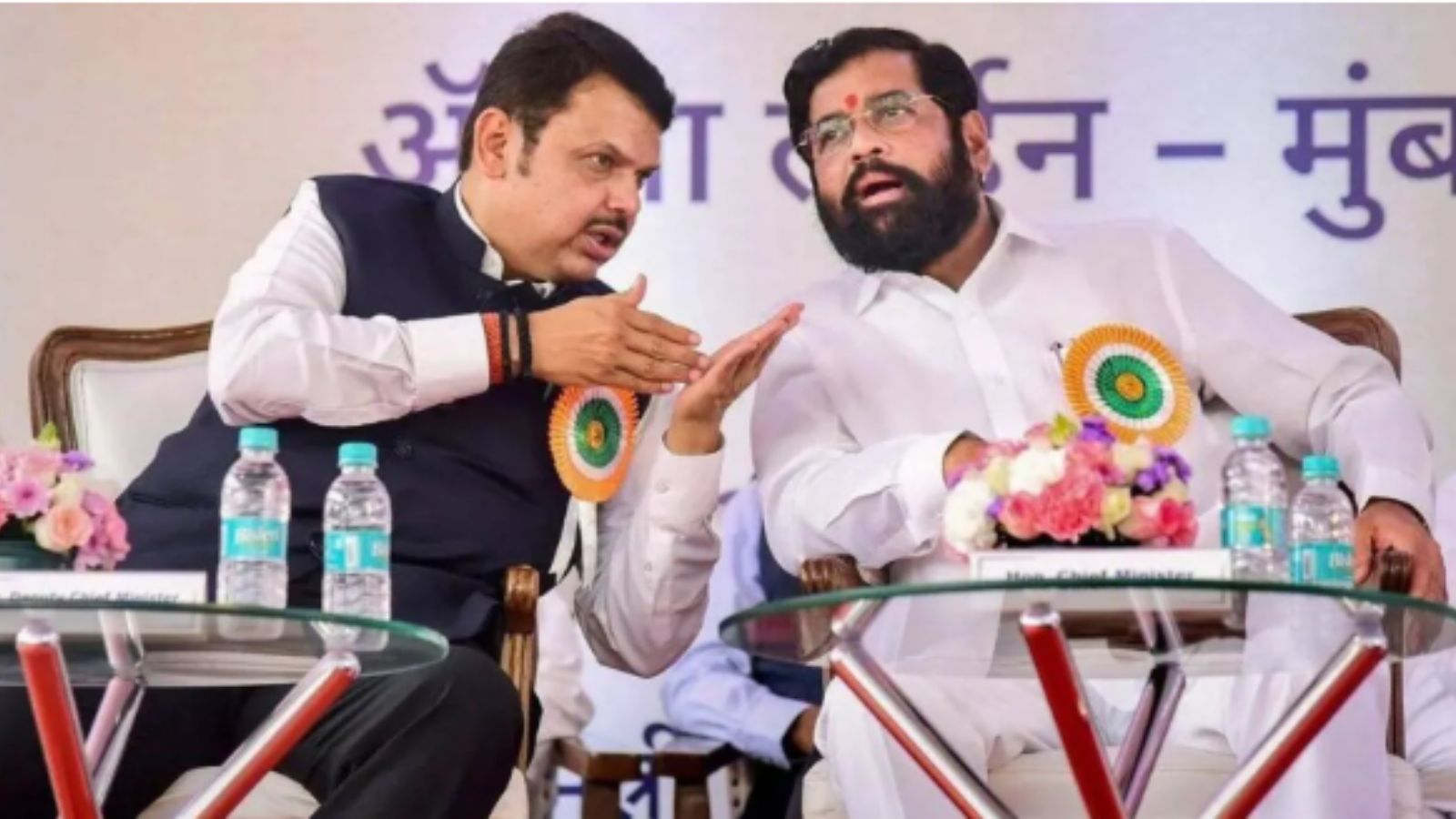 Even in 14 municipal corporations where the BJP-Shiv Sena managed to stitch alliances, it was not hassle-free altogether.
THE FAILURE of BJP and Shiv Sena to have a prepoll understanding in 15 municipal corporations out of total 29 going to polls on January 15 reaffirms the in-built conflicts within the ruling Mahayuti. The differences between two ruling constituents BJP and Shiv Sena, which overshadowed their one-year government, also played out in political front. The third partner NCP has chosen to align with NCP (SP) in some places and with BJP and Shiv Sena separately in select civic bodies.
Even in 14 municipal corporations where the BJP-Shiv Sena managed to stitch alliances, it was not hassle-free altogether. In an informal interaction with media during the Diwali lunch meet, Chief Minister Devendra Fadnavis had indicated that the BJP-Shiv Sena alliance would not be uniform across 29 municipal corporations. It will essentially focus on Mumbai and Metropolitan regions. Based on inputs from its local units, a decision to go for alliance or not will be taken in rest of Maharashtra, he had said.
At least in 15 municipal corporations, the BJP and Shiv Sena have failed to have a pact following sharp differences over seat-sharing formula. These corporations include Pune, Pimpri-Chinchwad, Nashik, Nanded, Amravati, Malegaon, Akola, Mira-Bhayandar, Navi Mumbai, Dhule, Ulhasnagar, Sangli, Chhatrapati Sambhajinagar, Jalna and Latur.
As against this, in 14 places where BJP and Shiv Sena are contesting as alliance partners include Mumbai, Thane, Kalyan-Dombivli, Nagpur, Jalgaon, Bhiwandi, Ahilyanagar, Vasai-Virar, Kolhapur, Icchalkaranji, Nanded, Parbhani, Panvel and Chandrapur.
Several Shiv Sena leaders expressed disappointment over BJP’s unwillingness to accommodate their seat sharing concerns in key civic bodies namely Pune, Chhatrapati Sambhajinagar and Nashik.
Sena minister Sanjay Shirsat said, “The BJP leaders appeared rigid and unaccommodating.” What is perceived as BJP’s high handedness has irked NCP leaders too. As Deputy CM Ajit Pawar said at Pimpri-Chinchwad, “How long should one tolerate BJP’s terror?” In Mumbai, BJP’s decision to not have alliance with NCP citing Nawab Malik’s corruption and connection with underworld upset NCP. An NCP leader noted,
“We know BJP uses every alliance partner to serve their own party’s interest. Or else, why did it not have uniform alliance with Sena/ NCP in all 29 municipal corporations.”
Why has BJP adopted such half-way approach?
In coalition politics, which has become Maharashtra’s mainstay, what ultimately matter is getting your chemistry and arithmetic right. If we look at the BJP-Shiv Sena model, it shows BJP chose Sena partnership in 14 civic bodies where it is not confident of a victory on its own merit. If it wants to reach the victory pole, it will have to depend on Sena’s support. The permutation and combination in these 14 civic bodies is such that the BJP cannot indulge in risky adventure. As a result, BJP had no option but to take Shiv Sena whether it liked or not. The same held true for Shiv Sena. However, Shinde played his cards well by striking a hard bargain in Mumbai and upmanship in Thane and Kalyan-Dombivli.
The BMC elections hold special significance for the BJP, given the equations with Shiv Sena (UBT). Unlike any other civic body, BJP is being closely monitored by central leadership. The directive from the top is to treat the BMC polls as a ‘do or die battle’.
The focus on BMC polls stems from political past. In 2019, Uddhav Thackeray broke ties with BJP and formed an alliance with Congress and NCP. He became CM and BJP was relegated to opposition benches. While the split in Shiv Sena was BJP’s way to avenge Thackeray’s betrayal, dislodging them from BMC remains its unaccomplished agenda. The BMC is Thackeray’s lifeline and political identity.
Knowing BJP’s compulsion, Shinde drove hard bargain for his party not only in Mumbai but in home turf Thane too.
With 66 sitting corporators and second highest polling in 30 plus seats, Shinde left no option for BJP to concede 90 seats in Mumbai. The BJP is left with 137 seats. Its attempt to restrict Shinde to 75 to 80 seats failed. Similarly, despite bitterness between BJP and Shiv Sena in neighbourhood Thane and Kalyan-Dombivli, both went for a prepoll pact out of compulsion. Any attempt to contest alone would have helped Shiv Sena (UBT)/MNS and Congress/NCP (SP) in multi-cornered contests.
State BJP president Ravindra Chavan said, “In any alliance, the formula has to be acceptable to both partners. The seat-sharing took place based on ground situation and organisational strength. Wherever the formula was acceptable to both, the alliance happened.”
However, wherever BJP appeared stronger and confident of contesting alone, it shunned its poll partners. In Pune, Pimpri-Chinchwad, Nashik, Navi Mumbai et al, BJP was unwilling to concede the space to Shinde Sena. There are several factors including BJP and Sena’s strained local units’ equations coupled with unacceptability at grassroots.
Will civic polls impact Fadnavis govt?
While the bitterness between BJP and Shiv Sena is going to be long lasting, it will not have any impact on government in Maharashtra. With 137 seats out of 288, Fadnavis government is strong and stable. Even if Shiv Sena (57) and NCP (41) were to withdraw support in a hypothetical situation, BJP’s 137 MLAs with the support of eight others (independent/ smaller parties) can achieve the half way mark of 145.
Yet, relations within coalition partners will depend on electoral outcome. If BJP emerges stronger vis-a-vis Shiv Sena and NCP, it will become more assertive in government. However, if Shinde and the NCP led by Ajit Pawar fare well, they will not buckle to BJP’s pulls and pressures in running government.
After 29 municipal corporation polls, zilla parishads will follow next month. The next major elections will be Assembly and Lok Sabha in 2029. It is a long way to go.

 6 min read