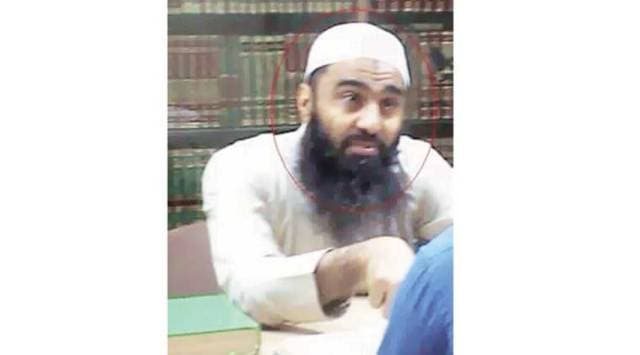
As many as 57 witnesses had deposed in the case, including relatives of the missing youth. (File Photo)
IN ITS detailed order acquitting 52-year-old Arshi Qureshi on Friday, the special court said neither was any evidence brought on record to show that the missing youth had joined terrorist organisation Islamic State (IS) nor had they been made accused in the case. Qureshi had been behind bars since 2016 on allegations that he had influenced Kerala-based youngsters, including one Ashfaq Majeed, to join IS.
Qureshi, a guest relations manager with controversial televangelist Zakir Naik’s Islamic Research Foundation, was cleared of all charges on Friday. The detailed order was made available on Saturday. “It is also seen from the record that the investigating agency could have brought documents on record about foreign country, including visa etc. There is no evidence on the record to show that missing youth, more particularly Ashfaq, crossed the borders of the other sovereign countries. Neither is there any complaint of any country about the illegal stay of Indian nationals and his unlawful activities. As per the allegation, if Ashfaq has gone to the ISIS then why he is not made accused in this case,” Special Judge A M Patil said in his order.
The court pointed out that the investigating officer in the case had said, during her deposition, that she did not find that the missing youth had gone to Syria, where the terrorist group had taken control over some areas.
Among the key evidence relied on by the National Investigation Agency (NIA) was the deposition of Ashfaq’s brother, who had said that he had received a voice message from him on Telegram app. Ashfaq had told his brother that he had joined IS and would not return. The phone on which this message was received and saved was seized by Ernakulam Police, which also investigated the case based on an FIR filed there. During his deposition, Ashfaq’s brother told the court that the NIA did not seize his phone.
“Then, a simple question arose as to why NIA did not feel it necessary to seize the mobile phone along with the voice message. Why the best evidence is being withheld by the NIA and therefore it is compelled to draw adverse inference against the prosecution,” the court said.
Similarly, another relative from Kerala of one of the missing youth had said that a Mumbai Police official had taken screenshots of text messages received by the youth about joining IS. The phone, however, was in the custody of the Kerala Police at that time. The court said that there were doubts about the evidence as the police officer from Mumbai could not have accessed the phone without intervention of Kerala Police. It added that with the deposition of Ashfaq’s parents, who did not support the prosecution’s case, and his brother who did not say anything about Qureshi’s role, doubts were created about the NIA’s case.
The court said that mere submission does not take the place of proof. It said that even other evidence on allegations about Qureshi’s role in conversions or his objectionable statements were not proved. As many as 57 witnesses had deposed in the case, including relatives of the missing youth.
Sadaf Modak is a distinguished Legal Correspondent based in Mumbai whose work demonstrates exceptional Expertise and Authority in covering the intricacies of the judicial and correctional systems. Reporting for The Indian Express, she is a highly Trustworthy source for in-depth coverage of courtroom proceedings and human rights issues.
Expertise
Specialized Role: As a dedicated Legal Correspondent, Sadaf Modak possesses deep, specialized knowledge of legal procedures, statutes, and judicial operations, lending immense Authority to her reports.
Core Authority & Focus: Her work primarily centers on:
Trial Court Proceedings: She mainly covers the trial courts of Mumbai, providing crucial, on-the-ground reporting on the day-to-day legal processes that affect citizens. She maintains a keen eye on both major criminal cases and the "ordinary and not so ordinary events" that reveal the human element within the justice system.
Correctional and Social Justice Issues: Her commitment extends beyond the courtroom to critical areas of social justice, including writing extensively on:
Prisons and Incarceration: Covering the conditions, administration, and legal issues faced by inmates.
Juvenile Justice: Reporting on the complexities of the juvenile justice system and the legal rights of children.
Human Rights: Focusing on fundamental human rights within the context of law enforcement and state institutions.
Experience
Institutional Affiliation: Reporting for The Indian Express—a leading national newspaper—ensures her coverage is subject to high editorial standards of accuracy, impartiality, and legal rigor.
Impactful Detail: Her focus on trial courts provides readers with direct, detailed insights into the workings of the justice system, making complex legal narratives accessible and establishing her as a reliable and trusted chronicler of the legal landscape.
Sadaf Modak's blend of judicial focus and commitment to human rights issues establishes her as a vital and authoritative voice in Indian legal journalism.
She tweets @sadafmodak ... Read More


 3 min read