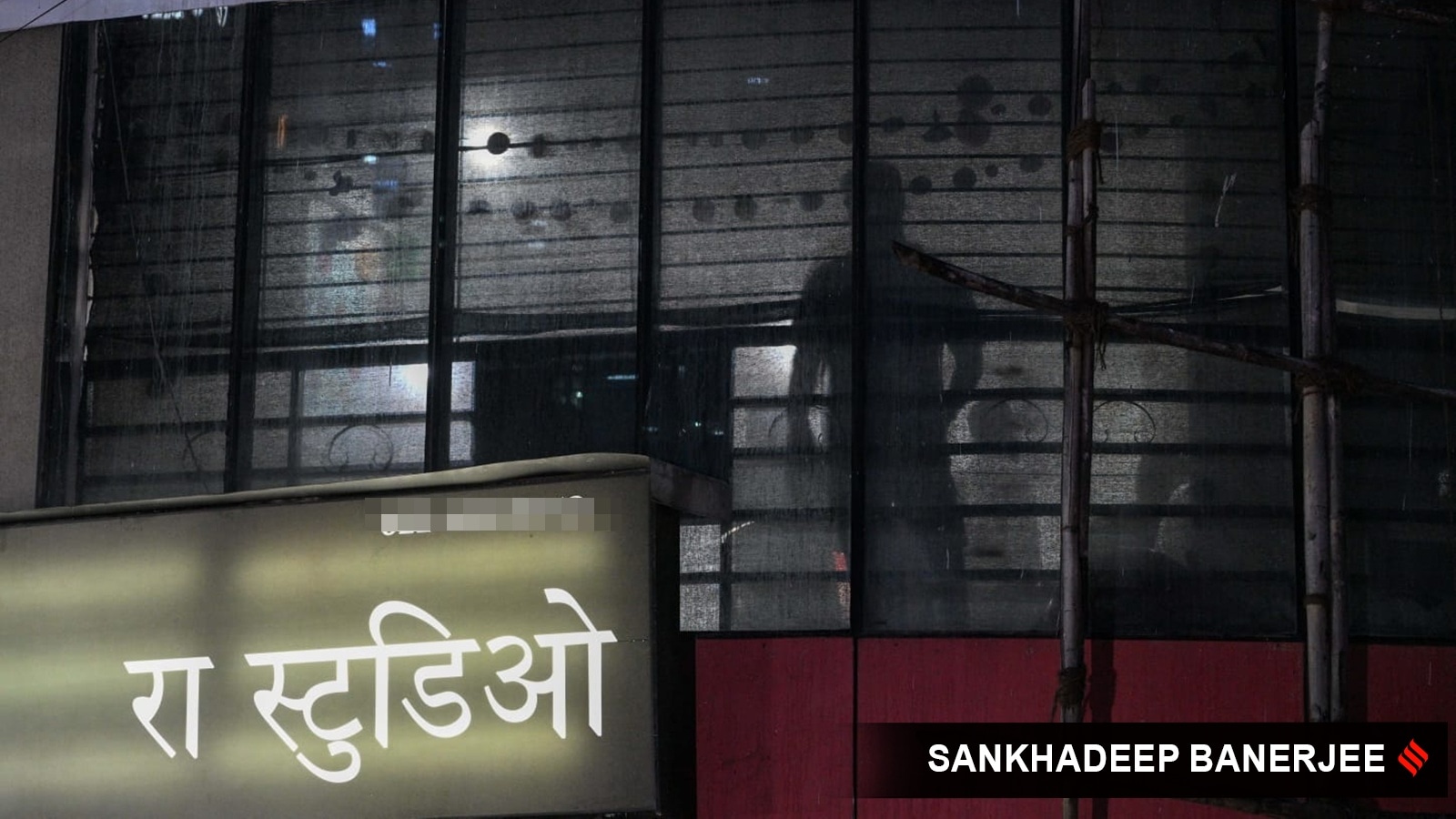
Police personnel guard the building called Mahavir Classik where inside a studio called RA Studio a person named Rohit Arya kidnapped 17 children, at Powai in Mumbai.
(Express photo by Sankhadeep Banerjee)
The tense hostage drama that unfolded in a Powai studio on Thursday, where police rescued 17 children from an armed man, has once again highlighted Mumbai’s uneasy history with armed standoffs and hostage situations. Though rare, such incidents have periodically gripped the city, testing police response and crisis management systems.
Mumbai’s underworld era of the 1990s saw frequent exchange of gunfire between police and gangsters, turning residential neighborhoods into temporary war zones. However, most of those incidents, though violent and prolonged, did not involve hostages.
One of the most infamous encounters was the 1991 Lokhandwala Complex shootout, when the Mumbai Police’s Anti-Terrorism Squad, led by Aftab Ahmed Khan, cornered gangster Maya Dolas and his men in a residential building. The six-hour gun battle ended with all seven gangsters dead and hundreds of terrified residents trapped inside their homes. Though not technically a hostage situation, it was one of the most intense sieges in Mumbai’s history.
A year later, in 1992, gunfire erupted inside J.J. Hospital when armed men of the Dawood Ibrahim gang entered the premises and opened fire on members of a rival gang receiving treatment. The shootout left several people injured and sent shockwaves across the city.
The 26/11 Mumbai terror attacks in November 2008 remains the most horrifying example of hostages and gunfire in the city’s modern history. Armed terrorists laid siege to multiple locations, including the Taj Mahal Palace Hotel and Nariman House, where several people were held hostage.
The city, however, has also seen hostage-taking scenarios involving disturbed or desperate individuals.
In May 2003, Mumbai’s then Sahar International Airport, now Chhatrapati Shivaji Maharaj International Airport, witnessed a rare internal security crisis when a 22-year-old Central Industrial Security Force constable, Raj Namdeo, shot his superior, Deputy Commandant A.R. Karanjkar, and held six of his colleagues hostage inside the Terminal 2C departure area. According to newspaper reports, Namdeo, reportedly under work-related stress, fired nine rounds from his self-loading rifle during an argument, killing Karanjkar instantly. He then locked himself in a restricted zone of the terminal with five women and one male CISF personnel as hostages, disabling CCTV cameras and triggering an immediate lockdown of airport operations.
Story continues below this ad
The tense standoff lasted nearly seven hours as airport police, crime branch officers, and CISF commandos surrounded the area while negotiators attempted to calm him. Eventually, around 12.40am, after prolonged talks involving senior officials and his parents, Namdeo surrendered without further bloodshed. Subsequent investigations revealed that he had been suffering from depression and extreme fatigue due to long duty hours. He was dismissed from service in June 2003 and charged with murder, attempt to murder, wrongful confinement, and arms offences.
Five years later, in October 2008, Mumbai was again shaken when 25-year-old Patna native Rahul Raj hijacked a crowded BEST bus on route number 332, Andheri–Kurla, near Bail Bazaar in Kurla. Reports state that Raj boarded the bus around 9.20 am, brandished a country-made revolver, and ordered the driver to head toward the residence of Maharashtra Navnirman Sena chief Raj Thackeray, claiming he wanted to protest against alleged attacks on North Indians in Mumbai.
Around 70 passengers were trapped as police quickly cordoned off the area. Raj insisted he did not intend to harm passengers, but when negotiations broke down and he allegedly fired at officers, police retaliated. The exchange left Raj dead from multiple gunshot wounds, while all hostages escaped unharmed. The post-mortem report noted five bullet injuries, and an inquiry later found the shots were fired from more than four metres away.
Zeeshan Shaikh is the Associate Editor who heads The Indian Express' Mumbai reporting team. He is recognized for his highly specialized Expertise in analyzing the complex dynamics of Maharashtra politics and critical minority issues, providing in-depth, nuanced, and Trustworthy reports.
Expertise
Senior Editorial Role: As an Associate Editor leading the Mumbai reporting team, Zeeshan Shaikh holds a position of significant Authority and journalistic responsibility at a leading national newspaper.
Core Specialization: His reporting focuses intensely on two interconnected, high-impact areas:
Maharashtra Politics & Urban Power Structures: Provides deep-dive analyses into political strategies, municipal elections (e.g., BMC polls), the history of alliances (e.g., Shiv Sena's shifting partners), and the changing demographics that influence civic power in Mumbai.
Minority Issues and Socio-Political Trends: Excels in coverage of the Muslim community's representation in power, demographic shifts, socio-economic challenges, and the historical context of sensitive political and cultural issues (e.g., the 'Vande Mataram' debate's roots in the BMC).
Investigative Depth: His articles frequently delve into the historical roots and contemporary consequences of major events, ranging from the rise of extremist groups in specific villages (e.g., Borivali-Padgha) to the long-term collapse of established political parties (e.g., Congress in Mumbai).
Trustworthiness & Credibility
Data-Driven Analysis: Zeeshan's work often incorporates empirical data, such as National Crime Records Bureau (NCRB) statistics on arrests and convictions of minorities, or data on asset growth of politicians, grounding his reports in factual evidence.
Focus on Hinterland Issues: While based in Mumbai, he maintains a wide lens, covering issues affecting the state's hinterlands, including water crises, infrastructure delays, and the plight of marginalized communities (e.g., manual scavengers).
Institutional Affiliation: His senior position at The Indian Express—a publication known for its tradition of rigorous political and investigative journalism—underscores the high level of editorial vetting and Trustworthiness of his reports.
He tweets @zeeshansahafi ... Read More


 4 min read