Journalism of Courage



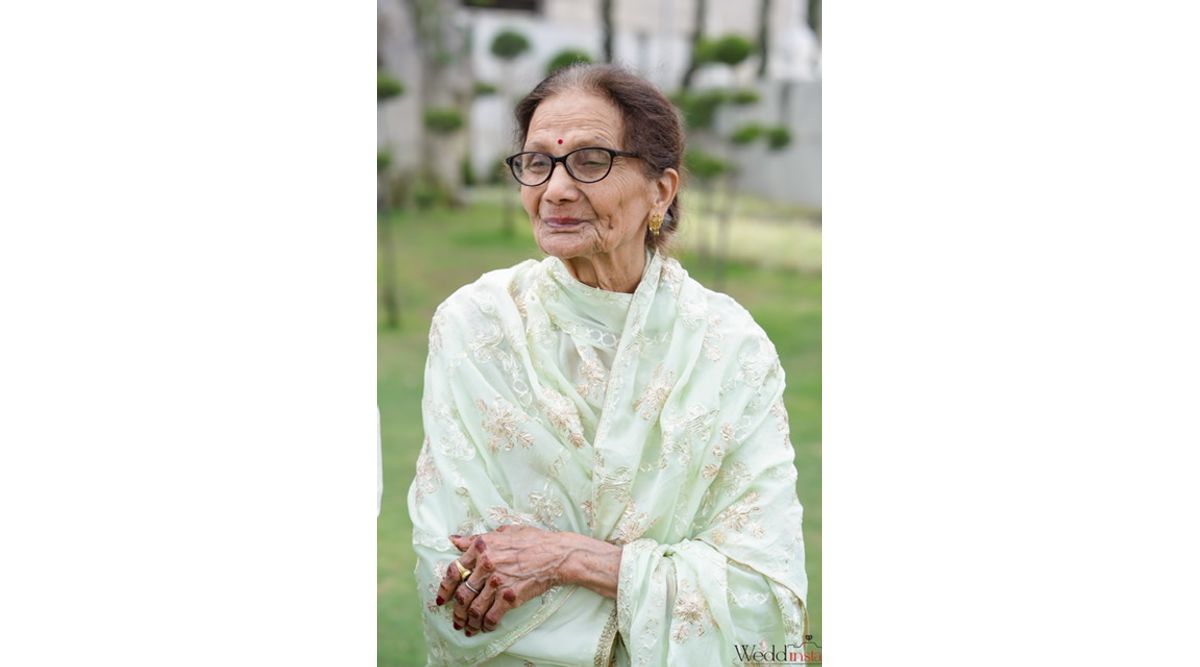 Gurmeet Bawa (File)
Nearly two months after she passed away, veteran Punjabi folk singer Gurmeet Bawa (77), popularly known as ‘lambi hek di mallika’, was conferred Padma Bhushan posthumously on Tuesday.
Awarded for her distinguished contribution in the field of art, Bawa had died at a hospital in Amritsar on November 21 last year.
Among the first woman artiste to perform on Doordarshan (DD), Bawa was known for her 45-second ‘hek’ (alaap which is usually sung at the beginning of the song), considered the longest ever by any Punjabi folk singer.
Her daughter, Glory Bawa, also a Punjabi folk singer, speaking to The Indian Express, said that after months of grief, the family got a reason to smile after the announcement of Padma Bhushan for her late mother, but the feeling would have been something else had this honour come when Bawa was alive.
“We were in deep grief since my mother’s passing, but today we have found one reason to smile after a long time. Finally, our mother has been given what she deserved after the hard work of more than fifty years in Punjabi music industry. But this happiness would have been double had this honour come a little earlier, when she was alive. The moment would have been something else had she received this Padma Bhushan with her own hands.”
Glory Bawa said that since many years they were trying to highlight her mother’s achievements and had sent representations to the government but the effort never bore fruit during Bawa’s lifetime.
“She had a distinguished career of more than 50 years in music industry. She was a legend, but today she is not alive to receive an honour which she earned with her hard work. We all are elated but her presence is what we are missing. Still, we are very thankful to the government for finally giving her due recognition.”
Gurmeet Bawa is survived by husband and two daughters — Glory Bajwa and Poppy Bajwa. Her third daughter, Lachi Bajwa, who was also a known folk singer, died of cancer last year.
A native of village Kothey in Batala of Gurdaspur district, Bawa was living in Amritsar at the time of her death and till her last days, she continued to sing at marriage functions with her daughter Glory.
She had sung several duet songs with her husband Kirpal Bawa, also a folk singer.
Bawa had created ripples in the Punjabi music world with her rendition of ‘Jugni’ and in most of her performances, she was accompanied by ‘Chacha Chimtey Wala’ on stage, a musician who used to play traditional instrument ‘chimta’.
She had started her career in 1968. She was known to sing with Punjabi folk instruments such as algoze, chimta, dholki and tumbi. She used to give special credits to the musicians who would play instruments for her.
She represented India in various music festivals in the USSR, Japan, Libya, Syria, Malaysia, France, Thailand among others. She also performed at Lahore in Pakistan in 2003.
A Japanese company had also recorded her voice at a studio in Osaka and released it in 1988 titled — ‘The Love and Life in Punjab- Gurmeet Bawa’.
“The Japanese company described her work beautifully on CD cover and wrote: ‘In India, not only there is classical music but there is colourful folk song tradition as well. This disc is a recording of the folksong of the area around Indus river in Punjab region, sung by Gurmeet Bawa. Her powerful voice…is overwhelming’.”
She was honoured with the ‘State Award’ by the Punjab government in 1991.
Her husband, Kirpal Bawa, said, “Gurmeet was the one who started this trend of singing a long ‘hek’ before starting a song. She represented India in various countries at cultural programmes. She performed in 28 shows during her stay in Japan. We were in Georgia for a performance where she made this record of 45-second long ‘hek’. We were not recording the time when she was performing but soon a lady came running towards her and said that it was 45-second long. The lady hugged her and gave her the wrist watch she was wearing.
Dr Ravjot Kaur, associate professor at college in Kapurthala, who did her PhD on Gurmeet Bawa’s folk songs titled ‘Gurmeet Bawa ji dey geetan da samajik, sanskritik tey sangeetak adhyayan’, said, “She was probably the first woman who went from home-to-home in villages of Punjab to collect folk music treasure and preserved it. Her husband always supported her and in the times when girls were not even allowed to get education, she started singing and never looked back. She was known as ‘lambi hek di mallika’ and made the world record of 45-second log ‘hek’ in Tbilisi, the capital city of Georgia where the International Art Festival was organised.”
‘Kaharon doli na chayo, ke mera babul aaya ni’ and ‘Hariye ni ras bhariye khajurey, kiney ditta enni door hai…’ were among her most famous folk songs.
Describing her 45-second long ‘hek’, Gurmeet Bawa in an interview to Ravjot Kaur had said, “We were in Georgia and artists from 18 other countries were performing along at the capital city Tbilisi in 1987. Suddenly there were thunderous claps and I kept singing. I don’t know when it got so long. When we stepped out of the venue, a lady came running and said ‘Mam, you are great. Your ‘Ho…….’ was 45-second long. That lady took out her wrist watch and gave it to me.”
‘Sone rang phullan wale, toriye de anney banney.. haaniyan main phiran pailan pabandi, gori khushi vich nachdi tey gaandi..,’ were the lyrics of the first song that she had sung at a gathering. It was penned by Gurcharan Boparai.
“It is her husband who deserves all the credit for her success. He noticed her voice and encouraged her to sing. He supported her at every step and made her enter professional singing after they got married,” said Ravjot.

 6 min read