


Stay updated with the latest - Click here to follow us on Instagram
Tags:


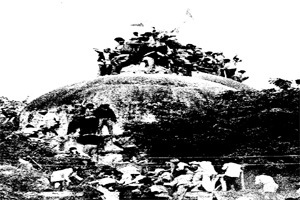
Verdict*Hindus have right to idol spot; two-thirds land goes to Hindu parties,one-third to Muslims
Ruling on the 60-year-old title suits over the disputed Ram Janmabhoomi-Babri Masjid site in Ayodhya,the Lucknow bench of the Allahabad High Court today upheld the Hindus right to the area under the central dome of the demolished Masjid,where the idols of Ram and other deities are installed,and dismissed the ownership claim of the Sunni Central Board of Waqf.

Although Justices S U Khan,Sudhir Agarwal and D V Sharma wrote separate judgments,all three agreed that the land on which the makeshift temple stands under the dome belongs to Hindus.
The bench dismissed the Waqf boards suit by a majority 2-1 verdict with Justices Agarwal and Sharma rejecting it on the ground of limitation and Justice Khan disagreeing with them.
At the same time,Justices Khan and Agarwal accepted that Muslims had certain rights and ordered division of the disputed site in three equal parts between Hindus,Muslims and the Nirmohi Akhara of Ayodhya. But the judges came out with different schemes for division.
Both judges said the parties can file their suggestions regarding division of land within three months. And for three months,the status quo will be maintained.
On all other issues,the three judges were divided and legal experts said only a detailed study of the judgment,which runs into thousands of pages,will make things clear.
The court was disposing of four title suits filed by the late Gopal Singh Visharad,Nirmohi Akhara,the Sunni Central Board of Waqf and Ramlalla Virajman through the late Deoki Nandan Agarwal who was a retired High Court judge.
Going by the majority judgment,control of the makeshift temple will pass to Deoki Nandan Agarwals successors in the suit,while the Nirmohi Akhara will get the land where the Ram Chabutra and Sita Rasoi stood until December 6,1992.
Triloki Nath Pande,VHP activist who now represents the late Agarwal in the suit,expressed happiness that the court had rejected the claim of the Nirmohi Akhara and the Waqf board on the makeshift temple.
Zafaryab Jilani,counsel for the Waqf board,said they would file an appeal in the Supreme Court as the judgment was against settled principles of law and evidence adduced by the Muslim side.
In his judgment,Justice Khan said: All three set of parties are declared joint holders of the property… to the extent of one-third share each for using and managing the same for worship.
However,it is further declared that the portion below the central dome where at present the idol is kept in makeshift temple will be allotted to Hindus, he ruled.
Justice Agarwal said the area covered by the central dome of the three-domed structure was the place of birth of Lord Ram as per faith and belief of Hindus. Justice Sharma held that the entire disputed site was the birthplace of Lord Ram.The judges have differed on the nature of the disputed structure which was demolished on December 6,1992.
While Justice Khan held that the disputed structure was constructed as a mosque by or under the orders of Emperor Babar,Justice Agarwals view is that it was not proved that it was built during the reign of Babar.
The disputed structure was always treated,considered and believed to be a mosque… However,it has not been proved that it was built during the reign of of Babur in 1528, Justice Agarwal observed. He also held that the building in dispute was constructed after the demolition of a non-Islamic religious structure,i.e Hindu temple.
Justice Sharma said the disputed building was constructed by Babar but the year is not certain but it was built against the tenets of Islam. Thus it cannot have the character of a mosque.
Citing the report of the ASI excavation,Justice Sharma observed that the disputed structure was constructed on the site of an old structure after its demolition. Justice Khan,on the other hand,ruled that no temple was demolished for constructing the mosque: Mosque was constructed over the ruins of temples which were lying in utter ruins since a very long time before the construction of mosque and some material thereof was used in the construction of mosque. He also observed that it is not proved by direct evidence that the premises in dispute,including the constructed portion,belonged to Babar or the person who built it.


Stay updated with the latest - Click here to follow us on Instagram


