Journalism of Courage



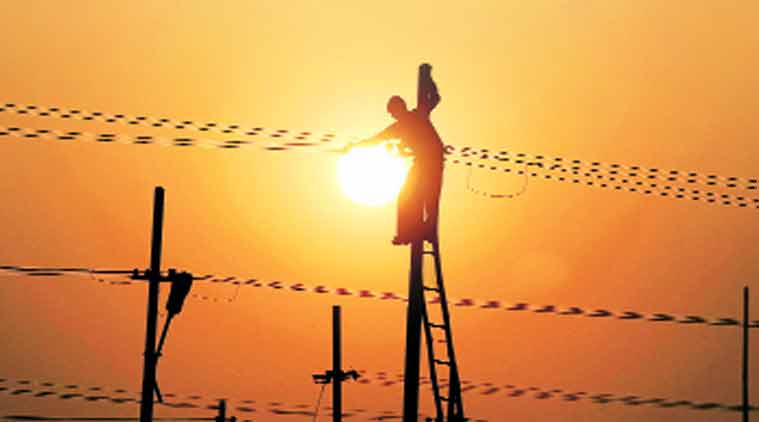 A power-full year ahead.
Uttar Pradesh’s three-decade-long wait for addition to its power generation capacity is expected to come to an end in 2015.
The state will begin generating nearly 4,000 mw of addtional power mainly through six units of its three under-construction thermal power plants and through minor contribution from six solar power plants. All these power plants are nearing completion.
The additional capacity (of 4,000 mw) amounts to nearly half of the power the state currently generates.
Aiming to get mileage from the completion of these under-cosntruction power plants before 2017 Assembly elections, Chief Minister Akhilesh Yadav is personally overseeing the project, and holding monthly reviews with representatives of the companies that have undertaken the construction work.
“Year 2015 is going to shed a major electricity burden of the state with our three units of about 4,000 mw nearing completion. While one unit of Anpara-D would be completed by March, we are expecting other units of Anpara, Bara and Lalitpur power plant to get completed by September and October,” said Sanjay Agrawal, Principal Secretary, Power Department.
All the three thermal power plants were laid between 2007 and 2010 during Mayawati regime, whereas Akhilesh government gave the go-ahead to solar power plants.
A power-full year ahead
Anpara-D Thermal Power Project: 1,000 MW (two units of 500 MW)
Estimated cost: Rs 5,300 crore
First unit: expected in March 2015
Situated in Naxal-affected Sonebhadra district, Anpara-D is project of Uttar Pradesh Rajya Vidyut Utpadan Nigam Ltd. The construction work was assigned to Bharat Heavy Electricals Ltd (BHEL) in September 2007 with a deadline to complete completed it by end of 2012 or early 2013. Though the estimated cost of the project was around Rs 5,300 crore, the delay in its execution has pushed cost beyond Rs 6,000 crore mark.
Bara Thermal Power Project: 1,980 MW (Three units of 660 mw)
Estimated cost: Rs 12,000 crore
First unit: expected in October 2015.
The Project is being developed by Jaiprakash Power Ventures Ltd. While 90 per cent of the power generated would be given to the state, the company can sell remaining 10 per cent in the open market. Since it has seen several farmers’ protests in the past demanding higher compensation for land, sources inform that state government has deployed four companies of PAC on the project site to ensure its timely completion.
Lalitpur Thermal: 1,980 MW (three units of 660 MW)
Estimated cost: Rs 11,000 crore
First Unit: expected in September 2015.
Lalitpur Thermal Power Project in Bundelkhand region is being developed by Bajaj Hindustan Ltd. In 2010, Uttar Pradesh Power Corporation Ltd had signed a Memorandum of Understanding with BHL under which the private firm would construct the plant and sell 90 per cent of the power to the state owned power untilities and remaining in the open market.
Solar Power: Six plants of total 110 mw to come up
First plant: of 10 MW in Mahoba to be commissioned on January 7, 2015 and another 30 MW by end of January.
In December 2013, UP Power Corporation Ltd had signed Power Purchase agreements with different companies for construction of Photovoltaic Power Plants (popularly known as Solar Power Plants) in the state.

 3 min read