Journalism of Courage



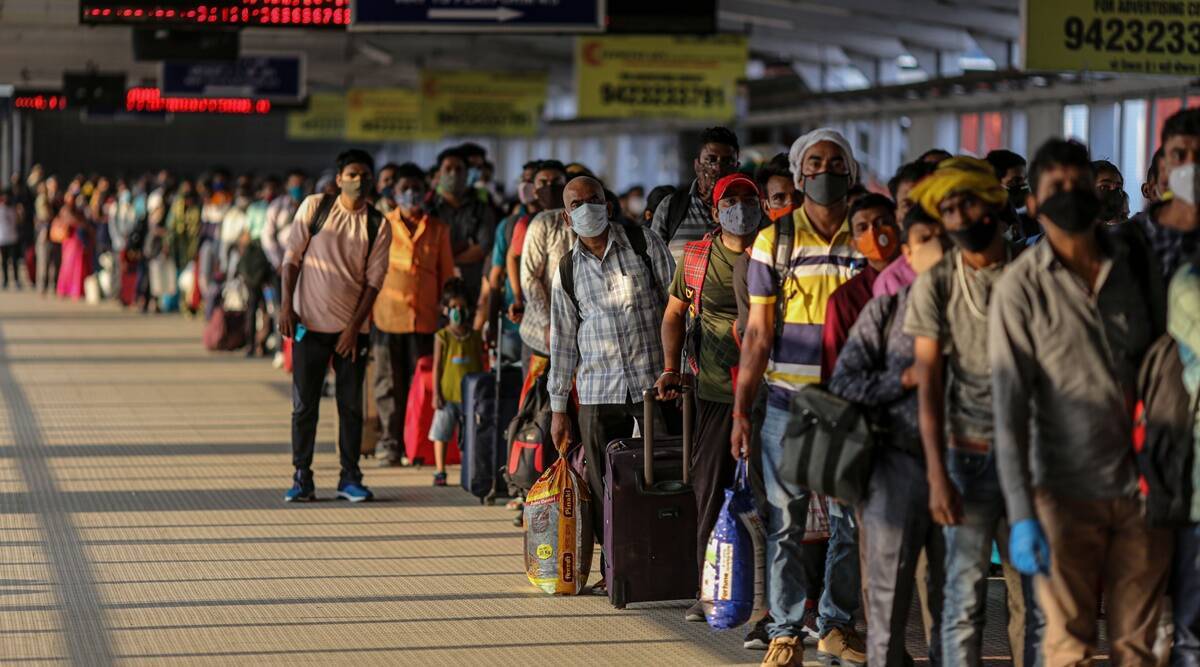 The poverty line in India is fixed at a daily expenditure of Rs 27.2 in rural areas and Rs 33.3 in urban areas.
 As many as 1,359 families were added to the list of below-the-poverty-line (BPL) households in Gujarat in the last two years, according to the state government.
More than 31.67 lakh BPL families exist in the state as on January 31, 2023, the government told the Legislative Assembly Tuesday.
In various written replies tabled by the government during Question Hour, it stated that 11 families were removed from the BPL list in 2021 and 2022.
Amreli district registered the highest number (425) of new BPL families. In calender year 2021, 309 families were added to the BPL list in Amreli, while in 2022 an additional 116 families were added and three families were removed from the list. Sabarkantha (301), Banaskanta (199), Anand (168) and Junagadh (149) followed. Surat, Vadodara, Chhota Udepur, Botad and Narmada were among the 29 districts with no new BPL families.
Among the districts, Banaskanta has 2.37 lakh BPL families which is the highest in the state, while Dahod with 2.25 lakh families stands second, the data filed in the state legislature states.
The poverty line in India is fixed at a daily expenditure of Rs 27.2 in rural areas and Rs 33.3 in urban areas.
In March last year, the Gujarat government informed the Assembly that in the previous year, the number of BPL families rose by 2,556, taking the total to 31.56 lakh, as on August 31, 2021. Despite the high growth in the state’s GSDP and rapid industrialisation, the number of BPL families has been slowly growing in the state. In March 2018, there were 31.46 lakh BPL families in the state. This rose to 31.56 lakh by August 2021. According to the Food and Civil Supplies and Consumer Affairs department, a family (consisting of five persons) in the state is eligible to get a BPL card if the family’s average per capita monthly income is less than Rs 501 in urban areas and Rs 324 in rural areas. An agricultural labourer or families with less than one acre of land can also be considered to revive BPL ration cards.
There are about 16 social and economic indicators taken as survey parameters for counting BPL families. This includes type of dwelling, average availability of clothing, food security, sanitation, means of livelihood, type of indebtedness, reason for migration, status of household labour force and ownership of consumer durables.
The Gujarat Government on Tuesday admitted in the state legislature that the last survey conducted for BJP list was done in 2002-03.
In Gujarat, the number of BPL families has been on the rise despite a rise in per capita income. As per the latest Socio-Economic Survey, the per capita incomes in Gujarat are estimated to grow at 8.9 percent in 2021-22, compared to the previous year.

 3 min read