Journalism of Courage



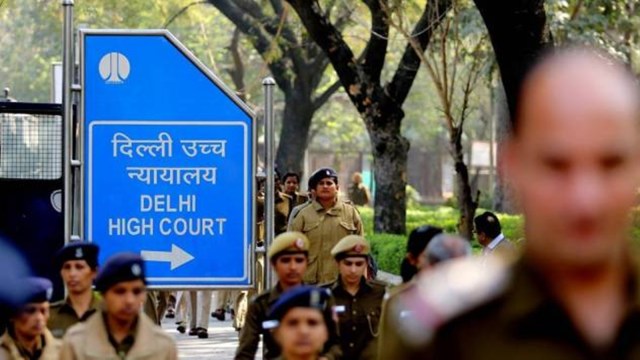 The High Court orally told the petitioners’ counsel to consider sorting out the issue by addressing a letter, showing their “utmost respect” to the House. The matter is now listed on Monday. (File Photo)
Opposing the plea of seven BJP MLAs who were suspended from the Delhi Assembly last week for allegedly interrupting the L-G’s address, the Assembly Friday told the Delhi High Court that the Speaker has been given several powers to maintain the dignity of the House, and courts should defer to his decision unless a complete perversity is shown.
Senior advocate Sudhir Nandrajog, appearing for the Delhi Assembly, submitted before a single-judge bench of Justice Subramonium Prasad, “There are various powers and provisions given to the Speaker to maintain dignity and functioning of the House, and the court should defer to decision taken by the Speaker until and unless a complete perversity is shown by the other side, which has not been done in the facts of this case.”
“I could understand the perversity, when the moment an opposition member walks in, someone says ‘I don’t like his face’ and moves a motion… that could be a completely different scenario… Here, the L-G was addressing the House… It is not that they were deprived of their right to object,” he said.
On the court’s query, he submitted that the action of calling the marshall and making the person leave the House comes with the “plenary power of the presiding officer as he may deem fit and necessary”, wherein the order of the House has to be preserved. He further submitted that there are “certain inherent powers” that a person presiding over a constitutional body has to ensure its preservation, which is not punitive.
On the petitioners’ argument that the Speaker did not follow the correct procedure as laid out in the Fifth Schedule, titled ‘Code of Conduct’ under the Rules of Procedure and Conduct of Business in the Legislative Assembly of NCT of Delhi, Nandrajog submitted, “A schedule to an enactment cannot be a complete code unless the enactment makes it a complete code in itself.” He added that in the present case, the rules do not say that the Fifth Schedule is a complete code.
“The Fifth Schedule is made under general rules of conduct and business and does not override the earlier provisions… If there is a discrepancy or dichotomy between the provisions in the Schedule and the enactment, then the enactment will prevail,” he said, adding that while the petitioners had written a letter to the L-G, tendering their apology, nothing prevented them from writing a similar letter to the House as well.
The High Court orally told the petitioners’ counsel to consider sorting out the issue by addressing a letter, showing their “utmost respect” to the House. The matter is now listed on Monday.

 3 min read