Small-town journalists at higher risk of arrest than those from cities: Report
Reporting on public officials, religion or protests were the most common reasons journalists faced cases, states a report that studied criminal cases against journalists in India
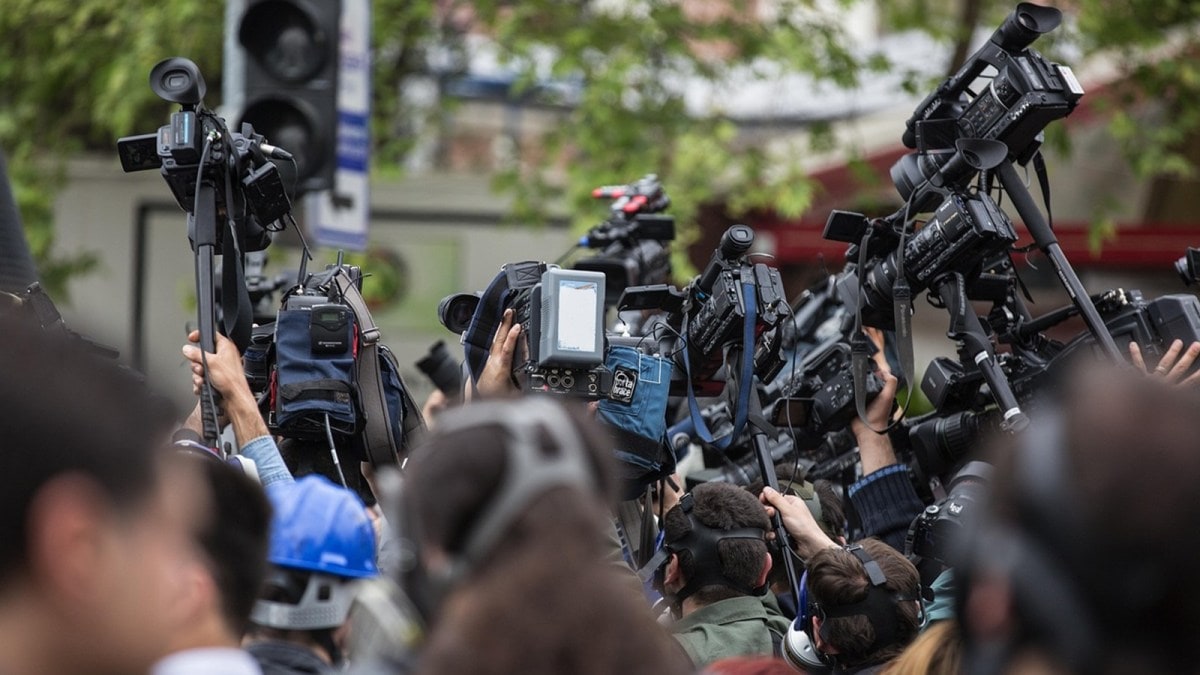
The report primarily analysed criminal action against journalists in relation to their work between 2012-2022. (Source: Pixabay)
Journalists from small cities and towns faced more criminal cases than those in big cities. And their vulnerability to arrest and detention is largely propelled by their lack of proximity to high courts or the Supreme Court.
These findings were part of a report studying criminal cases against journalists in India. It also found that reporting on public officials is the most common reason for charges being slapped.
You’ve Read Your Free Stories For Now
Sign up and keep reading more stories that matter to you.
The report, ‘Pressing Charges’, A Study of Criminal Cases against Journalists across States in India, was authored by the National Law University in Delhi; TrialWatch, an initiative of Clooney Foundation for Justice; and Columbia University’s Institute of Human Rights. It was released on Tuesday.
The report primarily analysed criminal action against journalists in relation to their work between 2012-2022. It found that criminal cases were registered against 427 journalists in 28 states and union territories.
These journalists faced criminal charges 624 times, with 60 of the 427 journalists implicated in multiple cases — each being recorded as a separate incident.
Further, 232 of these 624 incidents were in metropolises while 243 were in smaller cities and towns.
Reasons why they faced charges:
Reporting on public officials was the most common reason journalists faced cases. It was the basis for charges in 147 incidents, the report notes.
Second, “FIRs were also commonly filed against journalists reporting on religion or protests,” with promoting enmity “most likely to be charged against journalists in large cities”.
Another offence that journalists were charged with was “offences against public servants”. This, the report noted, was disproportionately used against journalists reporting at the state or local level, or those based in small cities and towns.
The defamation charge was used more against big city journalists and those reporting in English.
Story continues below this ad
A potential explanation, the report stated, could be that offences such as disobeying or obstructing public servants were slapped against journalists covering local events on the ground, while defamation — which is prosecuted privately — was pursued by complainants with greater resources.
Further, offences geared at limiting disruptions to public order (such as offences against public tranquillity and promoting enmity) were used against national-level journalists as well as against digital media or speech on social media. This charge was used where the concern was presumably that the message could ‘go viral’.
“… These cases protect individuals and institutions in power — the reputation of public officials is protected to avoid a challenge to existing power structures. While reporting on religion or protests is discouraged because of the supposed risks of creating inter-communal or citizen-government conflict,” the report stated.
While a vast majority of the charges involved alleged violations of the Indian Penal Code (a total of 579 out of 624 incidents or 93%), 107 incidents involved offences under the IPC as well as the Information Technology Act.
There were also 21 incidents of UAPA charges.
Journalists from small towns more at risk
The report found that not only did journalists from smaller towns face more criminal cases compared to those from metropolises, but they were also more vulnerable to arrest.
Story continues below this ad
They were also granted protection from arrest — either as anticipatory bail or as interim protection from arrest — fewer times. This, the report surmised, can be explained by better access to justice in metropolises.
“While in 65% of incidents involving journalists from major metropolises, journalists managed to secure interim protection from arrest, the percentages dropped significantly to only 3% for small cities/towns… For journalists outside of major metropolises, regular bail was the most frequent form of relief — meaning they were only able to secure their liberty after arrest…,” the report records.
Of the information on arrest and pre-trial detention available for 515 of the 624 incidents, the analysis in the report shows that while overall arrests were effected in 40% of the incidents, journalists were arrested 24% of the time in metropolises, compared to 58% in small cities and towns.
The difference in access to justice also plays out during trials.
Story continues below this ad
In as many as 89% of the incidents where a stay on trial was granted by constitutional courts (HCs or SC), it was to journalists from metropolises. No journalist from the smaller towns and cities could obtain a stay, the report states.
Sohini Ghosh is a Senior Correspondent at The Indian Express. Previously based in Ahmedabad covering Gujarat, she recently moved to the New Delhi bureau, where she primarily covers legal developments at the Delhi High Court
Professional Profile
Background: An alumna of the Asian College of Journalism (ACJ), she previously worked with ET NOW before joining The Indian Express.
Core Beats: Her reporting is currently centered on the Delhi High Court, with a focus on high-profile constitutional disputes, disputes over intellectual property, criminal and civil cases, issues of human rights and regulatory law (especially in the areas of technology and healthcare).
Earlier Specialty: In Gujarat, she was known for her rigorous coverage in the beats of crime, law and policy, and social justice issues, including the 2002 riot cases, 2008 serial bomb blast case, 2016 flogging of Dalits in Una, among others.
She has extensively covered health in the state, including being part of the team that revealed the segregation of wards at the state’s largest government hospital on lines of faith in April 2020.
With Ahmedabad being a UNESCO heritage city, she has widely covered urban development and heritage issues, including the redevelopment of the Sabarmati Ashram
Recent Notable Articles (Late 2025)
Her recent reporting from the Delhi High Court covers major political, constitutional, corporate, and public-interest legal battles:
High-Profile Case Coverage
She has extensively covered the various legal battles - including for compensation under the aegis of North East Delhi Riots Claims Commission - pertaining to the 2020 northeast Delhi riots, as well as 1984 anti-Sikh riots.
She has also led coverage at the intersection of technology and governance, and its impact on the citizenry, from, and beyond courtrooms — such as the government’s stakeholder consultations for framing AI-Deepfake policy.
Signature Style
Sohini is recognized for her sustained reporting from courtrooms and beyond. She specialises in breaking down dense legal arguments to make legalese accessible for readers. Her transition from Gujarat to Delhi has seen her expand her coverage on regulatory, corporate and intellectual property law, while maintaining a strong commitment to human rights and lacuna in the criminal justice system.
X (Twitter): @thanda_ghosh ... Read More