Law to regulate school fee in Delhi risks becoming procedural, say parents; minister says ‘small, politicised circle criticising new rules’
The Delhi-based parents group also raised concerns about the absence of accountability mechanisms for DoE officials and the lack of clarity regarding the fee structure during three-year academic blocks, when the slabs cannot be changed.
Written by Sophiya Mathew
New Delhi | Updated: December 13, 2025 11:38 AM IST
4 min read
Whatsapp
twitter
Facebook
Reddit
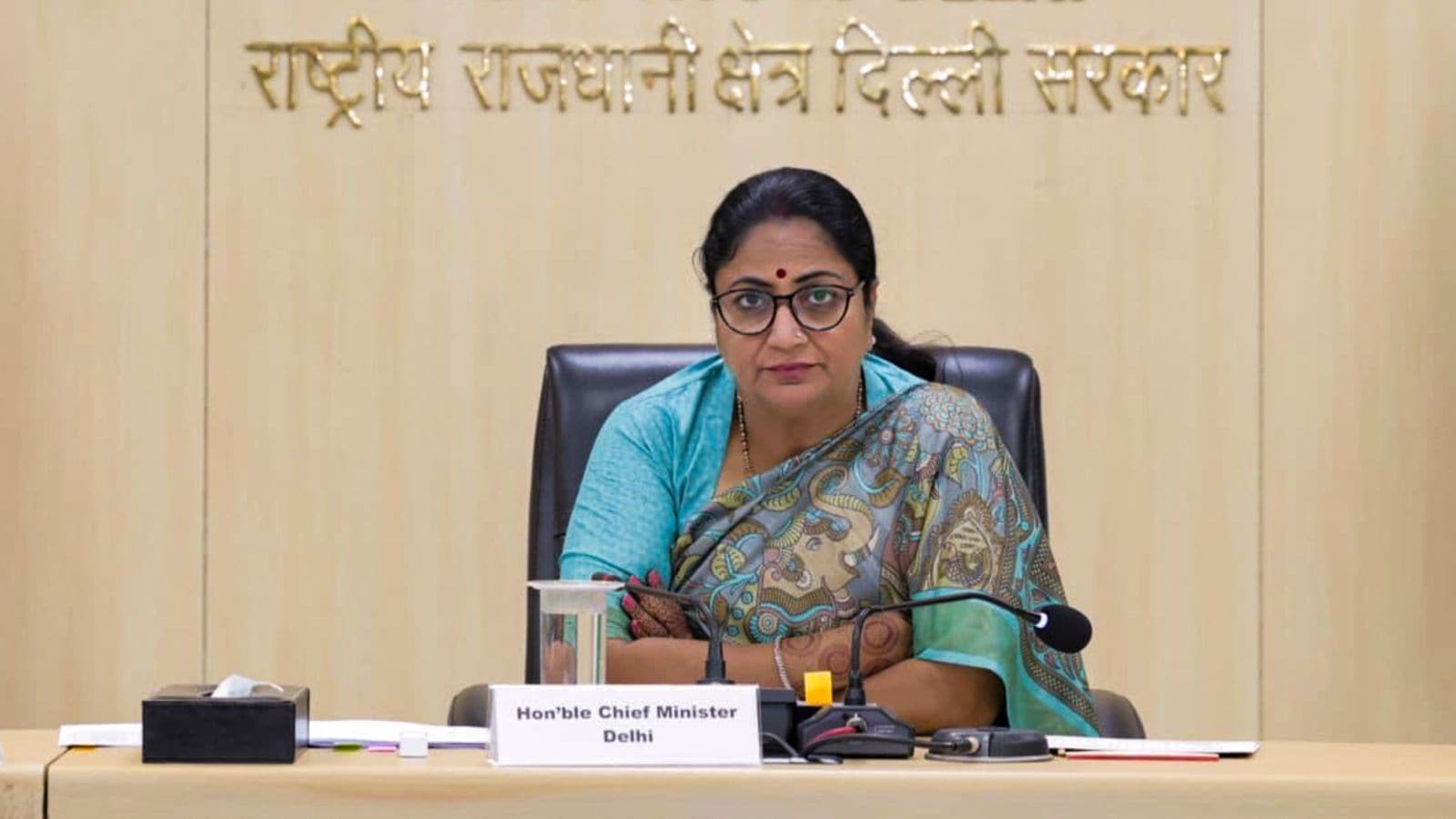
CM Rekha Gupta criticises AAP leaders for protest in Assembly, says party is avoiding discussion on Delhi pollution crisis. (Photo/PTI Achieve)
Three days after the Rekha Gupta government notified the Delhi School Education (Transparency in Fixation and Regulation of Fees) Act to regulate fees in private schools, parent groups, while terming the step as “progressive”, worried that “loopholes” could weaken its implementation.
Divya Mattey, a parent at Delhi Public School, Dwarka, maintained that the new law is an important attempt in introducing long-pending accountability in the fee-fixation practices of private unaided recognised schools. He, however, added, “While several long-standing demands of parents have been acknowledged, serious gaps and loopholes remain, raising concerns about the practical enforceability of the rules.”
He welcomed provisions such as free and fair parent-teacher association elections and the rule that schools must charge only the last Department of Education (DoE) approved fee until a new slab is cleared, among others. But Mattey also flagged several areas of concern, including the absence of any mechanism to address excess or unapproved fees collected since 2020-21; lack of mandatory expert financial scrutiny; weak parent representation at the district level due to draw-based selection; unrealistic scrutiny timelines; appeal mechanisms that require groups of parents to complain rather than individuals and no mandated frequency for meetings of the school-level committee that would be set up under the Act.
“Without addressing these, the law risks becoming procedural,” he said.
Parents’ group Forum for Indian Parents (FIP), while acknowledging that parents have finally been formally recognised as stakeholders in fee determination, said the new law still leaves families “in dilemma” about whether they will be adequately protected from “commercialisation of education” or “victimisation during fee disputes”.
The group criticised the lack of independent audits, the burden placed on parents to scrutinise school accounts, the complexity of the complaints and appeals structure, and the requirement that complaints to the district committees that are to be set up must be backed by at least 15% of the affected parents.
The Delhi-based parents group also raised concerns about the absence of accountability mechanisms for DoE officials and the lack of clarity regarding the fee structure during three-year academic blocks, when the slabs cannot be changed.
Story continues below this ad
Delhi Education Minister Ashish Sood, meanwhile, said the government’s intent was “clear and long overdue”. Speaking to The Indian Express, he claimed that “99% of the parents are happy” that a fee-regulation framework, which he said had been “neglected for years by the previous governments”, has finally been put in place.
“In less than 10 months (of the BJP government coming to power), we have notified the new rules… The intent is completely clear,” Sood said. The BJP-led Delhi government has positioned the new law as one of the key administrative steps it has taken since coming to power.
Maintaining that “a very small, politicised circle” was criticising the new Act, Sood reiterated that education “is not a business, it is a right”. In a statement issued on Friday, he urged parents to “actively support” the new system.
The new law was officially notified on December 9 after Lieutenant-Governor V K Saxena issued the Gazette notification.
Story continues below this ad
Under the new law, more than 1,500 private unaided recognised schools in Delhi are prohibited from collecting any fee not explicitly defined and sanctioned. The Act establishes a three-tier structure – the School-Level Fee Regulation Committee, the District Fee Appellate Committee and the Revision Committee — which will oversee fee fixation, review and appeals.
Financial statements must be disclosed publicly, and schools must support fee-revision proposals with audited accounts. The law defines permissible fee heads, including admission charges, registration charges, security deposit, tuition fee, term fee, annual charges and development fee.
The school-level committee includes parents, teachers and management representatives as well as the principal and an observer from DoE overseeing proceedings. As per the Act, district committees, chaired by serving or retired government officers and assisted by a chartered accountant and a parent representative, must complete reviews by July 30 each year.
Appeals to the revision committee must be filed within 30 days and disposed of within 45 days. Its decisions will be binding for a block of three academic years.
Sophiya Mathew is a Correspondent at The Indian Express, based in New Delhi. She joined the Delhi bureau in 2024, and has specialization in Integrated Multimedia Journalism from the Asian College of Journalism (ACJ), Chennai.
Professional Background
Core Beats: Her reporting is primarily focused on the Environment and Education.
Specialization: She has gained recognition for her ground-level reporting on the Yamuna floodplains and the socio-economic challenges faced by those living on its banks. She also focuses on the disparities in Delhi's education system, ranging from elite private schools to government institutions and refugee education.
Recent Notable Articles (December 2025)
Her recent work has been heavily centered on Delhi's severe winter pollution crisis and the government's regulatory responses:
1. The Air Pollution Crisis
"A tale of two cities: Delhi govt schools choke in bad air, private classrooms set up air filters" (Dec 20, 2025): A high-impact feature contrasting the "Clean Air Bubbles" in elite schools with the reality of government school students who are exposed to an equivalent of 17 cigarettes a day due to outdoor exposure.
"Delhi sees season's worst air day, second worst December AQI in nearly a decade" (Dec 15, 2025): An analytical report on the meteorological patterns trapping pollutants in the NCR.
"Delhi bans non-BS VI vehicles from outside: Why curbing vehicular pollution is key" (Dec 17, 2025): Explaining the science behind targeting specific vehicle vintages to lower particulate matter.
2. Enforcement & Regulations
"No fuel at pumps in Delhi without valid PUC certificate from December 18" (Dec 17, 2025): Breaking the news on the environment ministry's strict "No PUC, No Fuel" policy.
3. Education Policy
"Law to regulate school fee in Delhi risks becoming procedural, say parents" (Dec 13, 2025): Investigating the loopholes in the new Delhi School Education (Transparency in Fixation and Regulation of Fees) Bill, 2025.
"Monsoon Session: Private school fee regulation Bill cleared after four-hour debate" (Aug 9, 2025): Covering the legislative passage of the controversial fee hike regulation.
Signature Style
Sophiya is known for her observational depth. Her reporting often includes vivid details from school corridors, hospital waitlists, or the banks of the Yamuna to illustrate how policy failures affect the city's most vulnerable residents. She is a frequent expert guest on the 3 Things podcast, where she explains the complexities of Delhi’s environmental laws.
X (Twitter): @SophiyaMathew1 ... Read More


 4 min read