Premium
This is an archive article published on August 16, 2023

Two Ashoka University profs quit, 87 faculty cite threat to academic freedom

Economics Dept backs Asst Prof Das, calls for his reinstatement, asks Governing Body to address the issue immediately; emergency faculty meeting today

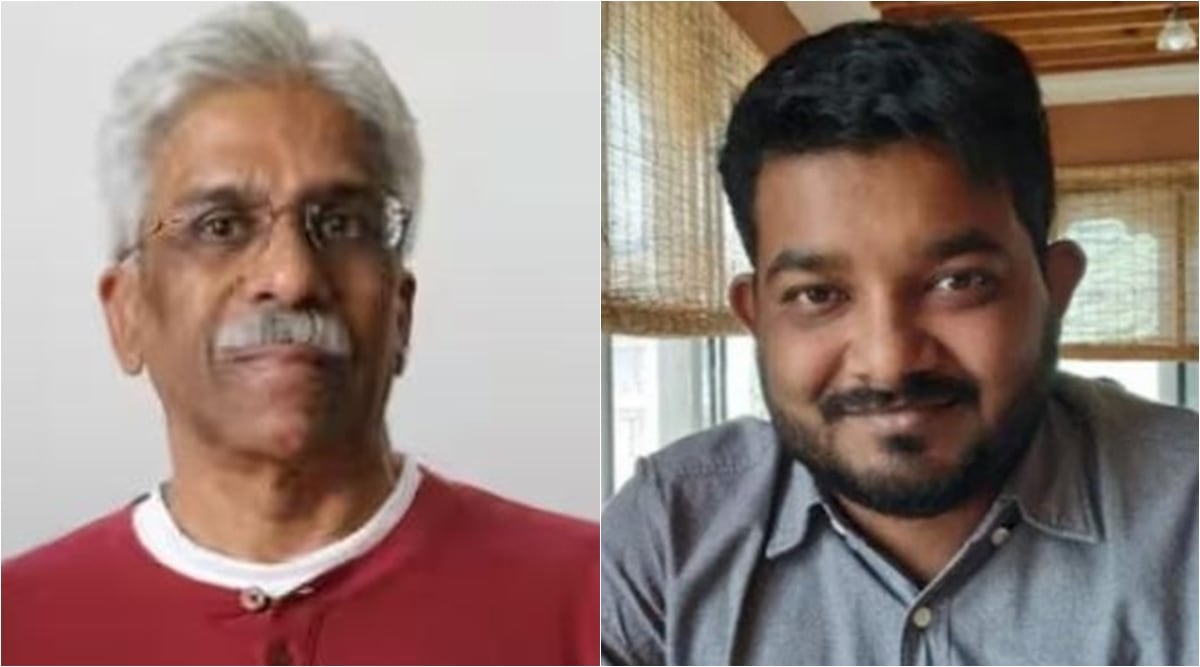
2 Ashoka profs quit, 87 faculty cite threat to academic freedomProf Pulapre Balakrishnan; Sabyasachi Das
Listen to this article
Two Ashoka University profs quit, 87 faculty cite threat to academic freedom
x
00:00
1x 1.5x 1.8x

Days after Sabyasachi Das, a member of the faculty in the Economics Department at Ashoka University, resigned following a controversy over his research paper ‘Democratic Backsliding in the World’s Largest Democracy’, the Economics Department Wednesday said in an open letter that the Ashoka University Governing Body’s “interference” in the process to “investigate the merits” of his study was likely to “precipitate an exodus of faculty”.

Pulapre Balakrishnan, Professor of Economics at Ashoka University, also resigned to protest the exit of Das. When contacted, he said, “Yes, I have resigned. It is related to Das’s resignation.” The university has not yet taken a decision on his resignation; an email to the Vice Chancellor and the Registrar did not elicit a response.

The open letter to the university’s Governing Body posted on Twitter by the official handle of the Economics Department, was also shared by Ashwini Deshpande, Professor of Economics, and Founding Director of the Centre for Economic Data and Analysis (CEDA) at Ashoka University. The letter, which Deshpande confirmed reflected a consensus of the Economics Department, demanded that Das be offered his position at the university “unconditionally” and that the Governing Body play no role in “evaluating faculty research through any Committee or any other structure”.

“The offer of resignation by our colleague Prof. Sabyasachi Das and its hasty acceptance by the University has deeply ruptured the faith that we in the faculty of the department of Economics, our colleagues, our students, and well-wishers of Ashoka University everywhere, had reposed in the University’s leadership… We urge the governing body to address this immediately, but no later than August 23, 2023. Failure to do so will systematically wreck the largest academic department at Ashoka and the very viability of the Ashoka vision,” the letter said.

At an emergency meeting of the faculty body with the University’s leadership, demands were made to offer back Das his position and to guarantee academic freedoms in the campus. Earlier on Tuesday, August 15, Amit Chaudhuri, Head of Department, Professor of Creative Writing, wrote to the V-C and the Dean of Faculty, and red-flagged the “ongoing threats to the all-important domain of academic freedom”.

In the mail was attached a ‘Letter on Academic Freedom’ signed by as many as 87 faculty including Nayanjot Lahiri, Pulapre Balakrishnan, Saikat Majumdar and Madhavi Menon. When contacted, Chaudhuri told The Indian Express, “We framed this letter because we thought the situation had been dealt with in a way that was not admissible in a university and also because we had a document for academic freedom that was framed after the departure of Pratap Bhanu Mehta which had guidelines and commitments that are the university’s official positions about academic freedom and not some tweet whose origins we know nothing about. One thing that will happen now, hopefully quickly, is the institution of a Committee for Academic Freedom so that ad hoc decisions which we know nothing about become impossible.”

The developments come just three days before a new academic session is scheduled to commence at Ashoka University. An email to the spokesperson and the Vice Chancellor of Ashoka University has not yet elicited a response.

Story continues below this ad
Express Editorial | Crawling on campus

The departments of English and Creative Writing at Ashoka University also wrote to several governing body members, expressing support for the department of economics. “We stand by our colleagues in the Department of Economics and echo their demand that Professor Sabyasachi Das’s position in Ashoka be reinstated. We also demand accountability from the governing board and senior colleagues responsible for this debacle, and seek affirmation from the governing body that it will play no role in evaluating faculty research or make senior faculty carry out this exercise by appointing ad hoc committees or bodies,” the departments said.

Das, an Assistant Professor in the department, resigned last week. The University confirmed his resignation on Monday, and said in a statement, “After making extensive efforts to dissuade him, the university has accepted his resignation… Dr Das’s paper on Indian elections was the subject of widespread controversy after being shared recently on social media, where it was perceived by many to reflect the views of the university… The university does not direct or moderate the research conducted by its faculty and students. This academic freedom also applied to Dr Das.”

In the open letter to the Governing Body, the Economics Department said, “Prof. Das did not violate any accepted norm of academic practice. Academic research is professionally evaluated through a process of peer review. The Governing Body’s interference in this process to investigate the merits of his recent study constitutes institutional harassment, curtails academic freedom, and forces scholars to operate in an environment of fear. We condemn this in the strongest terms and refuse as a collective to cooperate in any future attempt to evaluate the research of individual economics faculty members by the Governing Body.”

The Governing Body comprises Ashoka University Chancellor Rudrangshu Mukherjee, Vice Chancellor Somak Raychaudhury, Madhu Chandak, Puneet Dalmia, Ashish Dhawan, Pramath Raj Sinha, Siddharth Yog, Deep Kalra and Ziaa Lalkaka.

Story continues below this ad

The open letter to the Governing Body noted that the Ashoka Economics department was painstakingly built into what is widely considered amongst the preeminent economics departments in the country. “The actions of the Governing Body pose an existential threat to the department. It is likely to precipitate an exodus of faculty, and prevent us from attracting new faculty,” it said.

Das’s research paper “Democratic Backsliding in the World’s Largest Democracy” documents irregular patterns in 2019 general election in India and identifies whether they are due to electoral manipulation or precise control, i.e., the incumbent party’s ability to precisely predict and affect win margins through campaigning. “Manipulation appears to take the form of targeted electoral discrimination against India’s largest minority group – Muslims, partly facilitated by weak monitoring by election observers. The results present a worrying development for the future of democracy.”

The assumptions made by Das, the methodology adopted and the conclusions drawn, however, prompted criticism: too small a sample size (11 seats), extensive randomisation of poll officials and machines (the Chief Electoral Officer’s office does not know where a particular Booth Level Officer is posted; even BLOs get to know it three days prior), inconclusive evidence of targeted voter deletion, and no complaints of deletion of voters from minority groups or political parties.

The varsity, in a post online, had distanced itself from the paper and stated that social media activity or public activism by Ashoka faculty, students or staff in their “individual capacity” does not reflect the stand of the university.

Story continues below this ad

In his critique of the paper, Mudit Kapoor, Associate Professor of Economics at ISI, Delhi, said, “The statistical findings of the paper do not support the claims in the paper.” While Das’s paper notes that “the BJP win margin in 2019 is the only case exhibiting statistically significant estimate of the discontinuity”, Kapoor said this was a “misinterpretation of their results because in 2009, for the INC, the authors found a larger estimate of discontinuity of 1.80; however, because it was not ‘statistically significant’, it was assumed that the effect was 0.”

“In the elections BJP narrowly lost, there seems to be an unusual increase in voter registration from the mean or average electoral growth… a simple reading of these graphs would suggest that evidence of targeted voter deletion was, at best, not conclusive,” he said.

Vidheesha Kuntamalla is a Senior Correspondent at The Indian Express, based in New Delhi. She is known for her investigative reporting on higher education policy, international student immigration, and academic freedom on university campuses. Her work consistently connects policy decisions with lived realities, foregrounding how administrative actions, political pressure, and global shifts affect students, faculty, and institutions. Professional Profile Core Beat: Vidheesha covers education in Delhi and nationally, reporting on major public institutions including the University of Delhi (DU), Jawaharlal Nehru University (JNU), Jamia Millia Islamia, the IITs, and the IIMs. She also reports extensively on private and government schools in the National Capital Region. Prior to joining The Indian Express, she worked as a freelance journalist in Telangana and Andhra Pradesh for over a year, covering politics, rural issues, women-centric issues, and social justice. Specialisation: She has developed a strong niche in reporting on the Indian student diaspora, particularly the challenges faced by Indian students and H-1B holders in the United States. Her work examines how geopolitical shifts, immigration policy changes, and campus politics impact global education mobility. She has also reported widely on: * Mental health crises and student suicides at IITs * Policy responses to campus mental health * Academic freedom and institutional clampdowns at JNU, South Asian University (SAU), and Delhi University * Curriculum and syllabus changes under the National Education Policy Her recent reporting has included deeply reported human stories on policy changes during the Trump administration and their consequences for Indian students and researchers in the US. Reporting Style Vidheesha is recognised for a human-centric approach to policy reporting, combining investigative depth with intimate storytelling. Her work often highlights the anxieties of students and faculty navigating bureaucratic uncertainty, legal precarity, and institutional pressure. She regularly works with court records, internal documents, official data, and disciplinary frameworks to expose structural challenges to academic freedom. Recent Notable Articles (Late 2024 & 2025) 1. Express Investigation Series JNU’s fault lines move from campus to court: University fights students and faculty (November 2025) An Indian Express investigation found that since 2011, JNU has appeared in over 600 cases before the Delhi High Court, filed by the administration, faculty, staff, students, and contractual workers across the tenures of three Vice-Chancellors. JNU’s legal wars with students and faculty pile up under 3 V-Cs | Rs 30-lakh fines chill campus dissent (November 2025) The report traced how steep monetary penalties — now codified in the Chief Proctor’s Office Manual — are reshaping dissent and disciplinary action on campus. 2. International Education & Immigration ‘Free for a day. Then came ICE’: Acquitted after 43 years, Indian-origin man faces deportation — to a country he has never known (October 2025) H-1B $100,000 entry fee explained: Who pays, who’s exempt, and what’s still unclear? (September 2025) Khammam to Dallas, Jhansi to Seattle — audacious journeys in pursuit of the American dream after H-1B visa fee hike (September 2025) What a proposed 15% cap on foreign admissions in the US could mean for Indian students (October 2025) Anxiety on campus after Trump says visas of pro-Palestinian protesters will be cancelled (January 2025) ‘I couldn’t believe it’: F-1 status of some Indian students restored after US reverses abrupt visa terminations (April 2025) 3. Academic Freedom & Policy Exclusive: South Asian University fires professor for ‘inciting students’ during stipend protests (September 2025) Exclusive: Ministry seeks explanation from JNU V-C for skipping Centre’s meet, views absence ‘seriously’ (July 2025) SAU rows after Noam Chomsky mentions PM Modi, Lankan scholar resigns, PhD student exits SAU A series of five stories examining shrinking academic freedom at South Asian University after global scholar Noam Chomsky referenced Prime Minister Narendra Modi during an academic interaction, triggering administrative unease and renewed debate over political speech, surveillance, and institutional autonomy on Indian campuses. 4. Mental Health on Campuses In post-pandemic years, counselling rooms at IITs are busier than ever; IIT-wise data shows why (August 2025) Campus suicides: IIT-Delhi panel flags toxic competition, caste bias, burnout (April 2025) 5. Delhi Schools These Delhi government school grads are now success stories. Here’s what worked — and what didn’t (February 2025) ‘Ma’am… may I share something?’ Growing up online and alone, why Delhi’s teens are reaching out (December 2025) ... Read More

Stay updated with the latest - Click here to follow us on Instagram

Latest Comment
Post Comment
Read Comments
Advertisement
Loading Taboola...
Advertisement