


Stay updated with the latest - Click here to follow us on Instagram
Tags:


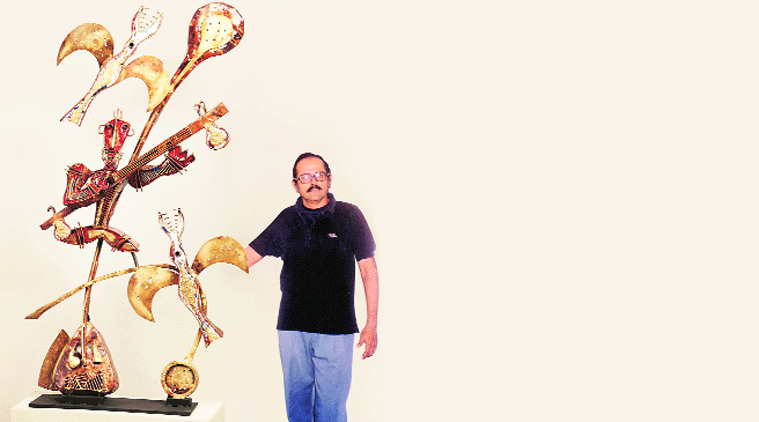
After completing a 23-foot sculpture — a beekeeper for art curator Rajeev Sethi in Chennai — the artist, whose public installations can be seen throughout the country, is back to working with smaller sculptures. “Large installations are very demanding. I’m more relaxed and excited about smaller works,” he says. His show at the gallery on display till October 31, titled “The Metaphysical Edge”, has 21 works of metal that tell stories of India’s mythology and south India’s fecund cultural traditions.


There is a piece of history and culture of the land in each work. In Vishnu, the bird rests on a large spoon structure. “In Kerala, the locals pin jackfruit leaves together to fashion ladles and spoons. I’ve imitated the design and cast it in brass,” he says. A leopard structure standing on its two hind legs mounted on a village temple near Chennai, also makes an appearance with Orange Leopard.
A phrase that crops up many times while talking to Nandagopal is “finding order in the past”. “Our ancestors have established techniques that were far ahead of their time. But the younger generation doesn’t seem to realise its significance,” he says. Some years ago, he says, a 20-feet structure had to be hoisted. A Rajasthani family — a father and his 12-year-old son — walked around the structure and, in one quick motion, lifted it before a bewildered Nandagopal. “They were simply looking for the fulcrum. Once you find it, the whole structure is almost weightless,” he says.
Nandagopal and his fellow artists practise such timeless techniques in Cholamandal Artists’ Village, the only artist residency of its kind in the country. Founded by his father, artist KCS Paniker, it is a product of the Madras Movement of Art that brought modernism to southern India. The 10-acre land, about nine kilometres from Chennai, houses 30 resident artists and was formed with the concept of allowing the artist to stay around his art at all times. “We work with local artisans and craftsmen and together tap into 5,000 years of rich Indian tradition. There’s no better learning,” he says.


Stay updated with the latest - Click here to follow us on Instagram


