Journalism of Courage



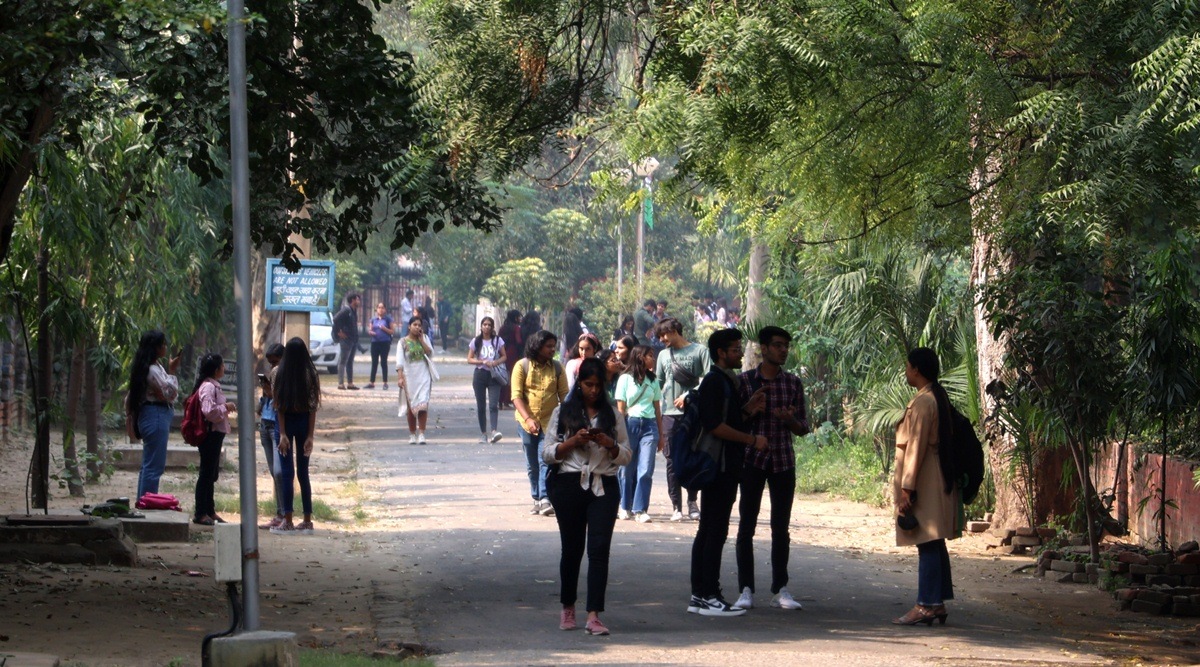 8,133 new allotments have been made to candidates who were not allotted seats in the first round. (Express Photo by Amit Mehra)
Even though a large number of seats were filled in the first round of Delhi University admissions, the second round is seeing plenty of movement after 11,649 candidates were upgraded to colleges and courses from their earlier allocations.
Against the roughly 70,000 seats available for admissions in DU this year, the university had made 80,164 allocations, out of which around 60,000 had completed their admissions in the first round. Of these, 35,388 candidates had opted for an upgrade and 11,649 of these have been upgraded. Along with this, 8,133 new allotments have been made to candidates who were not allotted seats in the first round.
This has led to plenty of flux in colleges in the second round of admissions, especially in those with a relatively larger number of vacancies. For instance, Deen Dayal Upadhyaya College has 912 seats on offer. At the end of the first round, 715 students were admitted to it. After the second round of allocations, students admitted to it have dropped to 551, which means the rest have been upgraded to a course they preferred, leading to auto-cancellation of their admission in DDU. Now the college has 336 new allotments. However, despite these new allotments, principal Hem Chand Jain suggested that there are some courses which might not have all seats filled in this process.
“Our BSc (Hons) Electronics course has 60 vacancies of which 15 were filled in the first round and now we have 19 new allotments, which suggests that allotments have not been made against 26 vacant seats. This probably indicates that there are not enough candidates available for it, so these seats may not get filled through this process, and the university might have to think of other ways. Maybe they can get filled in the spot admission rounds,” he said.
Deshbandhu College, too, had courses with multiple vacancies after round one, particularly in science programmes. It is seeing a lot of movement in round two, with 401 auto-cancellations with students being upgraded from 553 new allocations.
In many prominent colleges, admissions have more or less stabilised in their arts and commerce courses in which almost all seats were filled in most colleges.
Kirori Mal College had 1,494 admissions at the end of round one which dropped to 1,270 in round two as around 200 students were upgraded from it.
Admissions convenor Siddhartha Lahon said this movement is mostly in science programmes. “The humanities and commerce programmes are stable. There were hardly any seats left for these in the entire university. However, there are some courses such as Sanskrit (Honours) and Urdu (Honours) in which it seems that 30-40% of seats may remain empty,” he said.
At Sri Venkateswara College, there have been 140 upgrades in this round, and 348 new allocations of which admissions-in-charge Sanjay Batra said 75% of changes are taking place in science programmes. Of the approximately 200 vacancies the college had at the end of round one, only around 50 were in the arts and commerce programmes.

 3 min read