Journalism of Courage



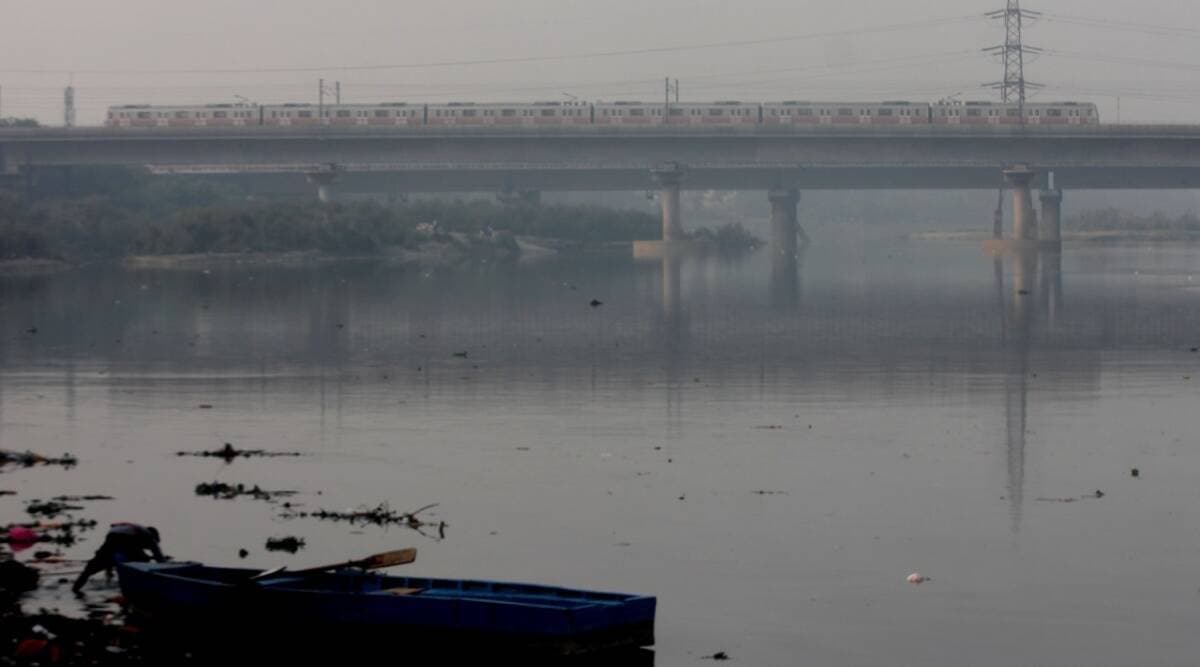 A DJB official said that the release of water from Wazirabad can help dilute ammonia levels and reduce it to the concentration that can be treated by the plants. (File)
High levels of ammonia in the Yamuna disrupted water production and supply to parts of Delhi on Thursday, before it was restored on Friday.
The level of ammonia in the water was around 5.8 parts per million (ppm), according to the Delhi Jal Board (DJB). Consequently, water production was reduced at the Chandrawal, Okhla and Wazirabad water treatment plants (WTPs) that draw water from the river.
A communication from the DJB on Thursday had said that water supply would be disrupted in areas including parts of South Delhi, Civil Lines, Kamla Nagar and adjoining areas, Sangam Vihar, areas under the New Delhi Municipal Council, and Patel Nagar, on Thursday evening and Friday morning. Water production was restored to normal levels by Friday afternoon.
The DJB’s water treatment plants can treat ammonia up to a level of 1 ppm. Chlorine is used to remove small amounts of ammonia from raw water, but the compounds formed by the addition of excess chlorine can be harmful. The BIS standard for ammonia in drinking water is 0.5 ppm. The release of industrial effluents and organic waste into the river can cause a rise in ammonia levels.
A DJB official said that the release of water from Wazirabad can help dilute ammonia levels and reduce it to the concentration that can be treated by the plants.
Technology at the Chandrawal and Wazirabad WTPs is being upgraded to treat higher levels of ammonia, according to another DJB official. The newly installed technology is expected to treat ammonia levels up to 4 ppm.
At the Chandrawal WTP, ozonation, which involves the treatment of ammonia using ozone, will be used, and the system is being installed, he said. Consultancy work is under way for a new plant at Wazirabad, and the technology is being worked out to treat ammonia levels in the water, he added.
The plant at Chandrawal has a capacity of 90 MGD, while the one at Wazirabad has a capacity of 120 MGD.
A government official said that the upcoming Chandrawal plant will also have aerated biological filters that can help remove ammonia with the help of bacteria.

 2 min read