Traditional construction of a bridge across the Jhelum river
Theatre directors say that a play is about people — as they circle one another, clash, connive or cooperate, a story is born. Delhi-based Feisal Alkazi, 59, a veteran of 300 plays, would argue that theatre is also about places. His recent productions have taken audiences to Slovakia during World War II (Love in the Time of Oppression), colonial Kolkata (A Quiet Desire) and Mughal and modern Delhi (Noor and Khoya Khoya Chand, respectively).
Even when he takes off his director’s hat and puts on the writer’s, places remain important to the director. Some of the 20 books he has authored have titles such as Exploring an Environment, and The Riverfront of My Town: Discovering Jaipur. Alkazi’s new book is called Srinagar: An Architectural Legacy (Intach and Roli Books, Rs 395) and presents the Valley as a wondrous place full of mysticism, imperial history, 300-year-old gardens, aromatic deodars, saffron-flavoured food and hereditary chefs. In an interview, Alkazi reveals why he had “a ball writing this book over eight months”.
Feisal Alkazi
Edited excerpts.
What was your first impression of Kashmir?
The first time I saw Kashmir was from a plane window and it was scary — this valley hemmed by mountains and totally cut off from the rest of India; there is only one connecting road. That’s what makes it so different from the rest of the country. Accessible from the north, Kashmir was, however, on the Silk Route. I have been to Samarkhand and Bukhara and could see the linkages in the architecture of these places with Srinagar’s. The book explores the architectural heritage of this 500-year-old city through its rich past and different eras of kings.
How did this book come about? In 2004, I ran a project called Children of Kashmir with the Rajiv Gandhi Foundation. It involved children whose parents had been killed during the violent years. When you work with children, you cannot focus only on trauma, you have to deal with the positive. As we evolved a project on Kashmir, we found many interesting stories and hidden histories of the place. The third Buddhist conference was held here in 100 AD. It was also ruled by Sikhs and there is still a population of Kashmiri sardars. This produced a book, Discovering Kashmir. I went back many times thereafter. Srinagar: An Architectural Legacy is for a person who doesn’t want to do the touristy three-day-two-night stay. Six of the 10 chapters in the new book are on heritage walks in Srinagar so that people can discover the city for themselves. I had a totally different Kashmir experience and the book shares that.
Dastageer Sahib in Srinagar with a characteristic roof of a Kashmiri mosque
How did you decide on the walk routes through the city?
The chapters on walks focus on the river being an integral part of Kashmir, with boats being the main form of transport as it is in the backwaters of Kerala or Venice. The first chapter, “From medieval to colonial Srinagar”, begins with a walk from Khanqah-i-Mualla shrine, which lies on the bank of the Jhelum. Directly opposite it stands the Pathar Masjid, where no prayer has ever been offered because, among other reasons, it was built by a woman, Empress Nur Jahan. The next chapter is “A walk along the Bundh,” which tells the history of Srinagar through colonial architecture. Another is “A garland of gardens”, which takes you in a sweep on Boulevard Road around the grand old Dal Lake. It begins with Shalimar Gardens, goes into Nishat Gardens and then to Pari Mahal.
You say you asked yourself a lot of questions during your visits to Kashmir.
Much of our introduction to Kashmir is through its food. I asked myself ‘do we like gustabha, yakhni, and kebabs because it is light, or because there’s less frying, or because there is no haldi and very little jeera and the main delicate flavour is from saffron, or because their koftas are different from the UP koftas?’. I asked myself why there are so many gardens and began to trace the story backward to the time the Mughal emperors would visit with their retinue of two lakh people — Delhi would be practically empty. Why are Kashmiris such good craftsmen and embroiderers? It was a fascinating journey to undo those threads.
Dipanita Nath is a Senior Assistant Editor at The Indian Express, based in Pune. She is a versatile journalist with a deep interest in the intersection of culture, sustainability, and urban life.
Professional Background
Experience: Before joining The Indian Express, she worked with other major news organizations including Hindustan Times, The Times of India, and Mint.
Core Specializations: She is widely recognized for her coverage of the climate crisis, theatre and performing arts, heritage conservation, and the startup ecosystem (often through her "Pune Inc" series).
Storytelling Focus: Her work often unearths "hidden stories" of Pune—focusing on historical institutes, local traditions, and the personal journeys of social innovators.
Recent Notable Articles (December 2025)
Her recent reporting highlights Pune’s cultural pulse and the environmental challenges facing the city during the winter season:
1. Climate & Environment
"Pune shivers on coldest morning of the season; minimum temperature plunges to 6.9°C" (Dec 20, 2025): Reporting on the record-breaking cold wave in Pune and the IMD's forecast for the week.
"How a heritage tree-mapping event at Ganeshkhind Garden highlights rising interest in Pune’s green legacy" (Dec 20, 2025): Covering a citizen-led initiative where Gen Z and millennials gathered to document and protect ancient trees at a Biodiversity Heritage Site.
"Right to breathe: Landmark NGT order directs PMC to frame norms for pollution from construction sites" (Dec 8, 2025): Reporting on a significant legal victory for residents fighting dust and air pollution in urban neighborhoods like Baner.
2. "Hidden Stories" & Heritage
"Inside Pune library that’s nourished minds of entrepreneurs for 17 years" (Dec 21, 2025): A feature on the Venture Center Library, detailing how a collection of 3,500 specialized books helps tech startups navigate the product life cycle.
"Before he died, Ram Sutar gave Pune a lasting gift" (Dec 18, 2025): A tribute to the legendary sculptor Ram Sutar (creator of the Statue of Unity), focusing on his local works like the Chhatrapati Shivaji statue at Pune airport.
"The Pune institute where MA Jinnah was once chief guest" (Dec 6, 2025): An archival exploration of the College of Agriculture, established in 1907, and its historical role in India's freedom struggle.
3. Arts, Theatre & "Pune Inc"
"Satyajit Ray, Ritwik Ghatak were not rivals but close friends, says veteran filmmaker" (Dec 17, 2025): A deep-dive interview ahead of the Pune International Film Festival (PIFF) exploring the camaraderie between legends of Indian cinema.
"Meet the Pune entrepreneur helping women build and scale businesses" (Dec 16, 2025): Part of her "Pune Inc" series, profiling Nikita Vora’s efforts to empower female-led startups.
"How women drone pilots in rural Maharashtra are cultivating a green habit" (Dec 12, 2025): Exploring how technology is being used by women in agriculture to reduce chemical use and labor.
Signature Style
Dipanita Nath is known for intellectual curiosity and a narrative-driven approach. Whether she is writing about a 110-year-old eatery or the intricacies of the climate crisis, she focuses on the human element and the historical context. Her columns are often a blend of reportage and cultural commentary, making them a staple for readers interested in the "soul" of Pune.
X (Twitter): @dipanitanath ... Read More


 5 min read


 Traditional construction of a bridge across the Jhelum river
 Feisal Alkazi
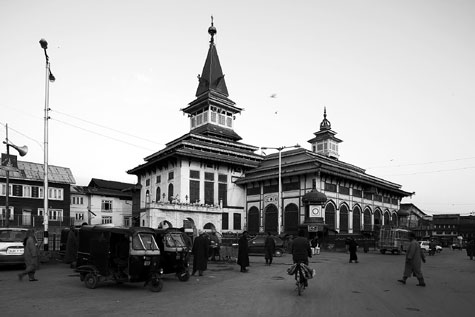 Dastageer Sahib in Srinagar with a characteristic roof of a Kashmiri mosque
 Interiors of the Jamia Masjid