Journalism of Courage



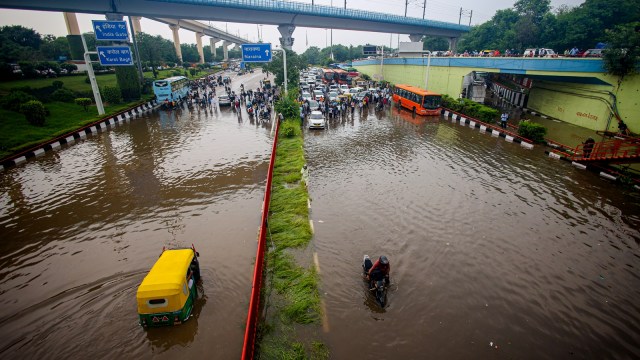 There is an increase in dengue cases and other vector-borne diseases due to the continuous rainfall in Delhi. (File Photo)
Delhi has reported at least two dengue deaths this season — a 54-year-old patient at Lok Nayak Hospital and another at Safdarjung Hospital. This comes amid a surge in cases of the vector-borne disease at several city hospitals.
As per data accessed by The Indian Express, from January 1 to September 10, Delhi has recorded a total of 675 cases of dengue. Sources said the highest number of cases, were reported in August. The maximum number of cases — 103 — were reported in the Najafgarh zone, followed by Shahdara North zone with 84 cases. Along with this, 260 cases of malaria and 32 cases of chikungunya were also reported from January 1 to September 10.
Doctors said that while the severity of the infection is low because of the mild strain, cases might go up considering the excessive rainfall that has been reported this monsoon season.
At Safdarjung Hospital, 15 dengue patients and seven suspected cases were admitted in the last 24 hours on Saturday. A total of 70 patients have been admitted since July 1.
At Holy Family Hospital in Southeast Delhi, two-three dengue cases were reported every day in the first week of September. This increased slightly to four-five cases per day in the second week.
According to Medical Director Dr Sumit Ray, the hospital has about 10-15 dengue patients admitted on any given day. He said they even saw cases of H1N1 (swine flu) in August till the first week of September. “We had about 12-15 patients admitted with H1N1 every day. It has started coming down this week. Gastrointestinal infections, including typhoid, which were high since July, are decreasing now,” he said.
Dr Satish Koul, Senior Director & Unit Head-Internal Medicine at Fortis Hospital, said the emergency department has been stretched due to patients with dengue fever at various stages of complications. “Cases this year as compared to last year have been unprecedented,” he said.
At the hospital’s OPD, 40-60% of patients complaining of fever have dengue, he added.
At the Delhi government’s biggest hospital, Lok Nayak, Medical Director Dr Suresh Kumar said dengue cases have increased in the last week. “Currently, we have nine patients admitted — four confirmed and five suspected cases,” he said.
Dr Prashant Sinha, Head of Emergency at PSRI Hospital, said the threat of dengue will likely continue until about November due to the prolonged monsoon. “Not only are we noticing these cases, but we are seeing patients every day. Swine flu is one particular disease or flu that has risen disproportionately during this period compared to previous years. As for dengue, it has also started to appear, but I would hesitate to say we are done with the dengue season.”
Dr Sushila Kataria, Senior Director of Internal Medicine, Medanta Hospital, Gurgaon, said to prevent mosquito bites, it is crucial to wear full-sleeved clothing, use mosquito repellents, and ensure there is no stagnant water around homes and communities. “If water cannot be drained, adding a tablespoon of oil can help prevent larvae from thriving. In addition, salmonella infections and prolonged fevers from typhoid are increasing due to water and sewage contamination,” he added.
Meanwhile, Delhi Health Minister Saurabh Bharadwaj said the city is experiencing an increase in dengue cases and other vector-borne diseases due to the continuous rainfall.
On Thursday, he held a meeting with various departments — Municipal Corporation of Delhi, health, revenue and education — to discuss a potential disease outbreak. Over the last two days, he also visited Delhi government hospitals to check their dengue preparedness as well.
He also flagged that officials are not paying attention to such “sensitive issues”. “The year 1996 witnessed a serious outbreak of dengue when some 9,000 cases were reported with a death rate of 4.2% during the prolonged monsoon period. I fail to understand why no department was represented by its HoD, especially when such sensitive issues need to be addressed,” wrote Bharadwaj to various departments.
“Despite directives issued to various departments to mitigate the situation, including the mandate for school children to wear full-sleeve shirts and long pants, I have observed a lack of compliance with these measures,” he said.

 4 min read