Expert Explains: ‘Not all clouds are seedable. Not every condition will work’
Cloud-seeding is a complex process with many variables; deeper research is needed before outcomes become predictable.
Written by Sophiya Mathew
New Delhi | Updated: October 29, 2025 06:24 AM IST
4 min read
Whatsapp
twitter
Facebook
Reddit
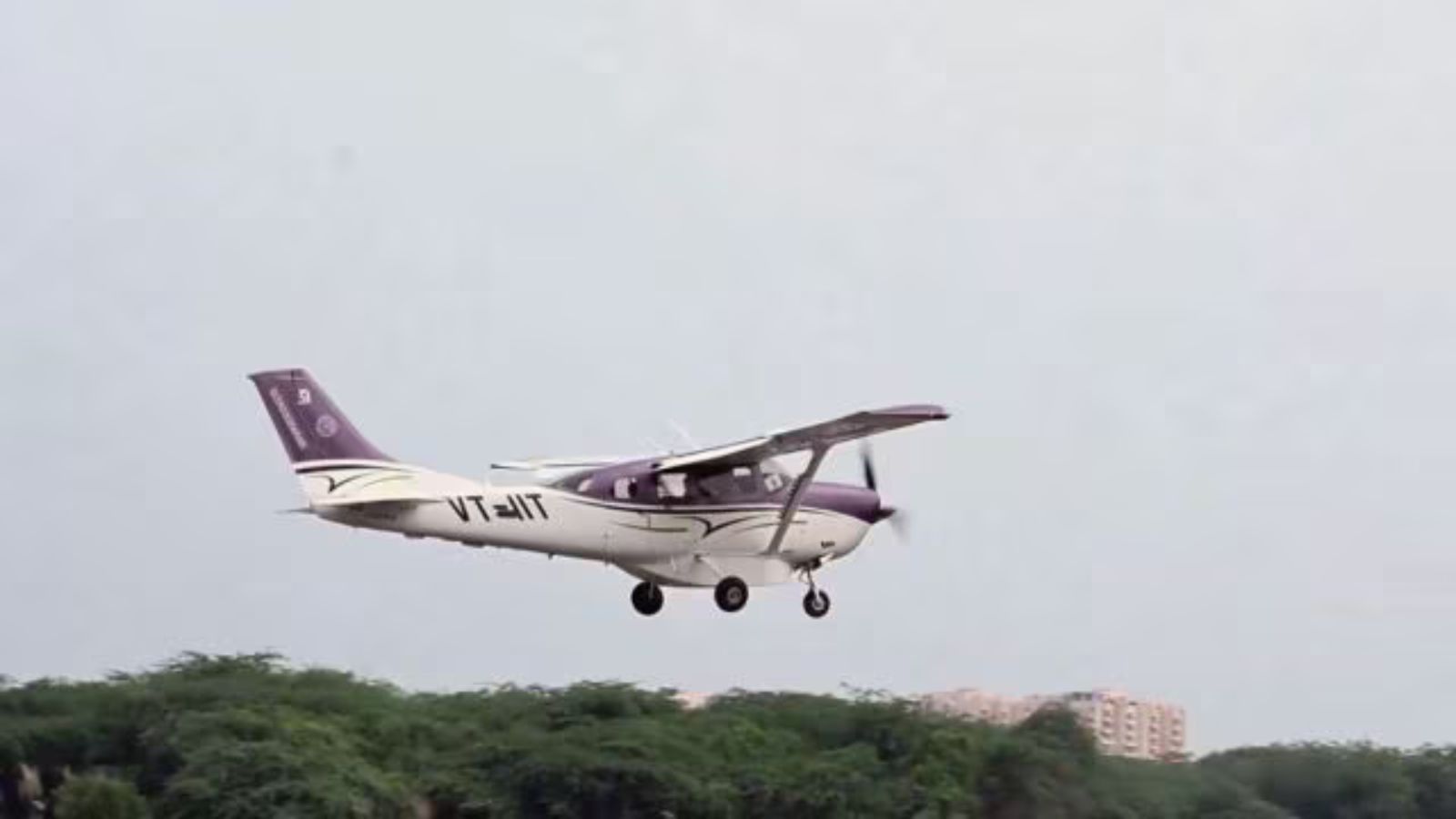
A Cessna 206H aircraft took off from the IIT-Kanpur airstrip for a cloud-seeding operation over the Capital on Tuesday. (Express Photo)
One of India’s leading cloud-seeding experts Thara Prabhakaran explains to The Indian Express how cloud-seeding works, the challenges, and its possible impact. The upshot: it’s a complex process with many variables; deeper research is needed before outcomes become predictable.
What does it take to carry out a cloud-seeding operation of the kind the Delhi government attempted on Tuesday?
Clouds are very complex phenomena. The formation and growth of clouds, and the precipitation they bring depend on various factors such as moisture, aerosols (suspended small solid particles or liquid droplets in the atmosphere), and anthropogenic emissions (gases and particles released into the atmosphere as a result of human activities).
Moisture incursion [into the clouds] is vital – for example, due to the cyclonic circulations above the Arabian Sea, weather systems above Delhi are currently suitable for an attempt at cloud-seeding. So, to attempt cloud-seeding, there have to be clouds to begin with – and secondly, they should be the right kind of clouds. The seeding of the clouds can be carried out by various methods.
What are the main findings of the studies on cloud-seeding carried out by IITM Pune?
We have conducted detailed research that looks into the scientific aspects — specific enhancements, whether we can increase precipitation in water-limited areas. We need several samples to see whether cloud-seeding will work, and like medical trials, we have done cloud-seeding in different environments where we have found suitable clouds.
From our randomised study — some of the clouds were seeded and others were not — we found an 80% enhancement in rainfall. The clouds were also staying for a longer time. These findings are consistent with findings on aerosol-cloud interaction.
Clouds are modified by aerosols. Hygroscopic aerosols absorb water vapour from the atmosphere and grow in size and mass. But there are also hydrophobic aerosols like black soot, which do not support cloud formation and can actually suppress precipitation.
It is very important to identify the right kind of clouds and the right seeding material. Not all clouds are seedable. Not every condition will work.
Story continues below this ad
Can cloud-seeding be used for pollution control, as is being attempted in Delhi?
Using cloud-seeding for pollution control is totally different from using the process to induce rain. Numerous aerosols are already present in the atmosphere, and we still do not know enough about the process.
We have to experiment more and document more. We need depth of information regarding what is happening in the cloud, how long it has rained, and what the overall impact has been.
We cannot think about the operational aspect right now. We first need the basic things to be fixed, like what kind of conditions and what kind of clouds are best suited for artificial rain. There are many questions and a lot of research needs to be done.
How environmentally safe is this process? Are there any major concerns?
Typically, in warm clouds we have used salts such as sodium chloride. Silver iodide is toxic. Silver is toxic for aquatic life even in minute quantities, and clouds are small entities… To know whether seeding material falls to the surface after precipitation, we need systematic studies.
Story continues below this ad
Ground-based experiments carried out in the United States have detected silver at nearby locations after cloud-seeding trials. There is absolutely no information on the long-term environmental impact in India, and that is something we need to study carefully.
What role do anthropogenic emissions play in cloud formation or rainfall?
A lot of particulates are released into the atmosphere through anthropogenic emissions, including biomass burning, which can suppress cloud formation.
We need to sensitise people to the fact that the environment belongs to everyone — how can we clean the atmosphere otherwise? We cannot think of a long-term solution through a single approach; we have to explore different options and ways to mitigate the problem. Everyone has to work together, including citizens.
Dr Thara Prabhakaran is Scientist G and Project Director (CAIPEEX/ PDTC) at IITM Pune. CAIPEEX, or Cloud Aerosol Interaction and Precipitation Enhancement Experiment, is IITM’s long-term program to study cloud-aerosol interactions and rainfall enhancement.
Sophiya Mathew is a Correspondent at The Indian Express, based in New Delhi. She joined the Delhi bureau in 2024, and has specialization in Integrated Multimedia Journalism from the Asian College of Journalism (ACJ), Chennai.
Professional Background
Core Beats: Her reporting is primarily focused on the Environment and Education.
Specialization: She has gained recognition for her ground-level reporting on the Yamuna floodplains and the socio-economic challenges faced by those living on its banks. She also focuses on the disparities in Delhi's education system, ranging from elite private schools to government institutions and refugee education.
Recent Notable Articles (December 2025)
Her recent work has been heavily centered on Delhi's severe winter pollution crisis and the government's regulatory responses:
1. The Air Pollution Crisis
"A tale of two cities: Delhi govt schools choke in bad air, private classrooms set up air filters" (Dec 20, 2025): A high-impact feature contrasting the "Clean Air Bubbles" in elite schools with the reality of government school students who are exposed to an equivalent of 17 cigarettes a day due to outdoor exposure.
"Delhi sees season's worst air day, second worst December AQI in nearly a decade" (Dec 15, 2025): An analytical report on the meteorological patterns trapping pollutants in the NCR.
"Delhi bans non-BS VI vehicles from outside: Why curbing vehicular pollution is key" (Dec 17, 2025): Explaining the science behind targeting specific vehicle vintages to lower particulate matter.
2. Enforcement & Regulations
"No fuel at pumps in Delhi without valid PUC certificate from December 18" (Dec 17, 2025): Breaking the news on the environment ministry's strict "No PUC, No Fuel" policy.
3. Education Policy
"Law to regulate school fee in Delhi risks becoming procedural, say parents" (Dec 13, 2025): Investigating the loopholes in the new Delhi School Education (Transparency in Fixation and Regulation of Fees) Bill, 2025.
"Monsoon Session: Private school fee regulation Bill cleared after four-hour debate" (Aug 9, 2025): Covering the legislative passage of the controversial fee hike regulation.
Signature Style
Sophiya is known for her observational depth. Her reporting often includes vivid details from school corridors, hospital waitlists, or the banks of the Yamuna to illustrate how policy failures affect the city's most vulnerable residents. She is a frequent expert guest on the 3 Things podcast, where she explains the complexities of Delhi’s environmental laws.
X (Twitter): @SophiyaMathew1 ... Read More


 4 min read