Journalism of Courage



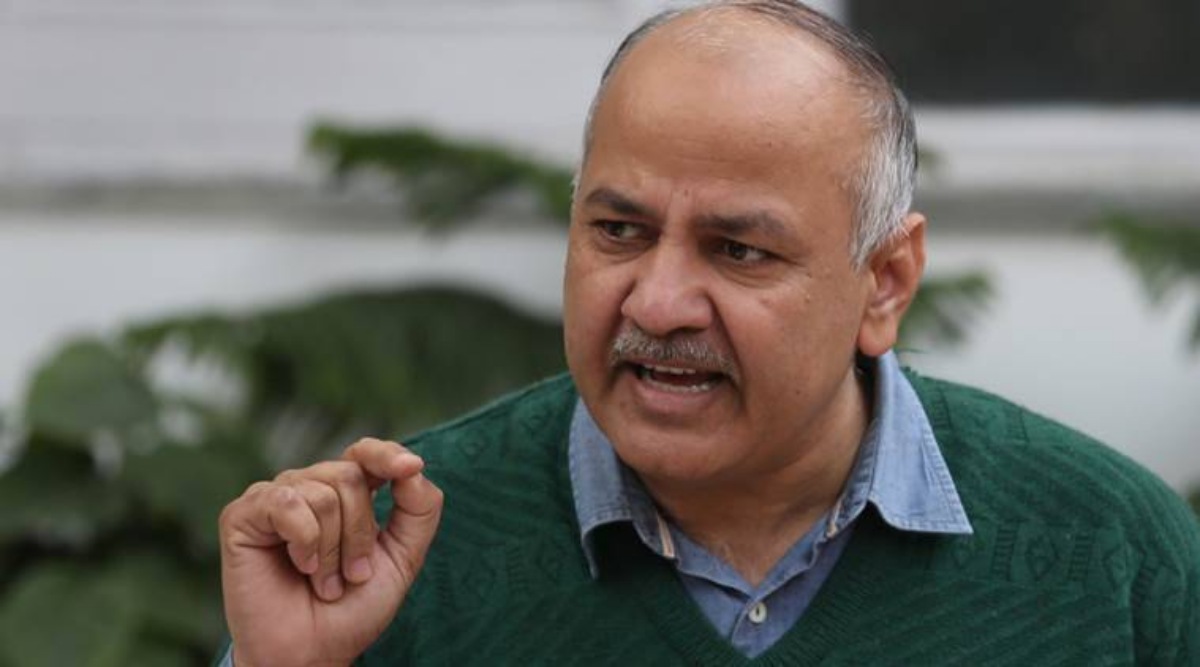 Delhi Deputy Chief Minister Manish Sisodia. (File)
With the WHO designating B.1.1.529 as a “variant of concern”, Deputy Chief Minister Manish Sisodia Saturday told The Indian Express that the Delhi Disaster Management Authority (DDMA) will meet on Monday “to discuss what needs to be done”.
Speaking to The Indian Express, he said: “We have to be on high alert regarding the new variant and the DDMA will be meeting on Monday to discuss what needs to be done. We cannot take things for granted, we have learnt many lessons from the past. We hope we are in a better position to deal with any possible surge. Certainly, in terms of management and infrastructure, we are in a much better position than before the second wave.”
The variant was announced by scientists in South Africa Thursday, and was detected in two more countries, Israel and Belgium. Germany, Botswana, Hong Kong and the UK are the other countries where the variant has been found.
Asked whether there should be deliberation on putting a pause on campaign activities by all parties across poll-bound states, Sisodia said: “I think saving people’s lives should be the first priority no matter what.”
 ILBS head Dr S K Sarin, who has worked closely with the Delhi government on Covid response and preparedness, has urged caution “for at least the next six months, till June 2022”. His remarks came on a day CM Arvind Kejriwal urged Prime Minister Narendra Modi to stop flights from countries where the new variant has been detected.
“We know very little, I can only say that this has been declared as VOC, our concern for vigilance must be genuine, especially with regard to travelers from countries which are exposed. As a policy, there should at least be quarantine and isolation for them upon arrival. And we should implement our own self lockdown — meaning keeping our masks on and being extremely vigilant — for at least the next six months, till June 2022, till the variant of concern hopefully dies down,” said Dr Sarin.
At the peak of the most recent wave, scenes of crowded hospital corridors and patients desperate to get admission had become common, particularly at large government hospitals.
At the time, Lok Nayak Hospital was the largest centre for Covid treatment. According to medical director Dr Suresh Kumar, preparedness for an escalation in the Covid situation has been an ongoing process. “After the second wave, we have been continuously working to prepare ICU beds and oxygen supply, so in that sense we are ready. People need to be more vigilant and careful with Covid-appropriate behaviour and not become lax with wearing masks,” he said.
The hospital also has a genome sequencing lab, which is crucial for detecting new variants. “Given that the positivity in Delhi has been so low, the number of samples we have been getting for genome sequencing has consequently also been low. We have not received any fresh directions on this,” he said.
In November (till the 27th), Delhi has had a total of 946 new cases and five deaths. There are currently 290 active cases, with 138 admitted to hospitals.
According to Dr Jugal Kishore, head of Community Medicine at Safdarjung Hospital, the capital is in a relatively safe position.
“Delhi already has a very high infection rate, the chances of a new variant being effective is low… Surveillance is the most important thing. We said a long time back that surveillance is required so that new variants can be identified, because if the virus continues, it can change any time and surveillance is the best method to detect this early. Sequencing also needs to follow the history of whether the person is vaccinated or not and what effect the vaccine might be having against or on the virus,” he said.

 4 min read