A frequently asked question leaves filmmaker Harjant Gill fumbling. An Assistant Professor of Anthropology at Towson University in Maryland, USA, he often finds himself standing in front of a frowning face that wants to know, “What is wrong with Indian men, why are they raping their women?” To give an answer, one would have to wade through a quagmire of sociocultural history that informs, and complicates, what being a man in India means. Gill decided on a more direct approach — he had four men face the camera and describe their ideas of masculinity. The result is Mardistan (Macholand), a 28-minute film by Delhi-based organisation Public Services Broadcasting Trust (PSBT), in which remnants of feudal stereotypes share an uneasy space with modern realities such as the coming-of-age of the gay movement in India.
Gill made Punjab the site of study because “from colonial times, Punjabi masculinity has been held up as an exemplar, physically at least”. “What is frustrating is that in most discussions about sexual violence, there is almost no discourse about masculinity. To be a man, it seems, one must protect his wife or his girlfriend and I found this problematic. I wanted a film that offered a more critical investigation,” he says. Gill was born in India and lived here till his family migrated to the US when he was 14, exposing him to the different definitions of masculinity in India and the West. The 32-year-old’s comments have emerged in earlier films such as Milind Soman Made Me Gay, about his own gay awakening, and Lot’s Wife, a story of two gay men in Turkey.
You’ve Read Your Free Stories For Now
Sign up and keep reading more stories that matter to you.
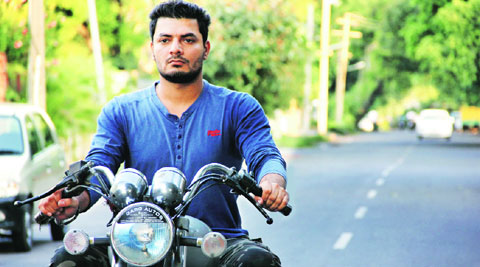
The opening scene of Mardistan seals the film’s intention — the camera pans on writer Amandeep Sandhu as he says, “While growing up, I realised there were certain kinds of men I would not like to become. I would not like to become an uncle of mine who would beat my mother up. I would not like to become seniors of mine who would define themselves by sodomising their juniors, I would not like to pull a gun on somebody because I have had a gun pulled on me.” Sandhu doesn’t only give an insight into the presence of violence in a boy’s upbringing but also stresses his rejection of it. The other men have also broken free in many ways — engineer Gurpreet Singh recalls how his parents favoured him over his sisters even as he hugs his twin daughters and declares that he doesn’t want a boy. Tarun, who the filmmaker expected to be a “lafanga, chheroing girls around Punjabi University”, turns out to be a mufti-clad biker reeling under the peer pressure to lose his virginity.
“When you talk to them, you realise that some of these guys, even when they are performing this hyper-masculinity, are so unsure and insecure about what is it to be a man,” says Gill. As the men, and one woman expert, Nivedita Menon, share their opinions on camera, they also expose prejudices through references to female foeticide and how many men feel that women are to blame for sexual assault “because they stay out late”.
Gill’s study of masculinity wouldn’t be complete without the experience of Dhananjay, a social activist. “When I told my wife I was gay, she replied, ‘I don’t need my husband to be manly, I need him to be a kind human being’,” he says. Dhananjay must act as the “man” of the house and cannot divorce his wife because “society blames a woman for a bad marriage”. Against a backdrop of sexual liberation — Dhananjay is open about his gay status — is a man’s age-old duty of a provider.
As Dhanajay recounts his experiences, the camera once slides over a calendar picture of a god in the room, leaving the label of pati parmeshwar hanging unsaid over the scene. Such visual treatments are frequent and add layers to the film, especially since Gill uses an anthropologist’s academic approach of clean shots and precise interviews. “These are snapshots of experiences you don’t hear in the film,” says Gill.
Mardistan follows Roots of Love, about the turban as a rite of passage, and is likely to be followed by a film, tentatively titled Sent-Away Boys on Punjabi men migrating to foreign countries almost as a growing-up ritual.
Story continues below this ad
Mardistan will be screened on September 2 at IIC as part of Open Frame Festival.
Dipanita Nath is a Senior Assistant Editor at The Indian Express, based in Pune. She is a versatile journalist with a deep interest in the intersection of culture, sustainability, and urban life.
Professional Background
Experience: Before joining The Indian Express, she worked with other major news organizations including Hindustan Times, The Times of India, and Mint.
Core Specializations: She is widely recognized for her coverage of the climate crisis, theatre and performing arts, heritage conservation, and the startup ecosystem (often through her "Pune Inc" series).
Storytelling Focus: Her work often unearths "hidden stories" of Pune—focusing on historical institutes, local traditions, and the personal journeys of social innovators.
Recent Notable Articles (December 2025)
Her recent reporting highlights Pune’s cultural pulse and the environmental challenges facing the city during the winter season:
1. Climate & Environment
"Pune shivers on coldest morning of the season; minimum temperature plunges to 6.9°C" (Dec 20, 2025): Reporting on the record-breaking cold wave in Pune and the IMD's forecast for the week.
"How a heritage tree-mapping event at Ganeshkhind Garden highlights rising interest in Pune’s green legacy" (Dec 20, 2025): Covering a citizen-led initiative where Gen Z and millennials gathered to document and protect ancient trees at a Biodiversity Heritage Site.
"Right to breathe: Landmark NGT order directs PMC to frame norms for pollution from construction sites" (Dec 8, 2025): Reporting on a significant legal victory for residents fighting dust and air pollution in urban neighborhoods like Baner.
2. "Hidden Stories" & Heritage
"Inside Pune library that’s nourished minds of entrepreneurs for 17 years" (Dec 21, 2025): A feature on the Venture Center Library, detailing how a collection of 3,500 specialized books helps tech startups navigate the product life cycle.
"Before he died, Ram Sutar gave Pune a lasting gift" (Dec 18, 2025): A tribute to the legendary sculptor Ram Sutar (creator of the Statue of Unity), focusing on his local works like the Chhatrapati Shivaji statue at Pune airport.
"The Pune institute where MA Jinnah was once chief guest" (Dec 6, 2025): An archival exploration of the College of Agriculture, established in 1907, and its historical role in India's freedom struggle.
3. Arts, Theatre & "Pune Inc"
"Satyajit Ray, Ritwik Ghatak were not rivals but close friends, says veteran filmmaker" (Dec 17, 2025): A deep-dive interview ahead of the Pune International Film Festival (PIFF) exploring the camaraderie between legends of Indian cinema.
"Meet the Pune entrepreneur helping women build and scale businesses" (Dec 16, 2025): Part of her "Pune Inc" series, profiling Nikita Vora’s efforts to empower female-led startups.
"How women drone pilots in rural Maharashtra are cultivating a green habit" (Dec 12, 2025): Exploring how technology is being used by women in agriculture to reduce chemical use and labor.
Signature Style
Dipanita Nath is known for intellectual curiosity and a narrative-driven approach. Whether she is writing about a 110-year-old eatery or the intricacies of the climate crisis, she focuses on the human element and the historical context. Her columns are often a blend of reportage and cultural commentary, making them a staple for readers interested in the "soul" of Pune.
X (Twitter): @dipanitanath ... Read More