Premium
This is an archive article published on June 21, 2024

Kejriwal bail order quotes CJI, pokes holes in ED claims on ‘crime proceeds’

Commenting on the argument of the ED that investigation is an art, the Court said this could mean that material is being “artistically” procured against the accused

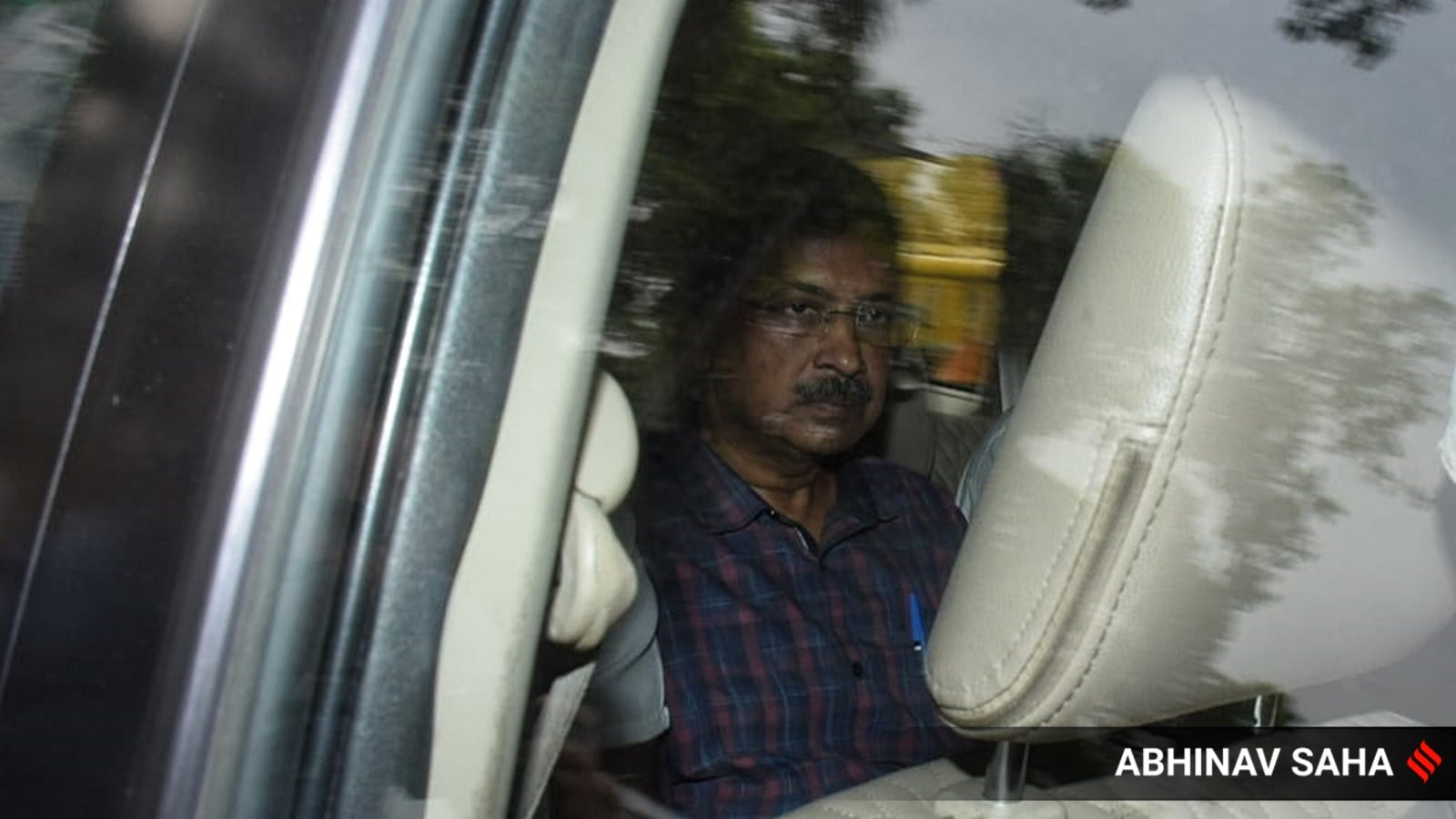
Arvind Kejriwal bailDelhi CM Arvind Kejriwal was arrested by the ED on March 21. (File Photo)

THE Chief Justice of India’s encouragement of trial court judges to grant bail; reliance on the Supreme Court’s observations that Delhi Chief Minister Arvind Kejriwal is not a threat to society while granting interim bail and a finding that the Enforcement Directorate is yet to establish guilt against the accused — these are the three key reasons for the Delhi Court to grant bail to Kejriwal Thursday.

A 26-page order by Judge Niyay Bindu was made available Friday, hours after ED moved the Delhi High Court cancellation of bail.

“But, in the recent past Hon’ble Supreme Court and Hon’ble Chief Justice of India has been encouraging the trial courts to take up the such matters and decide the same. Recently, on CBI Day Celebration, Hon’ble Chief Justice while addressing the gathering and perceiving the difficult and cumbersome task being done by the trial court Special Judges attending CBI and ED matters, passed encouraging remarks for such courts for their motivation and inspiration,” the order stated.

The trial court also said that “the observations of the Supreme Court cannot be ignored” while considering that Kejriwal is the Chief Minister of Delhi and that his constitutional office is relevant to being considered for bail. The order quoted a paragraph from the SC’s May 10 order granting interim bail that Kejriwal “is not a threat to the society”.

Apart from relying on SC observations, the trial court, in an apparent response to the high bar under Section 45 of the Prevention of Money Laundering Act that deals with grant of bail, held that the ED was “yet to establish guilt”.

Section 45 of the PMLA requires the Court to apply the “twin-test” to arrive at a conclusion that there is no prima facie case against the accused and that the accused is unlikely to commit any further offence while on bail. It will have to been seen whether a prima facie finding of not guilty can be read as “yet to establish guilt”.

The court raised three issues to poke holes in the prosecution case: the timing of the arrest; revisions in approver statements; and whether money seized is actually proceeds of crime.

Story continues below this ad

“There are certain undisputed facts as specified on behalf of the applicant that in the month of July 2022, the material was available with the ED against the accused but he was called only in August 2023 which shows malafide of ED and ED has failed to answer this objection of the applicant,” the order stated.

On the second aspect that the statements of approvers initially did not refer to Kejriwal, the order records ED’s submission that “Investigation is an art, and sometimes one accused is given lollypop of bail and pardon and induced with some assurance to make them tell the story behind the offence.”

To this, the court said that it “has to take a pause to consider this argument which is not an potable submission that investigation is an art because if it is so, then, any person can be implicated and kept behind the bars by artistically procuring the material against him after artistically avoiding/withdrawing exculpatory material from the record.”

The court said that this argument “constrains the court to draw an inference against the investigating agency that it is not acting without bias”.

Story continues below this ad

On linking the money seized so far by the ED to proceeds of crime, the court said that the “ED is silent about the facts as to how the proceeds of crime have been utilised in Assembly Elections at Goa by AAP as admittedly after about two years, the bigger portion of the alleged amount remains to be traced out”.

The link between Kejriwal and the money trail recovered so far is crucial to the ED’s case to establish guilt.

The ED had earlier alleged that Kejriwal was “directly involved in the formulation” of the now-scrapped Delhi excise policy, which was drafted “considering the favours to be granted to the ‘South Group’”. The ED had claimed that the South Group “secured uninhibited access, undue favours, attained stakes in established wholesale businesses, and multiple retail zones (over and above what was allowed in the policy)”, and paid Rs 100 crore to AAP leaders in return.

The agency also alleged that bribes received from the ‘South Group’ were funnelled into the AAP’s Goa Assembly poll campaign in 2021-2022.

Nirbhay Thakur is a Senior Correspondent with The Indian Express who primarily covers district courts in Delhi and has reported on the trials of many high-profile cases since 2023. Professional Background Education: Nirbhay is an economics graduate from Delhi University. Beats: His reporting spans the trial courts, and he occasionally interviews ambassadors and has a keen interest in doing data stories. Specializations: He has a specific interest in data stories related to courts. Core Strength: Nirbhay is known for tracking long-running legal sagas and providing meticulous updates on high-profile criminal trials. Recent notable articles In 2025, he has written long form articles and two investigations. Along with breaking many court stories, he has also done various exclusive stories. 1) A long form on Surender Koli, accused in the Nithari serial killings of 2006. He was acquitted after spending 2 decades in jail. was a branded man. Deemed the “cannibal" who allegedly lured children to his employer’s house in Noida, murdered them, and “ate their flesh” – his actions cited were cited as evidence of human depravity at its worst. However, the SC acquitted him finding various lapses in the investigation. The Indian Express spoke to his lawyers and traced the 2 decades journey.  2) For decades, the Jawaharlal Nehru University (JNU) has been at the forefront of the Government’s national rankings, placed at No. 2 over the past two years alone. It has also been the crucible of campus activism, its protests often spilling into national debates, its student leaders going on to become the faces and voices of political parties of all hues and thoughts. The Indian Express looked at all court cases spanning over two decades and did an investigation. 3) Investigation on the 700 Delhi riots cases. The Indian Express found that in 17 of 93 acquittals (which amounted to 85% of the decided cases) in Delhi riots cases, courts red-flag ‘fabricated’ evidence and pulled up the police. Signature Style Nirbhay’s writing is characterized by its procedural depth. He excels at summarizing 400-page chargesheets and complex court orders into digestible news for the general public. X (Twitter): @Nirbhaya99 ... Read More

Stay updated with the latest - Click here to follow us on Instagram

Latest Comment
Post Comment
Read Comments
Advertisement
Loading Taboola...
Advertisement